
6 Print Products That Build a Faceless Empire Without Showing Your Face
Build the brand out of objects instead of a founder. These six printed pieces are what a customer actually touches when there is nobody on camera, listed in the order they meet them, each one priced live.
A faceless brand has no founder to be the identity, so six printed objects do that job instead: the mailer box, the printed tape, the die-cut sticker, the insert card, the product label and the hang tag. Print all six with one mark, one color and one typeface and the customer remembers a brand rather than a seller. If the budget only covers two, make them the insert card and the sticker.
The picks
The 6-piece faceless brand kit, priced live
Buy in this order and each piece pays for the next one. Insert cards and stickers come first because they cost the least and change the parcel the most. Printed tape follows once you are packing every day, and the printed mailer box is the piece you earn. Every price below comes from the configurator and drops as the quantity climbs, and you can start any of them from a design template instead of an empty file.
Start here
Why print is the whole identity when there is no face
A founder-led brand can be inconsistent and get away with it, because the person is the through line. Take the person away and the only through line left is what arrives in the mail. That is why faceless brands live or die on how identical their packaging looks from the first order to the hundredth. The six pieces below are ordered the way a customer meets them, starting with the box on the doorstep and ending with the tag still attached to the product a week later.
Specs and starting prices
The six pieces, what they cost, and where each one works
Six printed pieces cover a faceless brand end to end, and each has a spec it is normally ordered at and a place it does its work. Boxes and tape carry the parcel, stickers and cards carry the message, labels and tags stay with the product. Read the row, tap the piece to jump to its section, then match the spec to what you actually ship.
| Piece | Typical spec and starting price | Where it does its work |
|---|---|---|
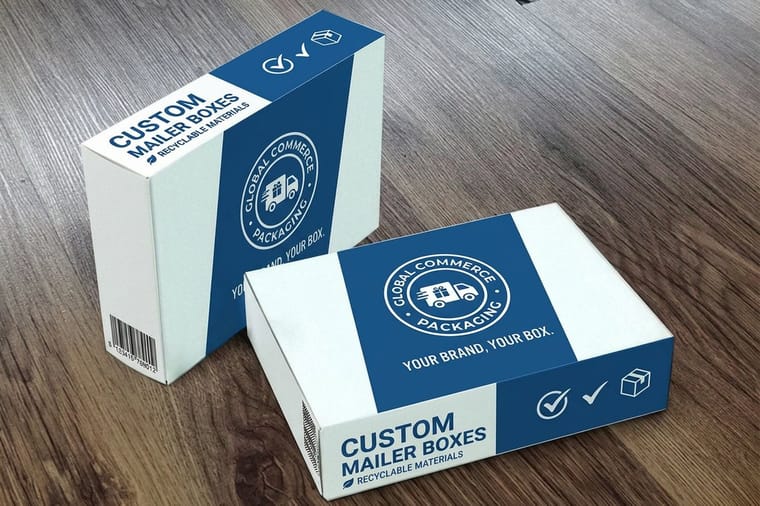
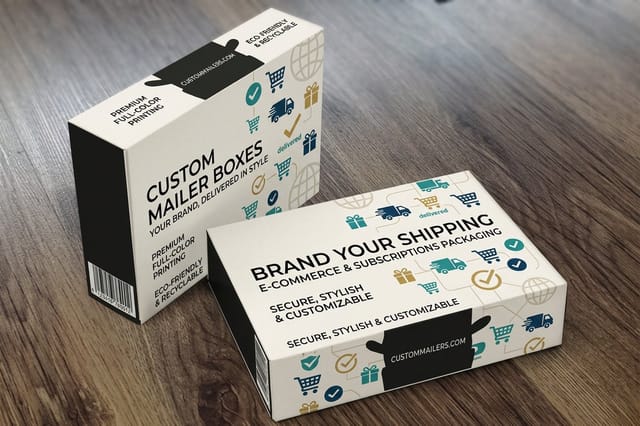
| 1. Custom mailer boxes | E-flute corrugated, printed outside, inside print optional. From $711.78 | The parcel itself. This is the only piece a customer sees before they know anything about you, and the one that gets filmed. |
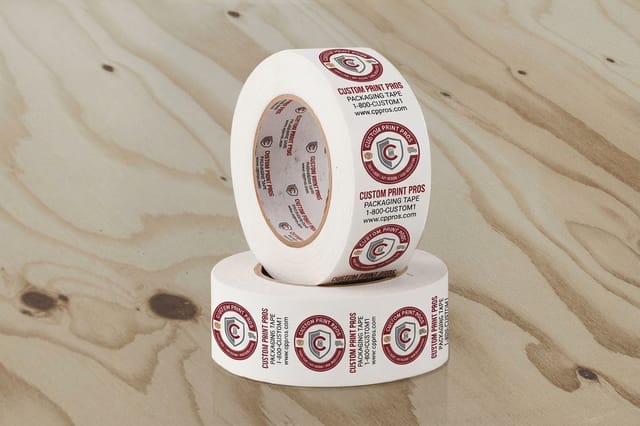
| 2. Printed packaging tape | 2 in wide, spot color, sold by the case. From $347.11 | The seam of a plain kraft box. Turns stock corrugated into branded corrugated for a fraction of a printed box. |
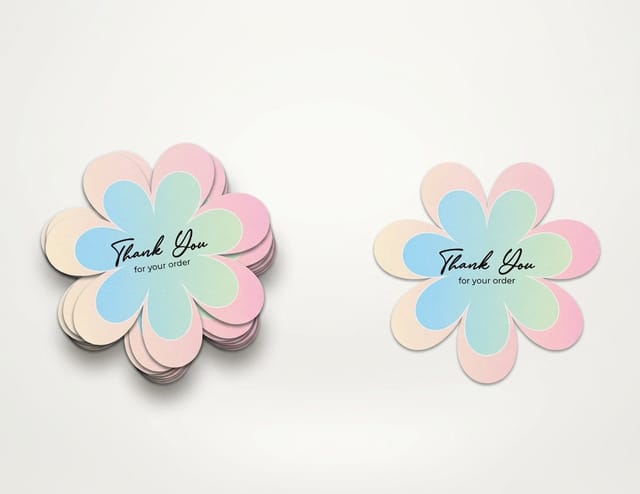
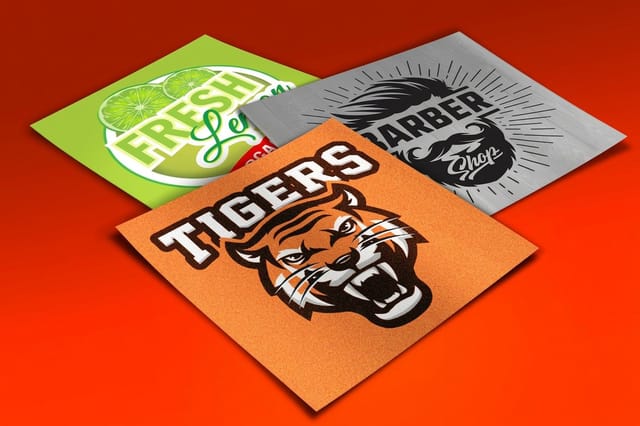
| 3. Die-cut stickers | Vinyl, cut on the outline of the artwork, 1.5 in to 3 in typical. From $93.37 | The flap seal, the tissue wrap, and the free one you drop in the box for the customer to stick somewhere public. |
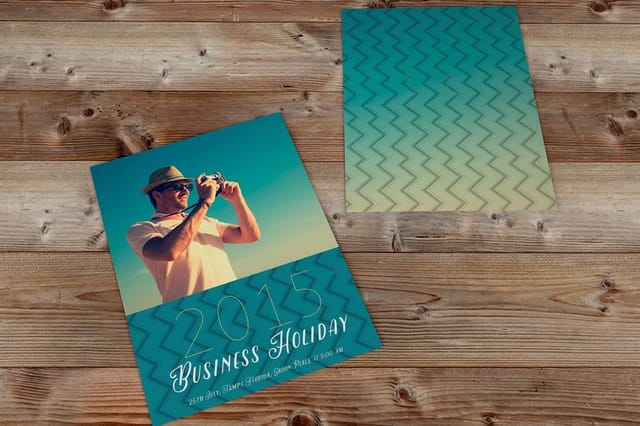
| 4. Insert cards | 4 in x 6 in postcard stock, printed both sides. From $16.48 | On top of the product, face up. Reorder code, care notes, and the only sentence you get to write. |
| 5. Premium labels | Sheet or roll, paper or film, custom shapes. From $29.16 | The product itself. It stays in the bathroom or the kitchen long after the box is flattened. |
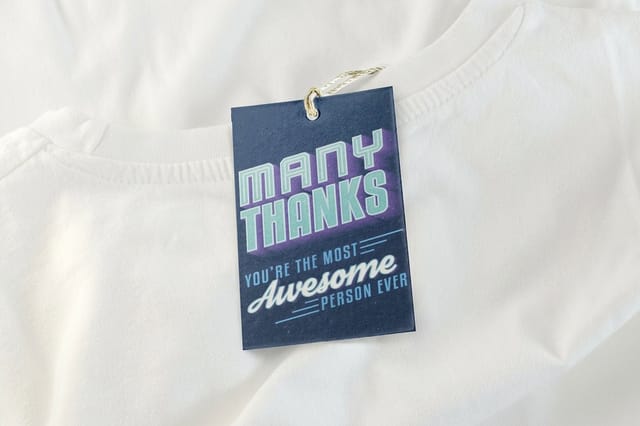
| 6. Hang tags | 2 in x 3.5 in typical, drilled for string. From $25.27 | Anything sold on a rack or shipped folded. It carries size, price, and the story the garment cannot tell. |
1. Custom mailer boxes: the parcel is the storefront
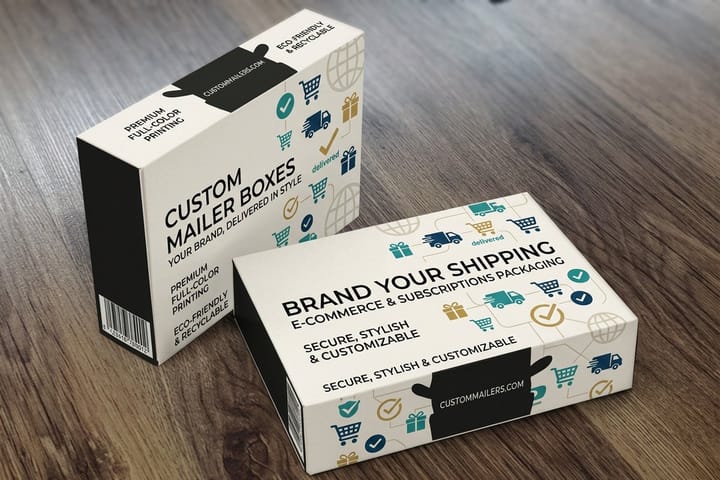
A faceless brand has no shop window, so the box is the shop window. A custom mailer box is the first physical object a customer associates with the name, and it arrives on a doorstep next to a dozen plain brown parcels. That contrast is the whole point.
Mailer boxes are corrugated, usually E-flute, which is thin enough to fold flat and stiff enough to survive a carrier belt. Print sits on the outside as standard. Inside print costs more and is the part people photograph, because the lid is what faces the camera when the box is open on a kitchen counter. If you only pay for one surface, pay for the one the customer sees second.
Here is the honest limit. Corrugated is a long-run product, so the entry price is $711.78 and the per-box cost only starts making sense once you are shipping steadily. If you move ten orders a week, buy a plain kraft box and brand it with tape and a sticker instead. Our breakdown of mailer boxes against shipping boxes covers which style suits which product, and no-minimum ordering applies to the paper pieces in this kit even where the boxes cannot.
One more thing that matters specifically to faceless sellers: if the product ships from a fulfiller rather than your kitchen table, ask about blind shipping so the parcel carries your brand and not the packer's name on the label.
2. Printed packaging tape: brand the seam before anyone opens it
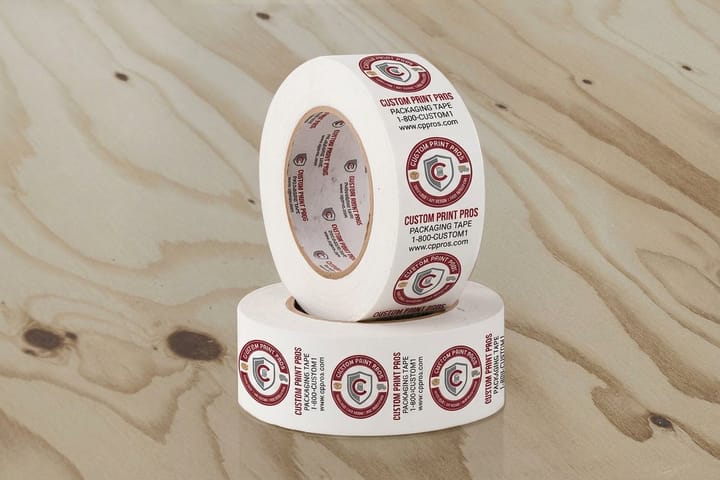
Printed tape is the cheapest way to make a stock box look deliberate. Two inches of printed packaging tape down the seam and across the flaps turns a $0.60 kraft carton into something that reads as a brand from six feet away, which is exactly the distance a doorstep photo gets taken from.
Design it as a repeating pattern, not as a single centered logo. Tape gets cut at whatever length the packer pulls, so a mark that only reads when the cut lands correctly will end up sliced in half on most parcels. Repeat the logomark every six to eight inches with the brand color running behind it and every cut length works.
Keep the artwork to one or two solid colors. Tape prints by flexo on a plastic or paper carrier, so fine gradients and photographic detail flatten out, while a bold two-color mark stays crisp roll after roll. If you want the color to match the box and the label exactly, specify it as a Pantone spot color rather than trusting four-color builds to agree across three different materials.
Tape starts at $347.11 because it is sold by the case, which is a real barrier at the very beginning. The upside is that a case lasts most small brands the better part of a year. Our guide to labels, seals and tape that brand your box compares the three adhesive routes side by side.
3. Die-cut stickers: the mark, cut to its own outline
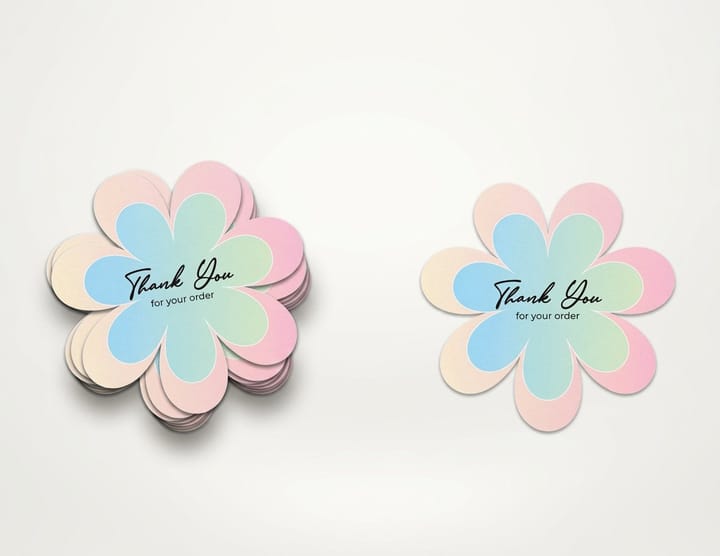
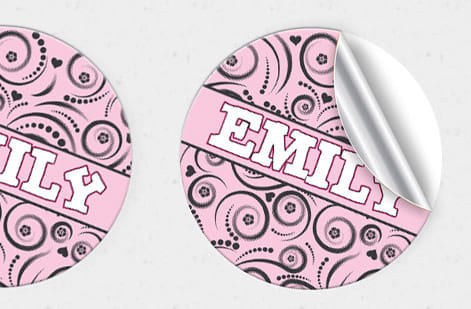
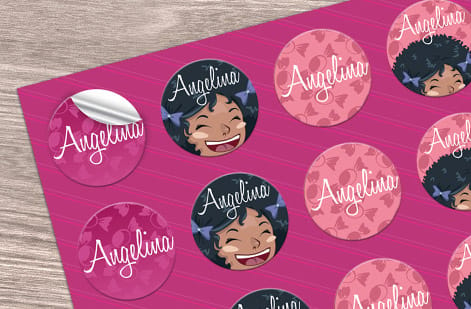
A die-cut sticker is cut along the edge of the artwork, so the sticker is the shape of the logo rather than a square with the logo inside it. For a brand with no face, that silhouette does a lot of work. It seals the tissue paper, it closes the box flap, and it goes in the parcel as a spare for the customer to stick on a laptop where other people will see it.
Two setup details decide whether the run comes back right. Leave about an eighth of an inch of clear space between your artwork and the cut line, because cutting tolerance is not zero and a mark that touches the edge will show a shaved letter on some of the sheet. And check what the sticker sits on: clear vinyl on brown kraft lets the board show through and dulls every color, so on kraft boxes use white vinyl or ask for a white ink underprint.
Stickers start at $93.37 and the per-piece price falls hard with quantity, which makes them the piece most faceless brands over-order on purpose. There is more on cut lines, materials and bleed in what die-cut stickers are, and if you are choosing between one mark and a family of them, logo variations every brand needs explains which version belongs on a two-inch circle.
4. Insert cards: the only voice in the box
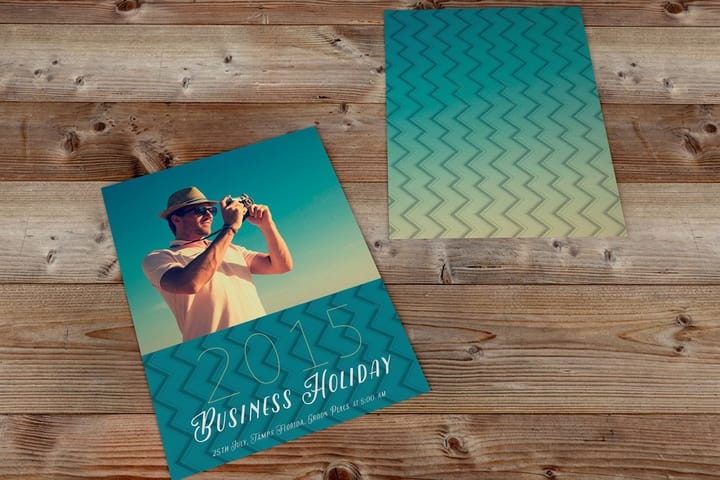
Every other brand gets to put a founder on camera. You get a card. A 4 in x 6 in postcard printed both sides is the cheapest piece in this kit at $16.48, and it is the one that carries the words: what the thing is, how to look after it, the code that brings them back, and one sentence that sounds like a person wrote it.
Print it double sided and give each side one job. Front is the brand and the message. Back is the practical half, which is where the reorder code, the care instructions and a QR code belong. Keep the QR at three quarters of an inch or larger and leave quiet space around it, because a code crammed to the trim edge fails on half the phones that try it.
Resist inventing a founder. Faceless brands that sign the card with a made-up first name create a problem the first time a customer asks to speak to them. Sign it with the brand, write in plain sentences, and let the note carry the personality. Our guides on insert cards for ecommerce brands and packaging inserts that drive repeat sales cover what to actually put on the card, and you can start from a layout in our design templates rather than a blank artboard.
5. Premium labels: the piece that outlives the box
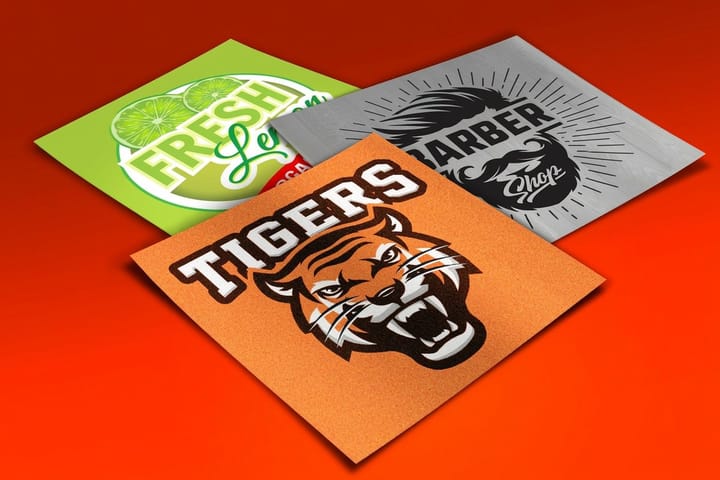
The box gets flattened within a day. The product label stays on a shelf in a bathroom or a kitchen for months, which makes it the longest-running advertisement a faceless brand owns. It is also the piece with the most rules, because material choice is not decoration here.
Match the stock to the surface and to what will be spilled on it. Paper labels look warm on a dry candle jar or a coffee bag and go blotchy the moment oil or condensation touches them. For anything wet, refrigerated, or handled with damp hands, a film label is the one that still looks new in month three. Labels start at $29.16, and custom shapes cost more than a rectangle for the same area, so a circle or a rounded square is where most brands land.
Set the artwork with the curve in mind. A label wrapped on a 2 in diameter jar only shows about an inch of face at a time, so center the mark and keep the ingredient text off the seam. If you are still deciding the color that will run across tape, labels and box, settle it before the first label order using how to choose your brand color palette, because reprinting labels to chase a color change is the most common avoidable cost in this kit.
6. Hang tags: for anything that hangs on a rack
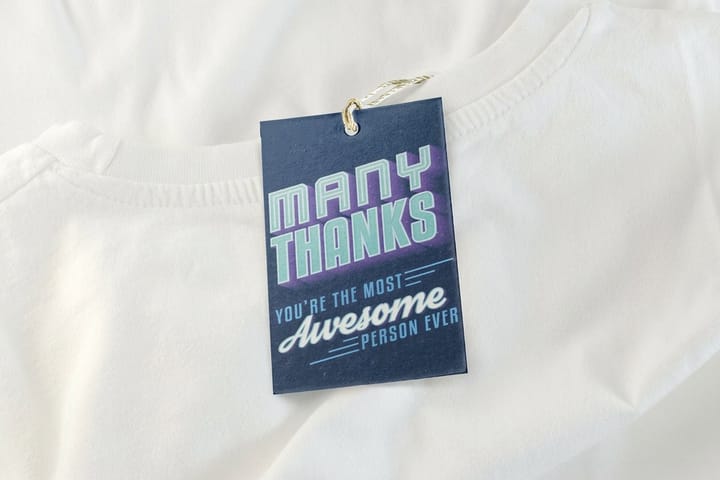
If the empire sells apparel, candles, ceramics or anything folded into a poly bag, the hang tag is the sixth piece. It carries size, price, materials and care, and it is the last thing a buyer reads before they decide. Tags start at $25.27, which makes them the cheapest way to add a printed surface to a product that has nowhere else to put one.
The usual size is 2 in x 3.5 in, the same footprint as a business card, which means your existing card artwork usually drops straight in. Two build details matter: order the drill hole placed at least a quarter inch in from the edge so the tag does not tear off the string, and choose a heavier stock than you think, because a floppy tag reads as cheap in the hand no matter how good the printing is.
Give the back of the tag a job. Care instructions, a short line about the material, or a QR to the reorder page all beat leaving it blank. Sizes, hole placement and string options are laid out in our hang tag sizes guide, and the wider view of how these six pieces fit an online-only business is in ecommerce branding.
Specs and pricing
Compare the two pieces you will reorder most
Insert cards and stickers get reprinted every time an offer or a mark changes, so they are the two lines on the invoice that repeat. Postcards start at 50 for $16.48 and die-cut stickers at 25 for $93.37.
| Quantity | Price Per Unit | Total |
|---|---|---|
| 50 | 33.0¢ | $16.48 |
| 100 | 24.2¢ | $24.16 |
| 200 | 15.9¢ | $31.86 |
| 300 | 12.8¢ | $38.45 |
| 400 | 11.3¢ | $45.04 |
| 500 | 10.3¢ | $51.62 |
| 600 | 9.89¢ | $59.31 |
| 700 | 9.57¢ | $67.00 |
| Quantity | Price Per Unit | Total |
|---|---|---|
| 50 | 50.5¢ | $25.27 |
| 100 | 28.6¢ | $28.56 |
| 200 | 15.9¢ | $31.86 |
| 300 | 12.4¢ | $37.35 |
| 400 | 10.2¢ | $40.64 |
| 500 | 8.79¢ | $43.94 |
| 600 | 8.24¢ | $49.43 |
| 700 | 7.53¢ | $52.73 |
Wally explains the faceless brand kit
No founder on camera, six objects doing the talking
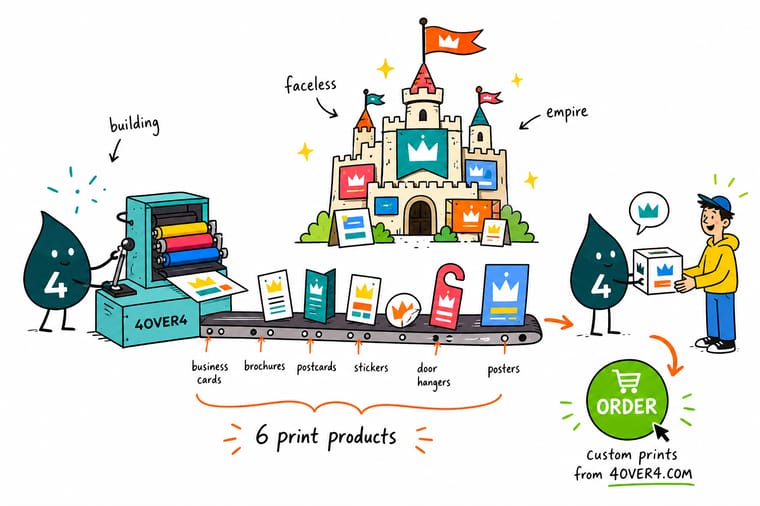
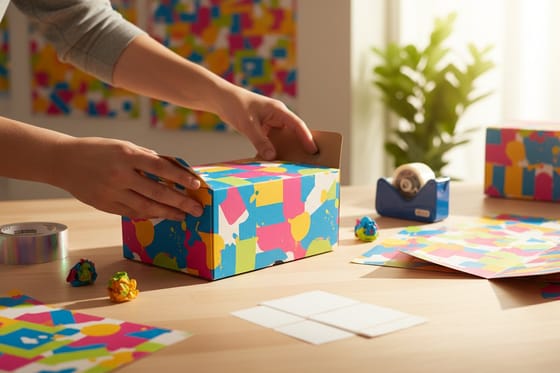
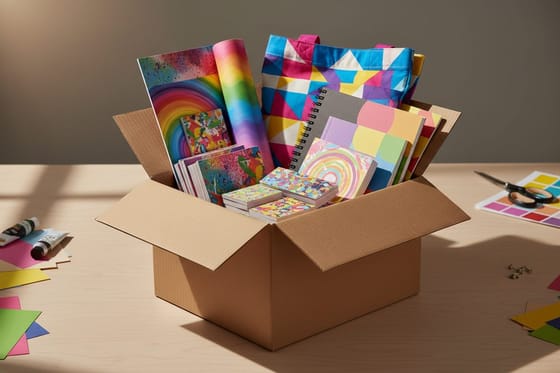
Wally opens a parcel the way a customer does. The tape and the sticker say the name before the box is open, the insert card says it in words, and the label and the hang tag keep saying it for weeks after the box is recycled. Print all six with the same mark and the same color and the brand is recognizable without a single photo of you. Start with the cards and the stickers, add the tape, and let 4OVER4 print the whole set when the volume is there.
Shop packaging printing →See it in use
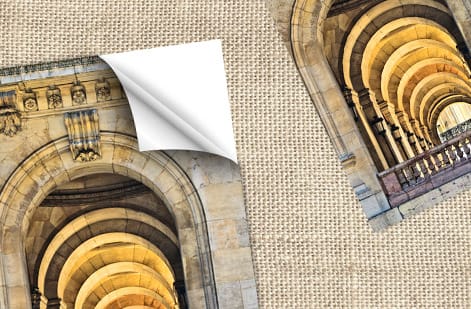
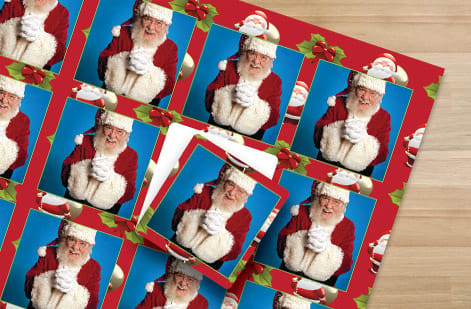
Sticker designs cut to their own outline




Explore more
Where to go next

By the numbers
Printing for a brand that never shows a face
Common Questions
Common questions about building a faceless brand in print
Can a business look legitimate with no founder photo anywhere?
Yes, and thousands do. Recognition transfers from a person to a set of objects: one logomark, one color, one typeface, repeated identically on the box, the tape, the sticker, the card, the label and the tag. What breaks the illusion is not the missing face, it is inconsistency, so a parcel where the tape color fights the label color reads as a reseller rather than a brand.
What should I print first if I only have a small budget?
Printed insert cards and die-cut stickers. Cards start at $16.48 and stickers at $93.37, and between them they cover the two jobs that matter earliest: saying something in the box, and putting your mark on a plain kraft carton. Add printed tape when your order volume justifies a case, and leave custom mailer boxes until the per-box cost stops hurting.
Do I need a printed box, or is a sticker on a plain mailer enough?
A sticker seal plus printed tape on a stock kraft box is enough for the first year of most small brands, and the doorstep photo looks close to identical. The printed mailer box wins on two things a sticker cannot do: the inside surface, and the fact that the branding survives the parcel being handled by six people before it arrives. Move to the printed box when repeat orders, not first orders, are paying for it.
Will my home address end up on the parcel?
Only if you put it there. If a fulfiller or a print partner ships on your behalf, ask for blind shipping so the label carries your business name and return address instead of theirs, and nothing inside the parcel identifies the packer. This is the single most-asked question from sellers who want to stay anonymous, and it is a shipping setting rather than a design problem.
What size should an insert card be?
Four inches by six inches is the standard because it fits flat on top of most products inside a mailer and is large enough for a readable message plus a QR code. Five by seven reads more like a gift note and suits higher-priced items. Anything smaller than 3.5 in x 2 in becomes a business card, which is a different piece with a different job.
How do I keep the same color across tape, labels and a box?
Specify a Pantone spot color and reference it on every order rather than sending a CMYK build. The same four-color recipe prints differently on coated label film, uncoated postcard stock and brown corrugated, so a mid-teal can land three visibly different ways across one kit. A spot color is mixed as ink, which is what holds a faceless brand together across materials.
Is there a minimum order on these pieces?
The paper and vinyl pieces run short with no minimum, so you can order insert cards, labels, stickers and hang tags in small quantities while you test the artwork. Corrugated boxes and printed tape are the exceptions: both are manufactured in runs, which is why they start at $711.78 and $347.11. Order the small pieces first, prove the design on real parcels, then commit to the long-run items.
How small can my logo go before it stops working?
Roughly half an inch is where the trouble starts, and that is exactly the size the mark reproduces at on packaging tape and on a small product label. Hairline serifs, thin connecting strokes and tight counters fill in at that scale. Print a test sheet at 0.5 in, 2 in and 8 in before you order anything, and if the small one turns to mud, draw a heavier variant of the same mark for the small applications.
Get Started
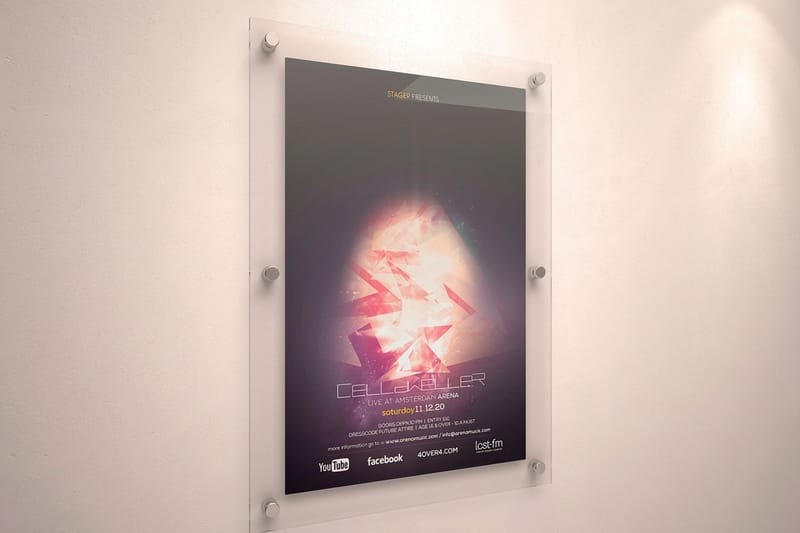
Order 50 postcards from $16.48 with no face on them
Print the six-piece faceless brand kit as one matched set at 4OVER4.COM. Pick your sizes, stocks and finishes, and watch every price update live as you build the order.
Legal Disclaimer
Gold Standard guarantees apply to all standard orders placed through 4over4.com. Price match requires verifiable proof of a competitor's published price for an equivalent product with matching specifications and turnaround time. Satisfaction guarantee covers manufacturing defects and print quality issues. Contact support with order number and documentation. On-time delivery rate based on tracked orders 1999 to 2026. Individual results may vary based on shipping carrier performance.
