
Printed Signage Types and How to Pick the Right One for the Job


Four families cover nearly every printed sign, and the surface you are mounting to picks the family before design ever enters the conversation. Each one has a price and a place where it fails.
Printed signage splits into four families: yard signs on 4mm coroplast, rigid panels in foam core, PVC or aluminum, flexible vinyl and mesh banners, and window clings or decals on glass. The mounting surface picks the family, then exposure and wind pick the grade inside it. Yard signs start at $25, aluminum at $36, banners at $79, window clings at $30.
Quick answer
Let the mounting surface make the first decision
Every printed sign has to attach to something, and that something narrows the choice faster than any material chart. Ground takes a coroplast yard sign on a wire stake. A wall, post or frame takes a rigid panel, with foam core indoors, PVC under cover and aluminum in full weather. A gap between two anchor points takes a banner, solid vinyl indoors and mesh where wind is a factor. Glass takes a static cling if the message rotates or an adhesive decal if it stays. Only after that does lifespan, wind load and reading distance decide the grade.
Yard Signs: The Ground Is the Mount
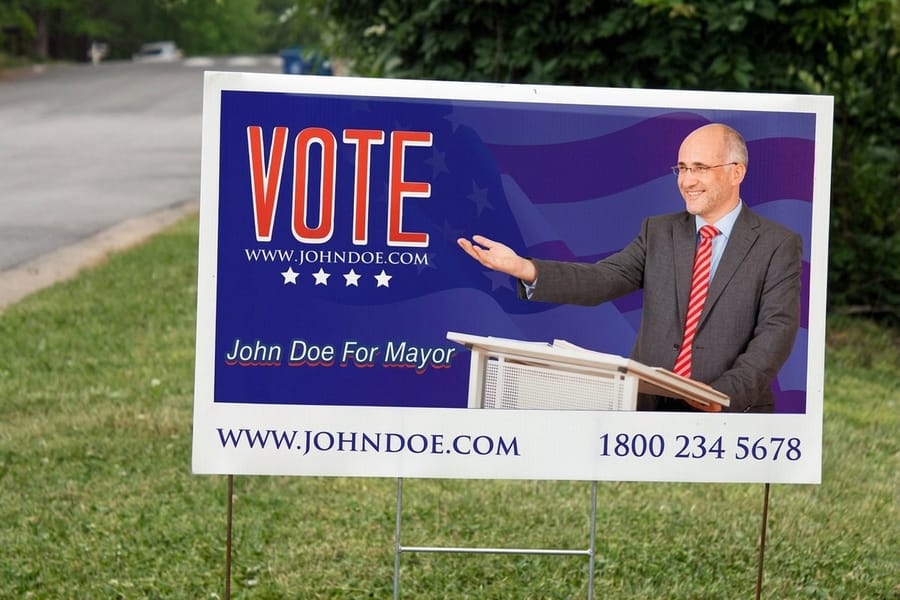
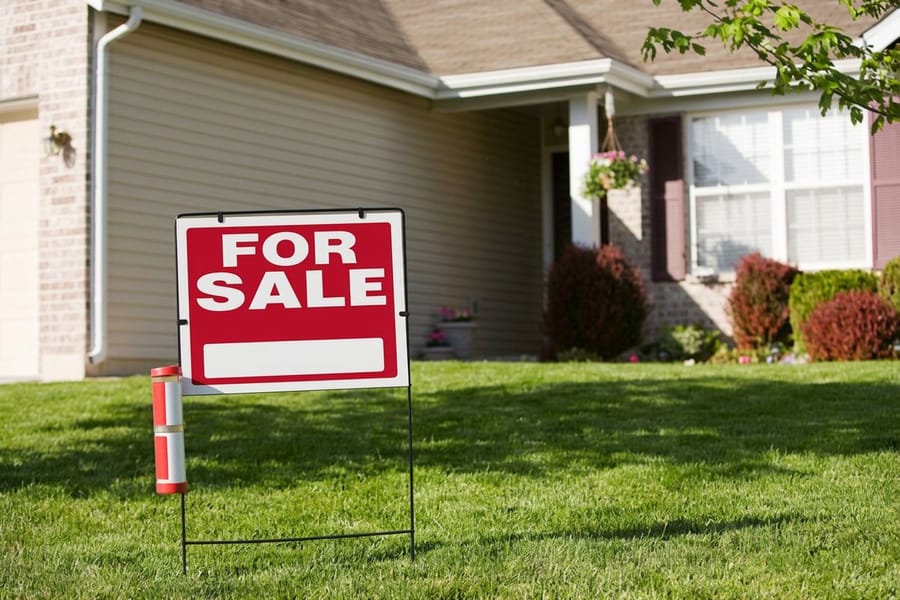
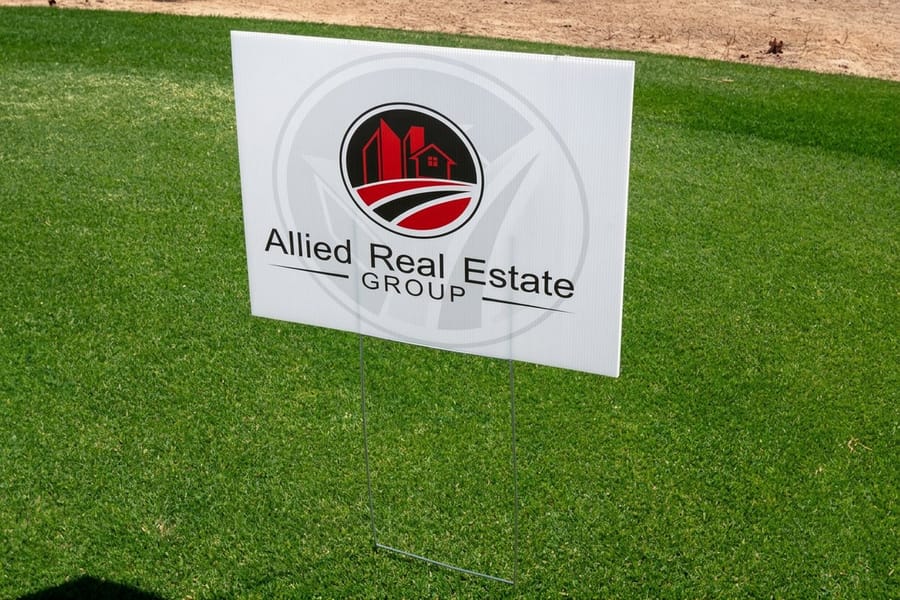
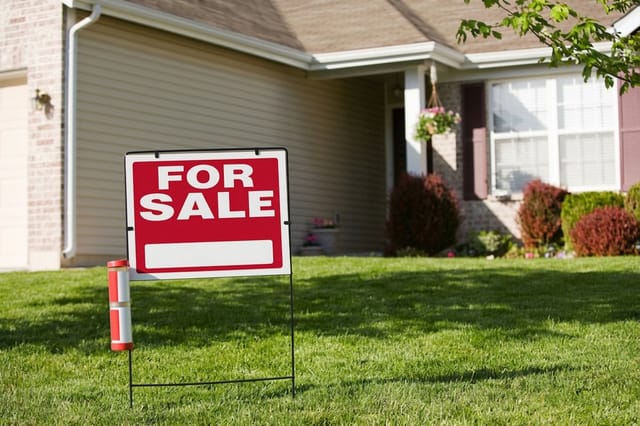
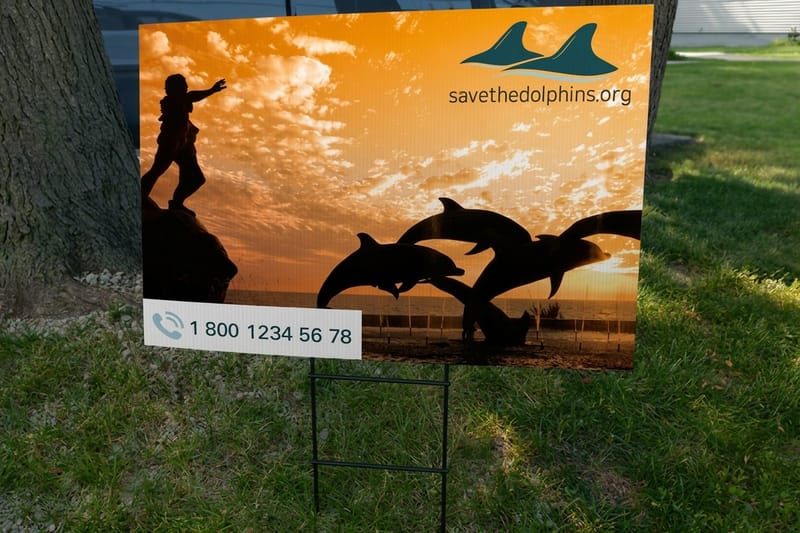
A yard sign is printed on 4mm corrugated polypropylene, the fluted plastic the trade calls coroplast, and it stands on a galvanized wire H stake pushed into soil. Nothing else in printed signage gets a message to eye level this cheaply. Yard signs start at $25, and standard coroplast signs at the same price if you want the blank panel without stakes.
The detail that separates a sign that survives a season from one that folds in the first storm is flute direction. Those internal channels run in one direction only, and the sheet is stiff across them and soft along them. Ordered with the flutes running vertically, the panel resists bending on its stake. Ordered horizontally, wind finds the weakest line and creases it. Portrait or landscape, the flutes should run top to bottom.
18 by 24 inches is the size that dominates real estate and campaign work, because it fits a standard stake and reads from a slow moving car. Print both sides when traffic passes in two directions, which costs less than double and doubles the impressions. For a longer look at how substrates hold up in weather, our guide on which materials survive outdoors goes deeper, and the full range sits in yard sign printing.
Rigid Signs: Foam Core, PVC and Aluminum Are Not Interchangeable
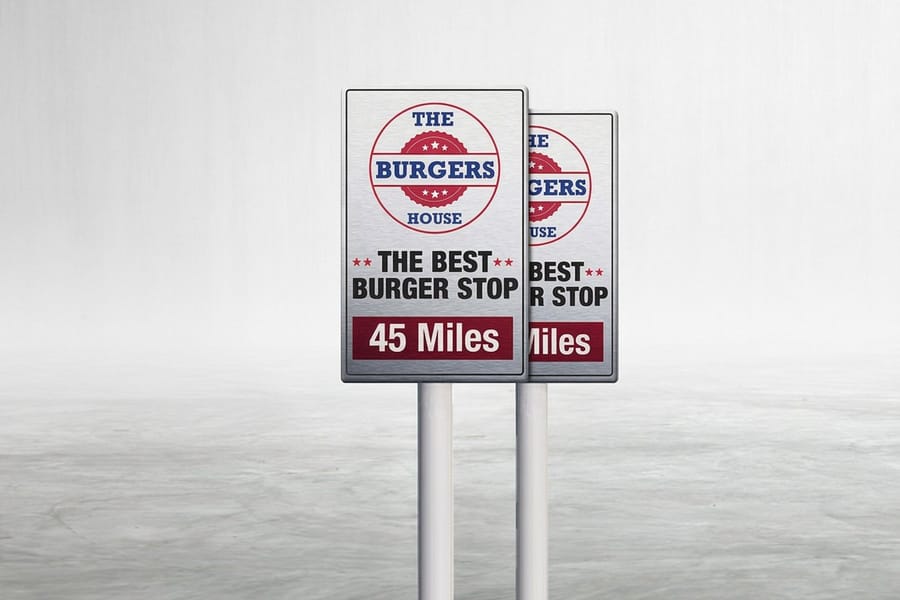
Rigid signage is a family of flat panels, and the three common substrates behave so differently that swapping one for another is the most expensive mistake on this page. They all print the same and they all look similar in a photo.
| Panel | Typical thickness | Where it belongs | The limit |
|---|---|---|---|
| Foam core | 3/16 inch board | Indoor presentations, trade show boards, event signage, easel work. | Paper faces over foam. Humidity warps it and a knock dents it permanently. |
| PVC | 3mm, 6mm, 10mm | Storefront interiors, covered walls, semi outdoor use, directional panels. | Thermal expansion. A long unsupported run in full sun can bow. |
| Aluminum | .040 and .063 inch | Full exposure outdoors: parking, property, traffic and permanent identity. | Weight and price. It needs real fasteners, not double sided tape. |
Read the last column first. Foam core starts at $49.99 and PVC at $25, so cost is not what decides this, exposure is. If the panel will sit outside unprotected, the honest answer is aluminum at $36 and up, because a warped PVC sign replaced twice costs more than getting it right once.
Thickness inside a substrate matters too. In PVC, 3mm is fine for a small panel in a frame, 6mm is the general purpose choice, and 10mm is what you order when the sign is large or freestanding. Browse the full set in rigid sign printing.
Banners: When the Only Anchor Points Are Two Poles
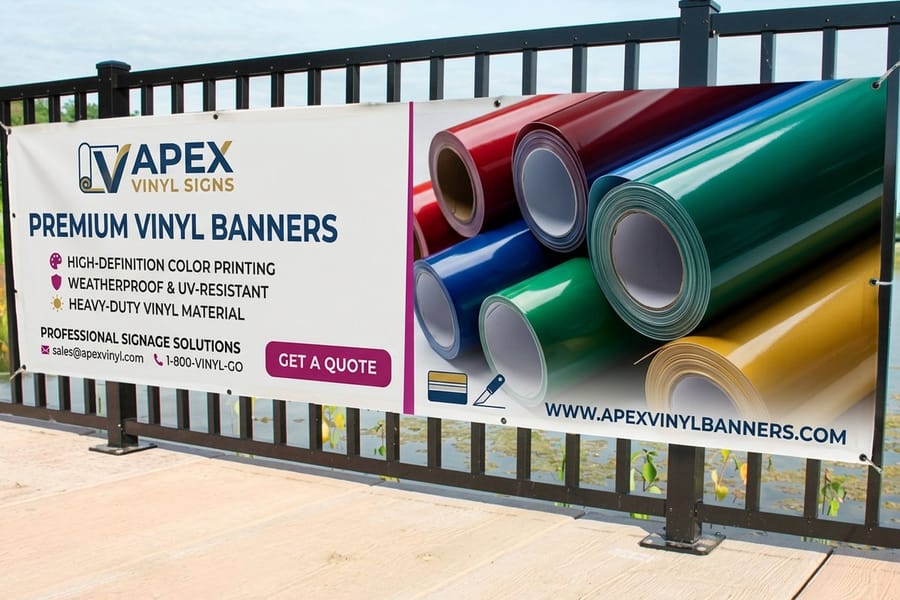
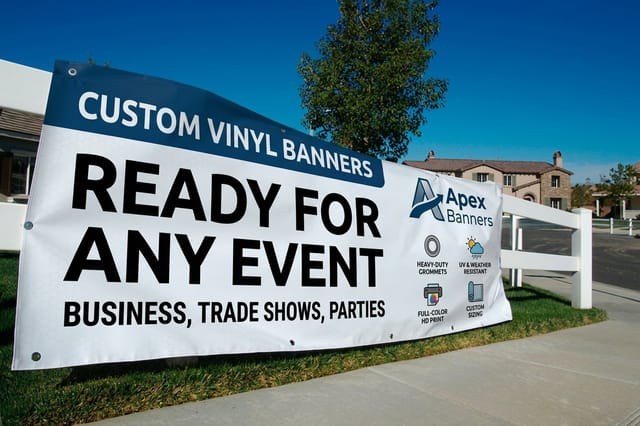
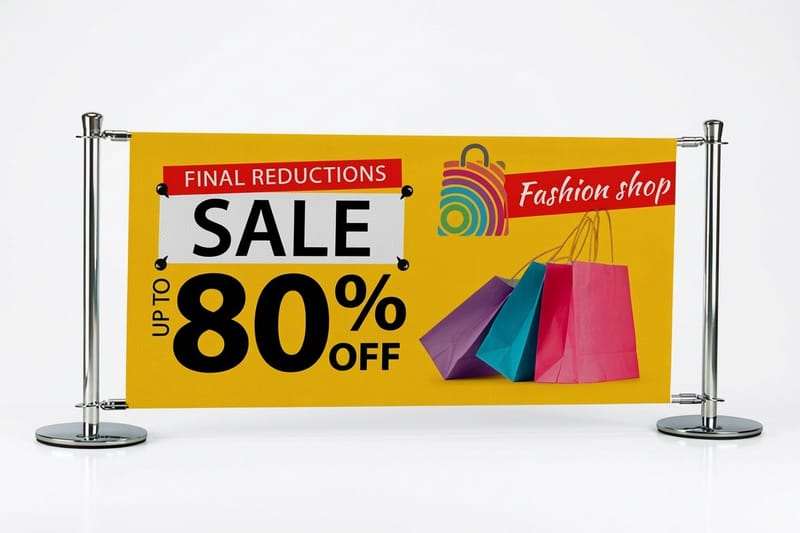
A banner is the answer when there is nothing flat to screw into. It rolls, ships in a small box, and hangs from a fence, a railing, a pair of poles or a wall using grommets and zip ties. Vinyl banners start at $79 on 13oz scrim vinyl, the standard weight for everything from a grand opening to a sponsor wall.
Outdoors, wind decides the material. Solid vinyl is a sheet of plastic with no way for air to escape, so on an exposed fence it behaves like a sail and pulls at the grommets until one tears through. Mesh banners start at $75 and are perforated across the whole face, which lets air pass and keeps the banner and its hardware intact. Wind slits cut into solid vinyl are a common suggestion and a weak substitute.
Two setup habits prevent most reprints. Keep live text at least two inches inside the trim, because grommets and hems sit in that border and a headline running too close gets punched through. And size the type from the reading distance rather than from the layout: a banner read from 60 feet needs capitals around six inches tall, which usually means cutting the copy rather than shrinking the words. Our guide to banner material types compares the fabrics, and banner printing lists every option with sizes.
Window Graphics: Clings, Decals and Perforated Film
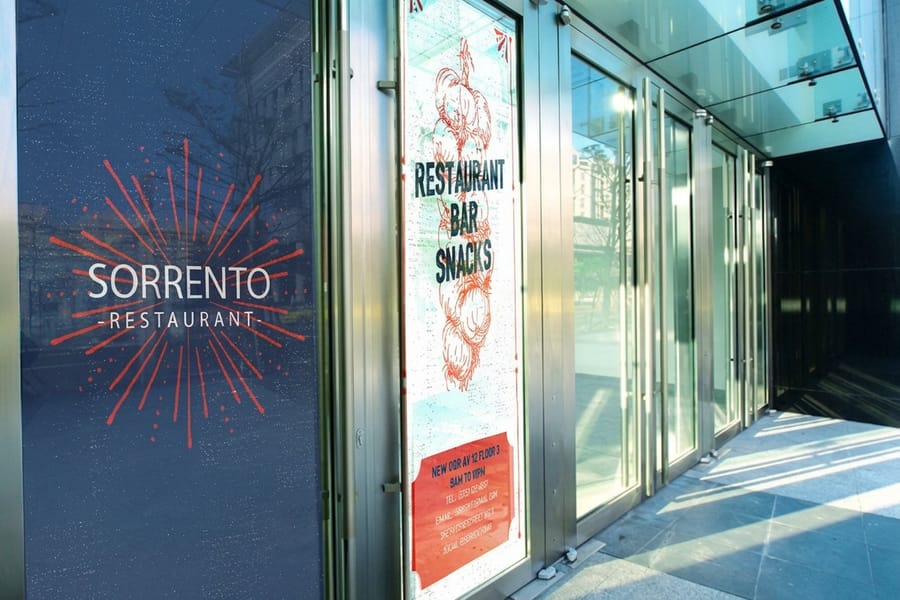
Glass gets its own category because nothing screws into it. Three products cover it, and the difference is adhesive and permanence.
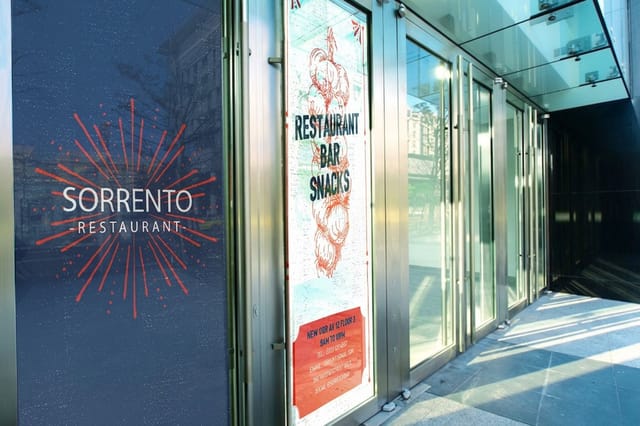
A clear window cling is static cling vinyl with no glue. It holds by surface contact, lifts off without residue, and can be stored flat and put back up next year, starting at $30. That reusability is the whole point: a holiday promotion, a seasonal offer, a set of opening hours that changes twice a year. Clings prefer clean interior glass and they do not enjoy a windy exterior surface.
Window decals are adhesive vinyl at $93.37 and up. They bond properly, tolerate rain and washing, and come off once. Order these for anything that stays: a logo on the front door, hours etched in white vinyl, a permanent address. Perforated window film is the third option, printed on a surface full of tiny holes so the graphic reads as solid from the street while staff still see out from inside. It is what covers a full storefront window without turning the shop into a box.
Application is where most of these fail, not printing. Clean the glass with an ammonia free cleaner, wet apply anything larger than a sheet of paper so you can slide it into place, and squeegee from the center outward. The clings versus decals comparison covers the choice in detail, and window cling printing holds the sizes.
Picking One in Under a Minute
Work through four questions in order and the answer falls out.
- What does it attach to? Soil means a yard sign. A wall, post or frame means a rigid panel. Two anchor points with a gap between them means a banner. Glass means a cling or a decal. Nothing at all means a freestanding aluminum A frame, which starts at $146.07 and needs only a flat floor or sidewalk.
- How long does it stay up? Days to a few months tolerates coroplast, foam core indoors, and a standard vinyl banner. A year or more outdoors means aluminum, adhesive decals or mesh.
- How much wind hits it? An exposed fence or rooftop pushes you to mesh over solid vinyl, and to a heavier stake or a frame rather than a single wire H stake.
- How far away is the reader? Multiply the viewing distance in feet by 0.1 to get a rough minimum capital letter height in inches. If the headline will not fit at that height, the copy is too long for the sign, not the sign too small for the copy.
Quantity changes the arithmetic on the first question. One sign for one location can be whatever suits the mount. Forty signs going out with a sales team want the cheapest thing that survives the run, which is almost always coroplast. If the sign carries a legal or regulatory message, check placement rules before printing: sign permits by state covers what needs approval, and the wider banner and sign guides collect the rest.
Wally sorts the sign types
Find the surface, then the sign picks itself

Wally never starts with the artwork. He walks up to the spot and asks what is there. Soil and no wall, so it is a coroplast yard sign on a stake, flutes running up and down so the wind cannot fold it. A brick wall, so it is a rigid panel, and aluminum if the rain gets at it. Two poles and a gap, so it is a banner, mesh if the wind runs through that yard. Glass, so it is a cling if the message changes with the season and a decal if it stays for good.
Order yard signs →Specs and pricing
Three signage families, sizes and starting prices
A yard sign, a banner and an aluminum panel side by side, with live configuration choices and starting prices straight from the 4OVER4.COM configurator.

Print it
Order the sign that suits the surface
Explore more
Where to go next



By the numbers
One thousand products, and where signage sits among them
Common Questions
Your printed signage questions, answered
What are the main types of printed signage?
Four families cover almost every job. Yard signs are printed on 4mm corrugated plastic and push into the ground on a wire H stake. Rigid signs are flat panels in foam core, PVC or aluminum that screw or hang onto a wall, post or frame. Banners are flexible vinyl or mesh with hems and grommets, strung across a span. Window graphics are static clings or adhesive decals applied to glass. A fifth group, freestanding signs such as A frames and banner stands, sits on the floor and needs no mounting at all.
How do I choose between a yard sign, a rigid sign and a banner?
Ask where it attaches. If there is soil and no wall, a yard sign is the cheapest way to get a message at eye level, from $25. If there is a wall, a post or a frame, a rigid panel looks more permanent and does not flap. If the only anchor points are two poles, a railing or a fence, a banner is the only one of the three that spans the gap. Cost matters less than mounting: a banner zip tied to a fence outlasts a rigid panel that nobody had a way to fix in place.
Which printed sign lasts longest outdoors?
Aluminum, by a wide margin. It does not absorb water, it does not flex, and printed with UV inks it holds up on a post for years of sun and rain. Aluminum Signs start at $36. PVC sits below it and does well under an awning or on a covered wall, though a long unsupported span in direct heat can bow. Coroplast is built for weeks and months rather than years, which is exactly right for a campaign or an open house. Foam core should never go outside at all.
What is the difference between a window cling and a window decal?
The adhesive. A cling is static cling vinyl with no glue at all. It grips glass by surface tension, peels away without residue, and can be flattened between sheets and reused next season, which is why holiday and promotional graphics are usually clings. A decal is adhesive vinyl. It bonds to the glass, survives outdoor weather and washing, and comes off once. Clings start at $30, Window Decals at $93.37. If the graphic rotates through the year, order the cling.
What resolution should a large sign file be?
Large format is viewed from a distance, so it does not need 300 dpi at full size. A common working method is to build the file at one quarter scale at 300 dpi, or at full size at 75 to 100 dpi, and to keep logos and type as vector artwork so they stay sharp at any output size. Photographs are the part that fails: a web image dropped into a 4 by 8 foot banner will be visibly soft, and no amount of upscaling fixes it.
Do I need a permit for a printed sign?
Often, and it depends on the city rather than the material. Temporary yard signs on private property are usually the least regulated, while anything mounted to a building face, projecting over a sidewalk, or placed on a public right of way tends to need approval. Election and real estate signs frequently have their own local rules on size and how long they may stay up. Our guide on how to get sign permits in every U.S. state lays out where to look before you order a quantity.
Get Started
Aluminum A-frames cost $146.07, window decals 25 for $93.37
Tell us where the sign is going and we will print it on the material that belongs there, from a stack of yard signs to an aluminum panel that stays up for years.
Legal Disclaimer
Gold Standard guarantees apply to all standard orders placed through 4over4.com. Price match requires verifiable proof of a competitor's published price for an equivalent product with matching specifications and turnaround time. Satisfaction guarantee covers manufacturing defects and print quality issues. Contact support with order number and documentation. On-time delivery rate based on tracked orders 1999 to 2026. Individual results may vary based on shipping carrier performance.
