
The Psychology of Conversions, From First Glance to Signed Order


What happens in the few seconds before someone acts, which levers move them, where each lever backfires, and the edits that raise conversions without a redesign.
People convert when three things arrive together: they want the outcome, the next step looks easy, and a prompt reaches them at a moment they can act. Most lost conversions fail on the second or third, not the first, which is why cutting friction beats arguing harder. The six persuasion levers, reciprocity, commitment, social proof, authority, liking and scarcity, each raise the odds and each backfire when the reader catches them being false.
Quick answer
Wanting it, being able to do it, and being asked at the right minute
A conversion happens when motivation, ability and a prompt meet. Motivation is slow and expensive to raise. Apparent ability is fast and cheap: fewer fields, a visible price, a step you can describe in one sentence. Persuasion levers tilt the odds, but each one has a backfire mode, and a false deadline or borrowed proof costs more than it earns. The chart below shows why the same person crosses the line for a shorter form long before they cross it for a better argument.
A Conversion Is a Decision Made in Seconds, Under Pressure
The person deciding whether to convert is not evaluating your business. They are running a much smaller comparison: is the next step worth what it visibly costs me right now. That comparison happens fast, usually while they are half distracted, and almost every conversion problem is a problem with one side of it.
BJ Fogg described behavior as the meeting of three things: motivation, ability, and a prompt. All three have to show up at once. Motivation is how much the person wants the outcome. Ability is how easy the step looks, which is not the same as how easy it is. A prompt is the thing that says do it now. Remove any one of the three and nothing happens, which is why a beautifully argued page with the button below the fold converts worse than a plain one with the button in view.
Two consequences fall out of that immediately. First, most abandoned forms are not a wanting failure, they are a timing failure: the prompt reached someone at a bad minute. Second, motivation is the expensive lever and ability is the cheap one. You can raise motivation, but it takes proof, time and repetition. You can raise apparent ability this afternoon by deleting fields, showing the price, and naming the number of steps.
The limit worth naming: this model tells you which lever is cheaper, not which ask is right. Plenty of businesses cut friction on an offer nobody wanted and call the flat result proof that psychology does not work. Before optimising the step, be sure the destination is something a person would choose. Our guide to building a brand that sells covers that side of it.
The Six Levers of Persuasion and Where Each One Backfires
Robert Cialdini grouped the reliable levers into six: reciprocity, commitment and consistency, social proof, authority, liking, and scarcity. What most summaries leave out is that every one of them has a failure mode, and the failure mode usually costs more than the lever ever gained.
| Lever | What it does | Where it backfires | A cheap honest version |
|---|---|---|---|
| Reciprocity | Receiving something first creates a pull to give something back. | Gifts with an obvious invoice attached read as a trap and kill trust. | Send something useful with no ask on it, like a sample pack or a printed price sheet. |
| Commitment | A small yes makes the next yes easier, because people stay consistent with themselves. | Escalating too fast turns the first yes into a lesson about being handled. | Ask for a postcode before a phone number. Let the second step feel like continuing, not starting. |
| Social proof | Evidence that similar people already did this removes the fear of being first. | Proof from the wrong crowd tells the reader this is not for them. | Name the trade, the town and the job. One specific customer beats a wall of logos. |
| Authority | Expertise shortens the evaluation, because judging the expert is easier than judging the work. | Claimed authority with nothing behind it invites the exact scrutiny you wanted to avoid. | Show the working. A spec sheet, a real turnaround time, a photo of the actual job. |
| Liking | People buy from people who seem similar to them and who they have seen before. | Forced warmth reads as a script, and a script reads as a call center. | Write the way you talk on the phone. Put a real name and a real face on the follow up. |
| Scarcity | A closing window converts people who would otherwise decide later, which means never. | A deadline that resets is discovered once and disbelieved forever. | Use the deadlines you already have: press schedules, seasonal cut offs, a printed expiry date. |
Read that third column as the real content of the table. The levers are not tricks, they are shortcuts people use because evaluating everything properly is exhausting, and a shortcut that turns out to be false is remembered longer than one that worked.
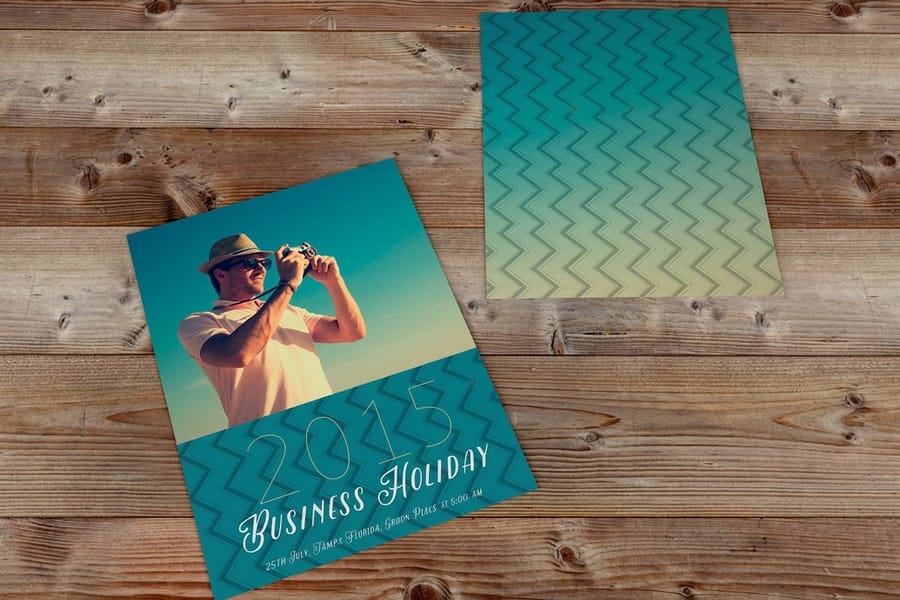
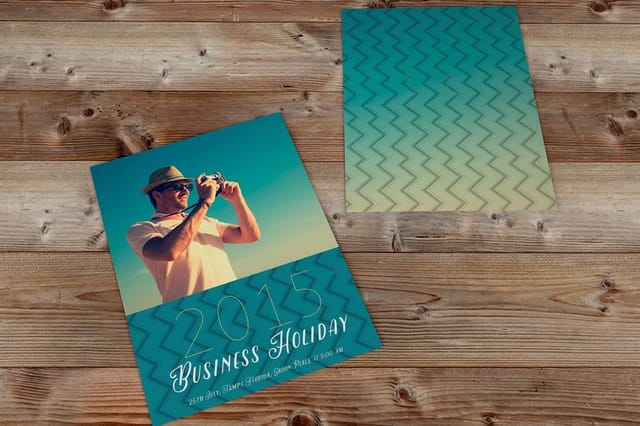
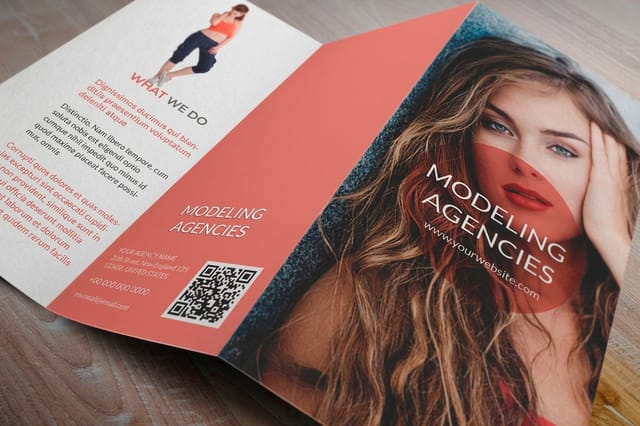
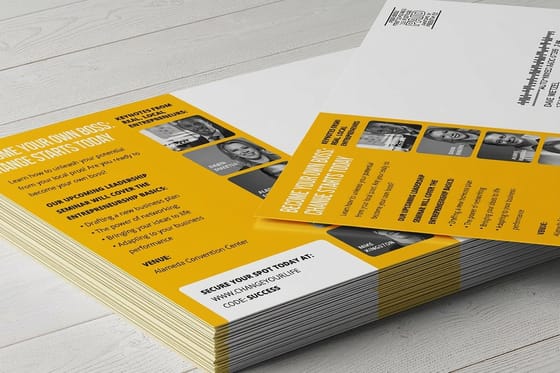
This is where a physical piece earns its place in the sequence rather than at the end of it. A mailed offer carries reciprocity and scarcity at the same time: the reader keeps the object and the object holds a date. Standard Postcards start at $16.48, which makes them the cheapest way to put a dated offer in a hand, and Standard Brochures start at $57.11 when the proof needs more room than one side of a card. If you want the numbers behind mail response before committing, we collected them in 338 direct mail statistics.
Friction Is Cheaper to Remove Than Desire Is to Create
Every conversion step has a visible cost and a hidden one. The visible cost is the money. The hidden cost is the effort, the exposure, and the number of small decisions you are asking someone to make while standing up on a phone.
Choice is the one people underestimate. Sheena Iyengar and Mark Lepper ran the study everyone half remembers, the supermarket jam display: the large assortment attracted more people to stop, and the small one produced far more purchases. The lesson is not that variety is bad. It is that browsing and buying are different jobs, and a page doing both at once does neither. Show the range on the category page, show one recommended configuration on the decision page.
The same applies to form length. Every field you delete raises submissions. It also lowers average lead quality, because friction was quietly filtering out people who were never going to buy. That trade is the whole decision, and it depends on what a bad lead costs you. If following up is an email, take the volume. If following up is an hour of a technician's day, keep the qualifying question and accept fewer submissions. Treating "fewer fields" as a universal law is how teams double their leads and halve their revenue.
Three cuts that cost nothing and work almost everywhere: put the starting price on the page instead of behind a quote request, replace a date picker with two buttons, and say how long the step takes before the person starts it. "Two minutes, three questions" changes the estimate of effort more than any reassurance about privacy. For the layout side of the same problem, the anatomy of a postcard shows how little room an offer actually needs, and these lead generation strategies cover where the traffic comes from in the first place.
Trust Moves at the Speed of Evidence, Not Adjectives
Ask a stranger to believe you and they will not. Show them something checkable and the question stops being about belief. This is the least glamorous part of conversion psychology and the part that moves the most people.
Specificity is the mechanism. "Fast turnaround" is unfalsifiable, so a careful reader discounts it to zero. "Printed and shipped in two business days from Queens" can be verified, which is exactly why it reads as true. The same swap works on every claim you have: replace the adjective with the number behind it, and if there is no number behind it, delete the sentence instead of dressing it up. That single edit does more for a page than any button color experiment.
Ordering matters as much as content. Proof placed after the ask is defensive. Proof placed just before the ask removes the objection while it is still forming. Put the price near the guarantee, the guarantee near the button, and the customer's name and trade next to both.
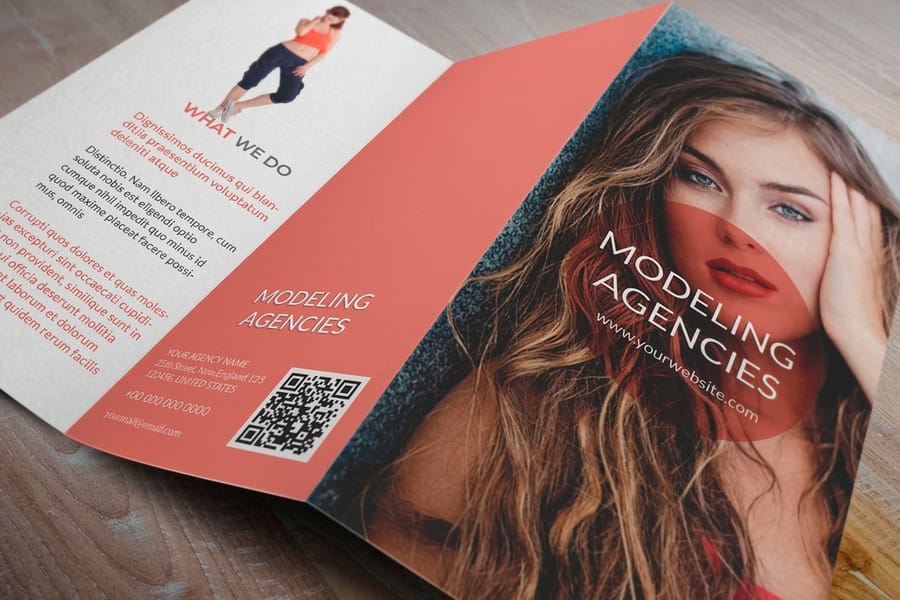
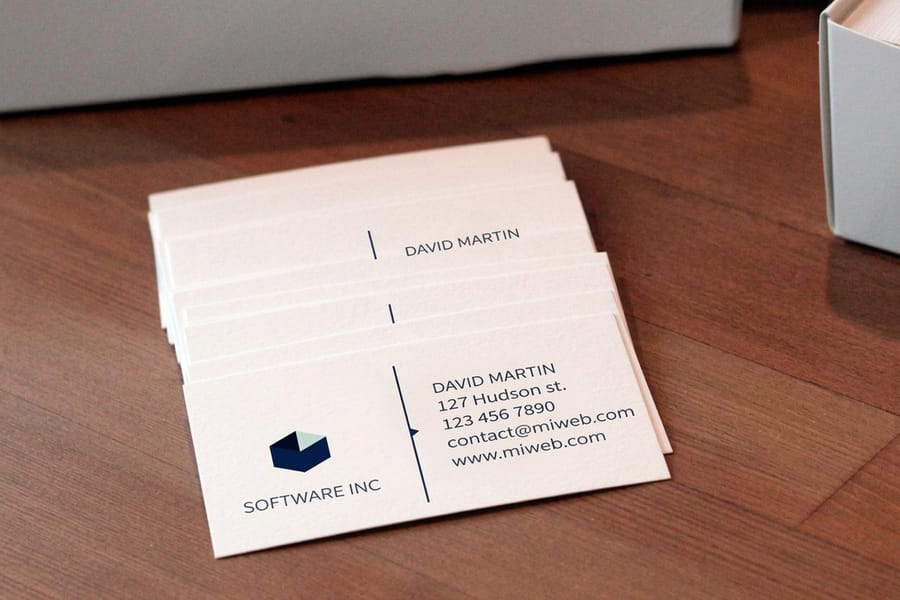
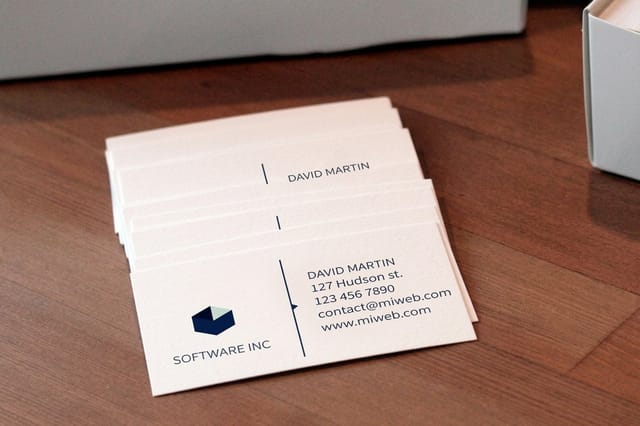
Physical objects do something a page cannot: they survive the session. A tab closes and the offer is gone. A business card starting at $17.57 stays in a wallet, and a brochure gets handed to the partner who was not in the room, which is where a surprising share of decisions actually get made. That persistence is the argument for print inside a mostly digital funnel, not nostalgia. The full range sits under brochure printing, and if the message itself is the weak part, start with brand messaging for small business.
Testing Without Fooling Yourself
The dangerous part of this subject is that every idea in it sounds right, which makes it easy to redesign a page around a principle and then find the evidence that agrees with you. A few habits keep that honest.
Run one change at a time when the traffic supports it, and change several things at once when it does not. That sounds backwards until you count visitors. A page with a few hundred visits a month cannot resolve a small difference, so testing a headline variant there produces noise you will read as a result. At that volume, make changes big enough to see without statistics and judge them on leads over a full month.
Stop at a sample size you set in advance. Watching a test and calling it the first time it looks good is the most common way small teams get confidently wrong answers, because early numbers swing wildly and eventually one of them swings in your favour. Write down the number of conversions you will wait for, then wait for it.
Beware the local peak. Optimising a form endlessly can leave you with the best possible version of the wrong ask. Once a quarter, test the ask itself rather than the wording: a price list instead of a consultation, a sample pack instead of a demo, a mailed piece instead of a fourth email. Offline channels need the same discipline, which is why flyer distribution practice is worth reading before judging a drop that did not work.
The Conversion Psychology Checklist
Work down this list on one page or one campaign at a time. Most businesses find three or four items they can fix in a day, and those are usually worth more than the redesign they were planning.
- Name the one action. If a page has three equal buttons it has no primary action. Pick one, make the others plainly secondary.
- Count the cost of the ask. Fields, clicks, minutes, and exposure. Write the number down, then cut it in half and see what actually breaks.
- Put a real number on every claim. Days, sizes, prices, quantities. Delete any sentence that survives having your business swapped for a competitor's.
- Show the price, or show the range. Hiding it does not remove the objection, it relocates the decision.
- Place proof immediately before the ask. One named customer in the reader's trade beats a row of logos.
- Use only deadlines that are true. Press cut offs, seasonal dates, and printed expiry dates all qualify. Rolling countdowns do not.
- Make the first step small. Offer the cheapest yes you have, and let the sequence carry the expensive one.
- Give the offer something to live on. A mailed card, a leave behind, a sample. Something that is still in the room next week.
- Re read the page as a sceptic. Mark every line you would not believe from a stranger, and either prove it or cut it.
- Decide what you will measure before you change anything. Leads per month, not clicks, and a fixed window.
The print side of that list is deliberately cheap to run. Standard Flyers start at $39.54 for a single page offer you can hand out or leave behind, and the mailing options sit in the direct mail services collection. More strategy reading lives in our marketing strategy guides.
Wally explains why people say yes
Shorten the ask before you sharpen the argument
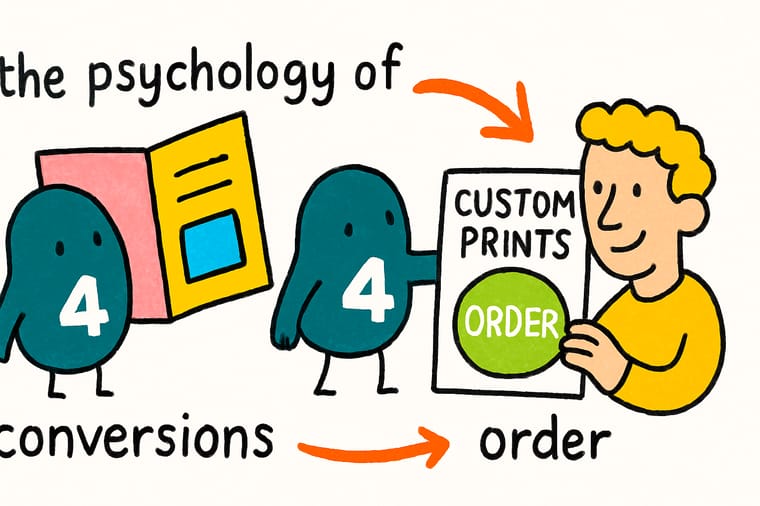
Wally has two versions of the same offer. On the left, eleven questions and a promise that the service is excellent. On the right, three questions, the starting price in plain view, and one customer named with their trade. Same product, same day, same visitor. The short one gets filled in because the person is measuring effort against reward in about four seconds, and only one of those two things is under your control this afternoon.
Print a postcard offer →Specs and pricing
The pieces that carry an offer, sizes and starting prices
Postcards for the dated ask, brochures for the proof that needs room, flyers for the leave behind. Live configuration choices and starting prices straight from the 4OVER4.COM configurator.



Print it
Put the offer somewhere it survives the week
Explore more
Where to go next

By the numbers
Who prints the marketing pieces in this guide
Common Questions
Your conversion psychology questions, answered
What is conversion psychology, in plain terms?
It is the study of why a person takes the next step, or does not. The useful version has three parts: how much the person wants the outcome, how hard the next step looks, and whether a prompt reaches them at a moment when both of those line up. BJ Fogg wrote that as behavior happening when motivation, ability and a prompt arrive together. Most failed conversions are not a wanting problem. The prompt showed up when the person was busy, or the step looked like more work than the outcome was worth.
Which persuasion principle actually moves the most people?
Social proof, when it comes from people the reader recognises as being like them. Robert Cialdini grouped the levers as reciprocity, commitment and consistency, social proof, authority, liking and scarcity. In practice social proof is the one that scales, because it costs nothing to show and it answers the question the visitor is silently asking, which is whether anyone like them has already done this and been fine. The catch is that proof from the wrong crowd reads as evidence you are not for them.
Do fewer form fields always mean more conversions?
They almost always mean more submissions. That is not the same as more revenue. Every field you delete raises volume and lowers average quality, because the friction you removed was also filtering out people who were never going to buy. If your sales team is the bottleneck, a short form buries them in noise. Match the length of the form to the cost of a bad lead: three fields when a lead costs you an email, more fields when a lead costs you an hour on site.
Why does print still convert when everything is online?
Because of persistence and because of the reciprocity reflex. A web page exists only while the tab is open. A postcard sits on a counter for a week, and a brochure gets handed to the person who was not in the room. Cialdini describes reciprocity as the pull to give something back after receiving something, and a physical object given without asking triggers it more reliably than a PDF. It is also why sample packs and printed guides outperform gated downloads for high consideration purchases.
How many people do I need before an A/B test means anything?
More than most small sites get in a week. The honest answer is that if a page sees a few hundred visitors a month, you cannot reliably detect anything smaller than a large swing, and stopping the test the moment it looks good is how teams convince themselves of effects that are not there. At low traffic, spend your effort on changes big enough to see without statistics: cutting the form, writing a specific headline, adding a real price. Save split testing for the pages with the volume to support it.
What is the single most common conversion mistake?
Asking for the biggest commitment on the first contact. A stranger will not book a consultation, but they will take a price list. Rank your asks by cost to the visitor and offer the cheapest one first, then let the relationship carry the heavier ones. The second most common mistake is hiding the price, which does not remove the objection. It just moves the decision to a competitor whose price is visible.
Get Started
Brochures run 50 for $57.11, business cards 100 for $17.57
Print the piece that keeps your offer in the room: a dated postcard, a brochure that answers the objection, or a card that stays in a wallet long after the tab closed.
Legal Disclaimer
Gold Standard guarantees apply to all standard orders placed through 4over4.com. Price match requires verifiable proof of a competitor's published price for an equivalent product with matching specifications and turnaround time. Satisfaction guarantee covers manufacturing defects and print quality issues. Contact support with order number and documentation. On-time delivery rate based on tracked orders 1999 to 2026. Individual results may vary based on shipping carrier performance.
