
Retail Signage Printing From the Curb to the Register


Which sign goes where, which material survives the position, how big the letters have to be, and what the whole set costs to print.
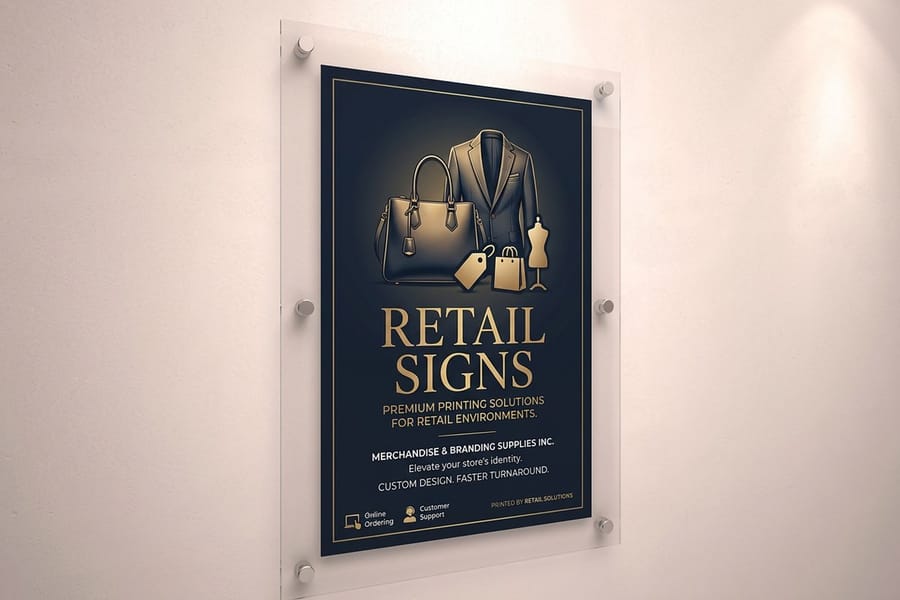
Retail signage is five signs, not one: identification at the curb, window graphics at the sidewalk, an A-frame with this week's reason to enter, interior direction, and small cards at the point of decision. Size the copy at roughly one inch of letter height per ten feet of reading distance, pick the substrate by exposure rather than by looks, and check the landlord's sign criteria before ordering anything permanent.
Quick answer
Five positions, sized by how far away they are read
A retail signage plan is a chain of five signs, each read from a different distance. The fascia or banner is read from the road, the window from the sidewalk, the A-frame from a few steps away, aisle signs from inside, and shelf cards from arm's length. Letter height follows distance at about one inch per ten feet, and material follows exposure: foam core indoors, coroplast and scrim vinyl for a season outdoors, aluminum and acrylic for years.
The Five Signs Every Store Needs, Curb to Counter
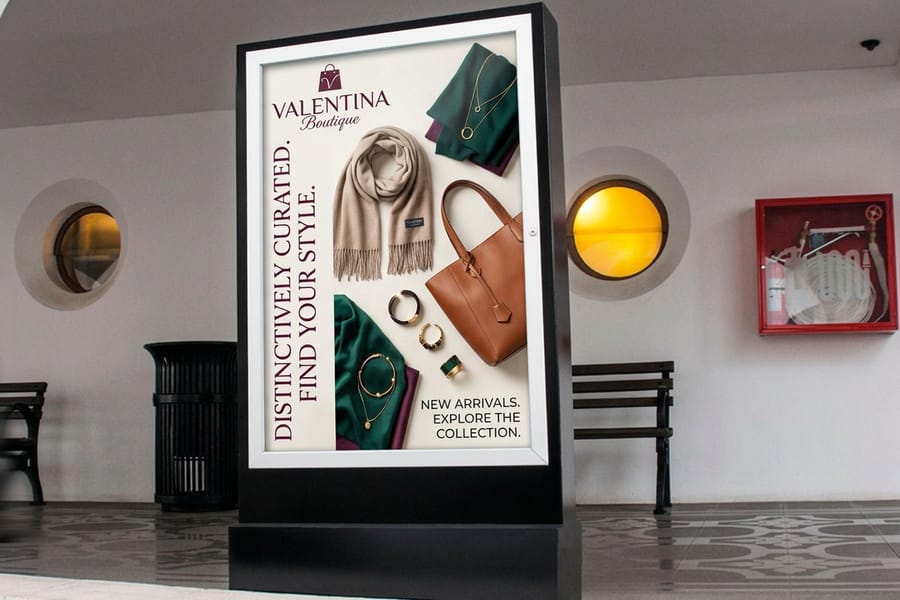
Retail signage is not one purchase, it is a chain of five, and each link is read from a different distance by a customer in a different frame of mind. Buy them out of order and the expensive one usually does the least work.
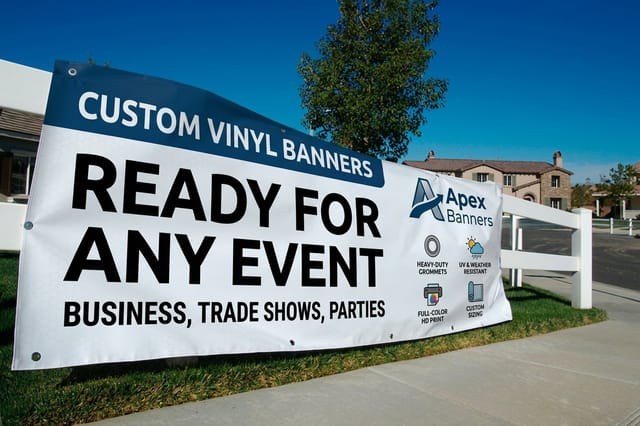
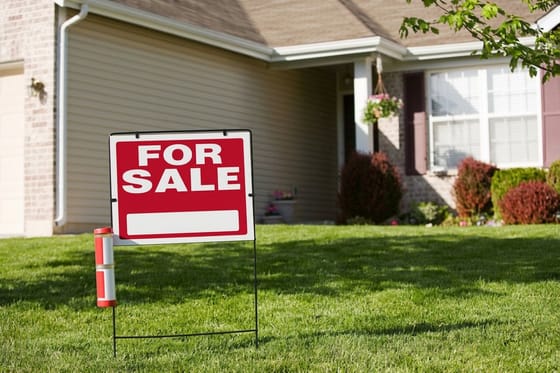
The identification sign answers "what is this place" from the road. Fascia letters or an aluminum panel do it permanently. A vinyl banner does it in three days for $79 while permitting drags on, which is why almost every new store hangs one.
The window answers "are you open and do you have what I want" from the sidewalk. Hours, a logo, and one promotion. It is the surface most stores waste completely.
The sidewalk sign answers "why today". An A-frame or a sandwich board carries one offer, changed weekly. This is the only sign in the chain that is supposed to be temporary.
Interior direction answers "where do I go". Aisle markers, department headers, fitting rooms, restrooms. Our wayfinding signage planning guide covers laying that out before you print anything.
Point of decision answers "should I take this". Shelf talkers, price cards, counter signs at the register. Small, cheap, and the ones that move units. The indoor signage guide goes deeper on the interior half of the chain.
Windows and Floors, the Two Surfaces Most Stores Waste
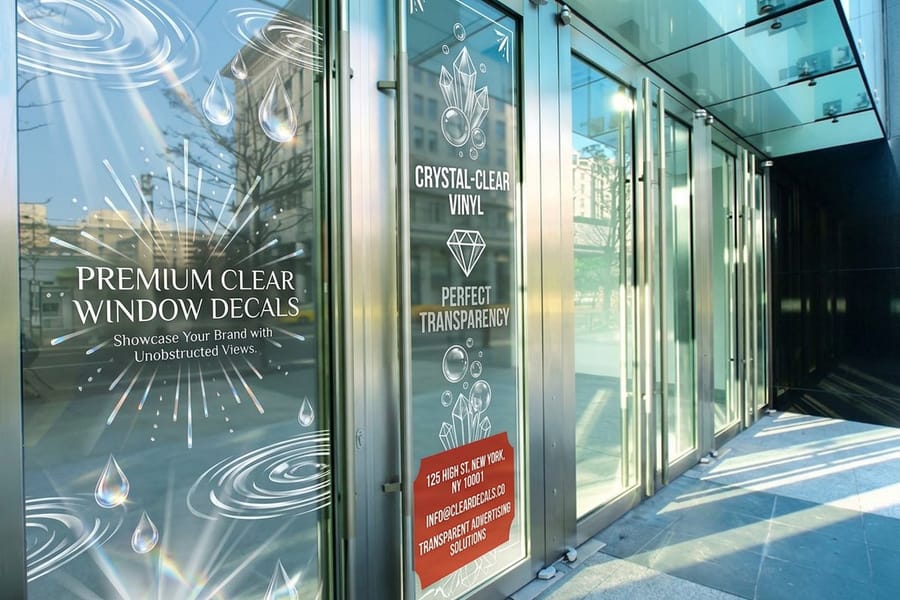
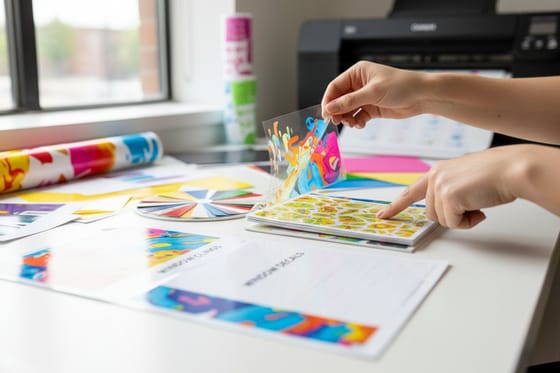
A storefront window is advertising space you already pay rent on, and it works after you have locked up for the night. Three materials cover almost every case.
| Window option | How it attaches | Best for | Starts at |
|---|---|---|---|
| Clear window decals | Adhesive vinyl, applied to the inside or outside of the glass. | Hours, logos, door graphics and anything that stays up for a year. | $30 |
| Perforated window decals | Perforated film that covers the full pane and keeps the view out. | Covering a large window with a graphic without darkening the store. | $30 |
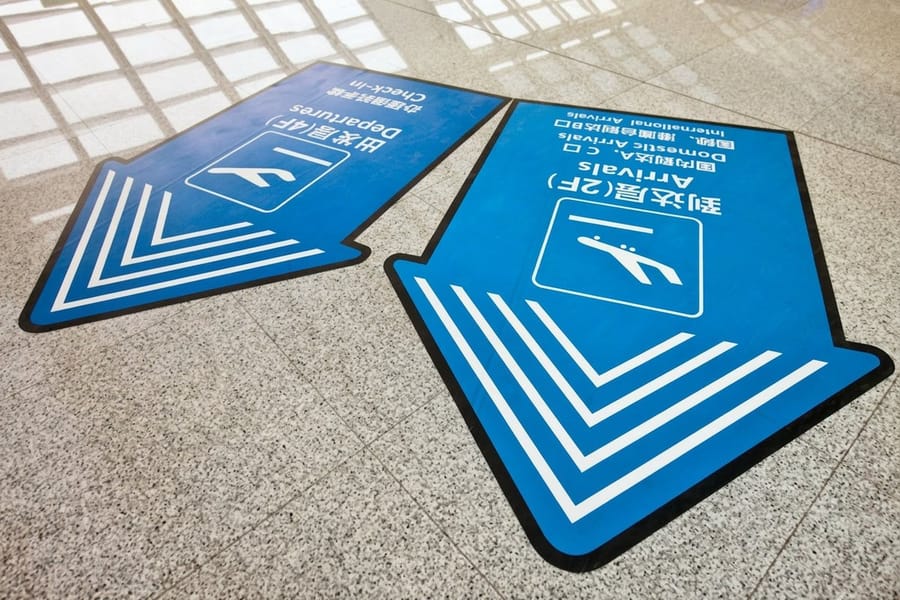
| Floor graphics | Adhesive vinyl with a slip resistant laminate, applied to sealed floor. | Aisle direction, queue spacing, and promotions at the point of decision. | $34 |
Two practical rules save most of the grief. First, decide which side of the glass the graphic goes on before you design it, because outside application survives cleaning and weather while inside application survives vandalism and reads reversed if you order it wrong. Second, perforated film is vinyl punched with thousands of small holes, commonly around a 70/30 split of material to open area, so the image reads as solid from outside and washed out from inside. That is exactly what you want on a display window and exactly wrong on a door you need to see through clearly.
Floor graphics need a floor that is sealed, smooth and clean. They will not hold on unsealed concrete, on rough tile grout, or on anything freshly waxed. Give the adhesive 24 hours before the first mop.
Sign Materials and How Long Each One Really Lasts

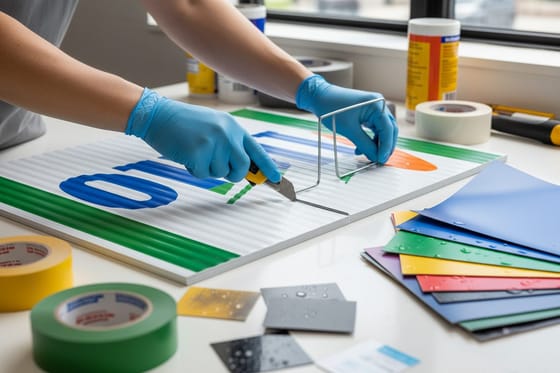
The single most common retail signage mistake is buying an indoor material for an outdoor position. Substrate is chosen by exposure first and appearance second.
| Material | What it is | Holds up | Use it for |
|---|---|---|---|
| Foam core | Paper-faced foam board, light and rigid. | Indoors only. Moisture delaminates the face and the board warps. | Easel signs, window displays, in-store promos. |
| Coroplast | Fluted polypropylene, the yard sign standard. | A season or two outside before the flutes bow. | Short-run outdoor signs, stakes, temporary promos. |
| Scrim vinyl | 13 ounce woven banner stock with hems and grommets. | A season or two outdoors, longer under cover. | Grand openings, seasonal sales, fence and wall hangs. |
| Aluminum | Solid metal panel, print protected on a rigid face. | Years outdoors without warping or fading badly. | Parking, regulatory, permanent building signs. |
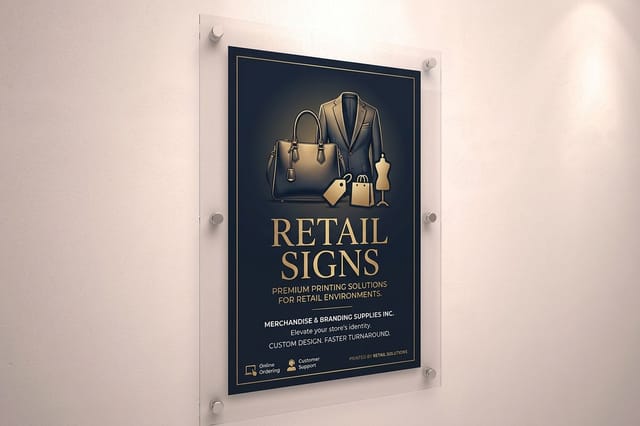
| Acrylic | Cast sheet with printed or applied graphics, often standoff mounted. | Years indoors, holds gloss and edge quality. | Lobby, reception, premium interior identification. |
The trade-off is honest and it is about replacement cycles. Foam core signs start at $49.99 and are meant to be thrown away when the promotion ends. Aluminum A-frames start at $146.07 and are meant to outlive several graphics. If a message changes every six weeks, spend nothing on the substrate and everything on the design. If it never changes, buy metal once and stop buying.
Wind is the other factor people underestimate. A solid banner on an exposed fence acts like a sail, and the grommets tear before the vinyl does. Mesh banner stock lets air through and is the right call on any fence or rooftop hang. Our comparison of banners versus signs covers when to hang fabric at all rather than mount a rigid panel.
Sizing Copy So It Reads From Where People Actually Stand
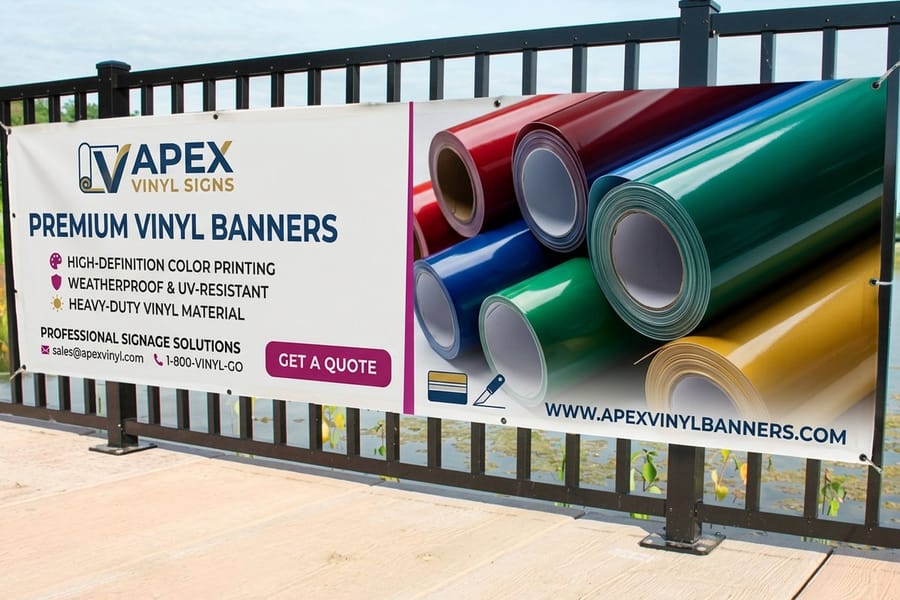
Sign copy is sized by reading distance, not by taste. The working rule across the sign trade is one inch of capital letter height for every ten feet of reading distance for comfortable legibility.
- 100 feet, across a parking lot. The largest word needs about 10 inch caps. That is the store name and nothing else.
- 50 feet, from the road. About 5 inches. A banner headline plus one supporting line.
- 25 feet, on the sidewalk. About 2.5 inches. One offer, one call to action, on an A-frame.
- 10 feet, at the glass. About 1 inch. Hours, a logo, a short list of services on a window decal.
- 3 feet, hand to eye. A quarter to a third of an inch. A shelf card can carry an actual sentence.
Run this rule backwards and it becomes an editing tool. If the headline needs 5 inch letters and the banner is 2 feet tall, you have room for roughly three lines total. Everything else gets cut. That is the real reason most retail signs fail: not the size of the sign, but the number of words fighting for it.
Contrast matters nearly as much as size. Dark type on a light field, or light type on a saturated dark field, reads at distance. Mid-tone type on a mid-tone photo does not, no matter how large it is. Our notes on the best colors for advertising signs cover the combinations that hold up outdoors, and business sign design tips covers layout hierarchy on the sign itself.
Files, Hems, Grommets and the Details That Sink Sign Jobs
Large format forgives less than small format in some ways and far more in others, and knowing which is which saves a reprint.
Resolution. A banner does not need 300 dpi at final size. Nobody reads a 6 foot banner from six inches away. Build at full size around 100 dpi, or at quarter scale at 300 dpi and let it scale up. Vector logos and type stay vector, always, and get converted to outlines before upload.
Safe margins. On rigid signs, keep live copy at least half an inch inside the trim. On banners, keep it further in, because the hem folds over the top and bottom edge and takes about an inch with it. On anything grommeted, keep copy clear of the corners where the grommets punch through.
Grommets and hems. The standard hang is a folded and welded hem all around with grommets every two feet along the perimeter and one in each corner. Fewer grommets means the banner scallops between fixing points and the print stresses at each hole.
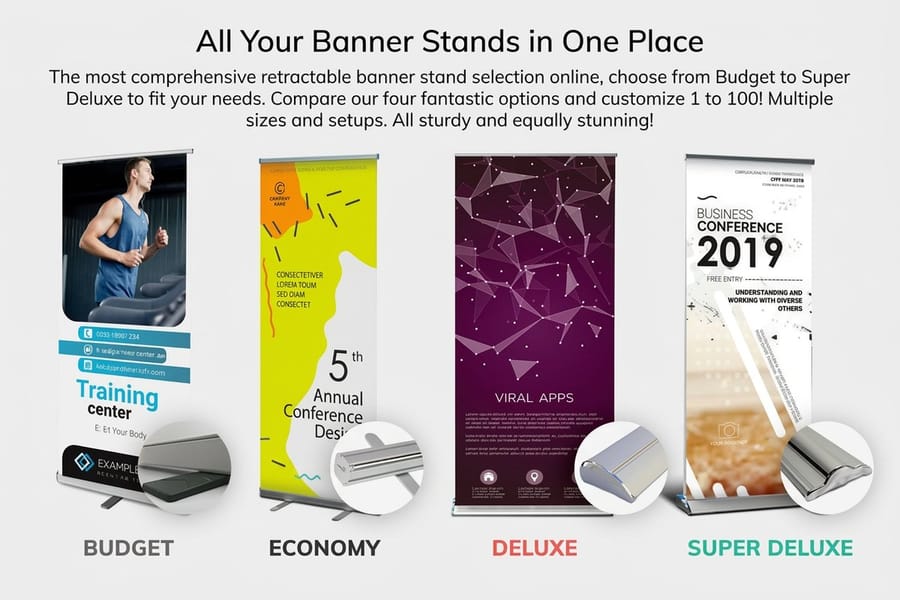
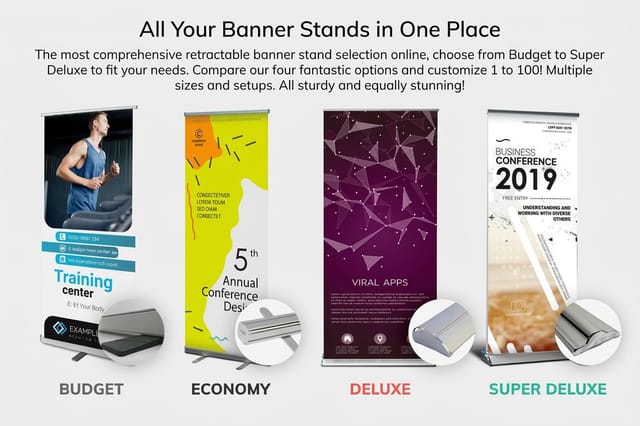
Mounting. Decide before printing. A rigid sign that will be screwed to a wall needs a hole allowance in the layout. A retractable stand needs the bottom several inches kept clear of critical copy because the base hides them. Retractable banner stands start at $139 and travel between store, trade show and sidewalk, which makes them the most reused piece in most retail kits.
Start from a correctly built file rather than fixing one. The blank template library has print-ready starting files at the standard sign and banner sizes, and the standard banner sizes guide explains which dimension suits which hang.
What Retail Signage Costs and Where to Spend First
A first signage order for a small store lands in a predictable range, and the order of spending matters more than the total.
Start with visibility from outside. Retail signs start at $25 and vinyl banners at $79, so a banner over the entrance plus a pair of window signs covers the "we exist and we are open" job for roughly the price of a single permanent panel. Clear window decals at $30 add the hours and the service list to glass that was doing nothing.
Then buy the sidewalk. An A-frame is the only sign in the store that changes its message weekly, and weekly change is what keeps regulars looking. Aluminum A-frames start at $146.07 and hold interchangeable inserts, so the frame is a one-time cost and the graphics are the recurring one.
Interior signage comes last and costs least. Foam core signs at $49.99 handle promotions and displays, and floor graphics at $34 direct traffic where aisle signs would be in the way. Browse the full retail printing collection to see the range, and retail sales tactics for what to put on the signs once they are up.
One caution on budget: do not spend the permanent-sign money before you have the landlord's sign criteria and the city permit answer in hand. Stores that print aluminum first and read the criteria sheet second buy it twice.
Wally sets up a store
One sign per distance, curb to counter
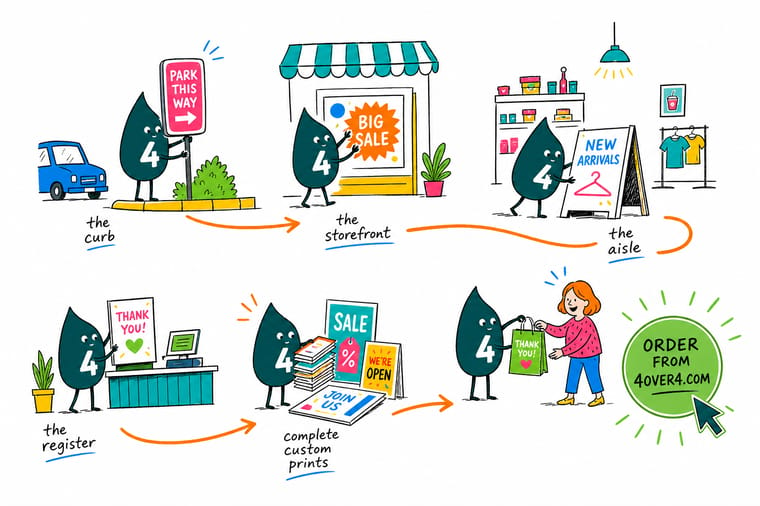
Wally starts at the road with the big name, because that is the only word anyone reads at 100 feet. On the glass he puts the hours and what you sell. On the sidewalk he stands an A-frame with one reason to come in today, and he swaps it every week. Inside, the aisle signs point and the shelf cards persuade. Same store, five distances, five different sign sizes. Get the distance wrong and the sign is invisible no matter how much it cost.
Order retail signs →Specs and pricing
Sizes, materials and starting prices
Configure the three pieces most retail stores order first, with live size and material choices and starting prices straight from the 4OVER4.COM configurator.

Print it
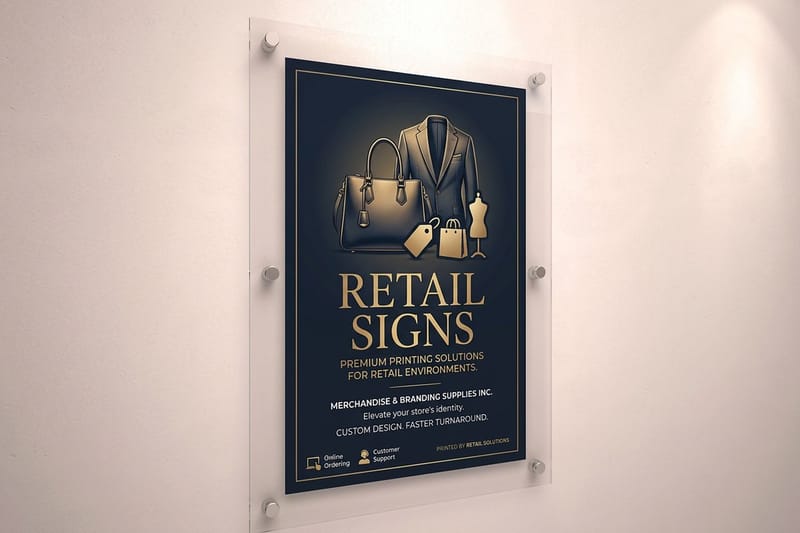
Print the signs that get people through the door
Explore more
Where to go next
By the numbers
Retail sign and print work across our catalog
Common Questions
Your retail signage questions, answered
What signs does a small retail store actually need to open?
Four pieces cover the opening week. A banner or a fascia sign so people know the name from the road, window graphics with the hours and what you sell, an A-frame on the sidewalk with the reason to walk in today, and small in-store signs for pricing and promotions. A grand opening banner does the heavy lifting for the first month while a permanent fascia sign goes through permitting, which is why most stores order the banner first and the aluminum sign second.
How big should the letters on a retail sign be?
Allow roughly one inch of capital letter height for every ten feet of reading distance. A sign read from 100 feet across a parking lot wants 10 inch letters on the main word. A sidewalk A-frame read from 25 feet wants around 2.5 inches. A shelf card held at arm's length is fine at a quarter inch. The mistake is not the sign size, it is putting three lines of copy where one line of large type belongs. Cut the words until the largest one fits the distance.
What is the difference between a window cling and a window decal?
A cling is a static vinyl with no adhesive. It holds to glass by surface tension, peels off clean, and can be moved and reused, which suits seasonal promotions applied from the inside. A decal is adhesive vinyl that bonds to the glass and stays put through weather and cleaning, which suits hours, logos and anything that lives on the door for a year. Clings are easier to remove, decals survive an outside surface. Our breakdown of window clings versus window decals walks through both applications.
How long does outdoor retail signage last?
It depends on the substrate and the sun. A 13 ounce vinyl banner holds up outdoors for about a season or two before the print fades and the hems fray. Coroplast lasts a similar stretch and then starts to warp along the flutes. Aluminum and acrylic hold color and shape for several years because the print is protected and the panel does not flex. If a message changes seasonally, buy the cheap material and replace it. If the message never changes, buy the metal once.
Do I need a permit for a retail sign?
For anything permanently attached to the building, usually yes, and the rules come from two directions. The city or county sign ordinance controls size, height, illumination and how many signs a storefront may carry. A landlord in a shopping center adds its own sign criteria on top, which often dictates letter style, color and the maximum fascia area. Portable signage on your own property, window graphics and interior signs are typically outside that process. Ask the landlord for the criteria sheet before designing anything permanent, because the criteria are stricter than the code more often than not.
What files do you need for large format signs?
Vector artwork wherever possible, and raster images built for the finished size. Photographs do not need 300 dpi at 4 feet wide because nobody reads a banner from six inches away, so build the file at full size around 100 dpi, or at quarter scale at 300 dpi and scale it up. Convert type to outlines, use CMYK, and keep live copy at least half an inch inside the trim on rigid signs and further inside on banners where a hem folds over the edge. Our blank template library has correctly sized starting files for the common sign and banner sizes.
Get Started
Aluminum A-frames cost $146.07 and ship in four business days
Pick the size, choose the material for where the sign will live, and we print banners, window decals and rigid signs that read from the distance they need to.
Legal Disclaimer
Gold Standard guarantees apply to all standard orders placed through 4over4.com. Price match requires verifiable proof of a competitor's published price for an equivalent product with matching specifications and turnaround time. Satisfaction guarantee covers manufacturing defects and print quality issues. Contact support with order number and documentation. On-time delivery rate based on tracked orders 1999 to 2026. Individual results may vary based on shipping carrier performance.
