
Table Cards Explained, From Tents to Place Cards and Table Numbers


Three different cards end up on a table and they are not interchangeable. Each one does a different job, holds its shape at particular sizes and folds, and suits either a restaurant or a reception.
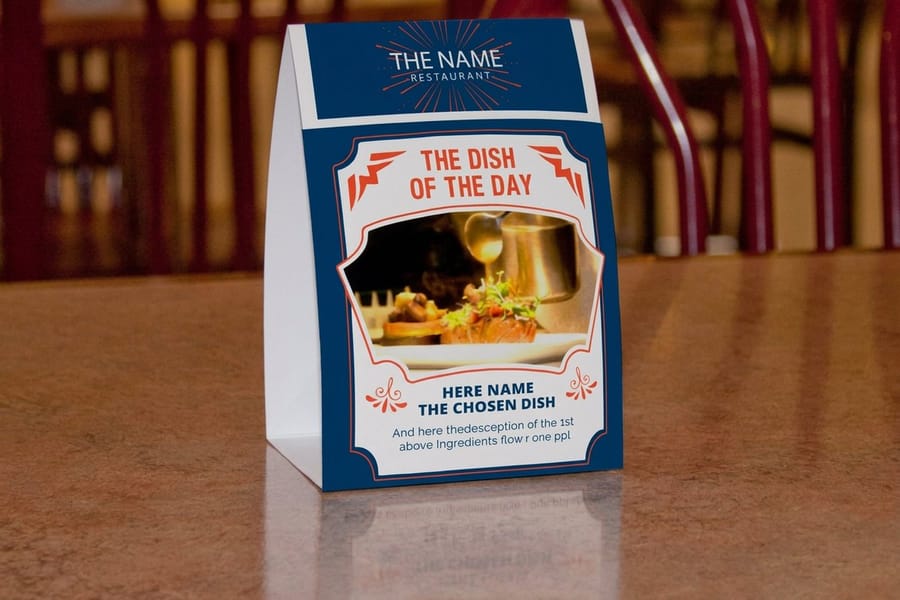
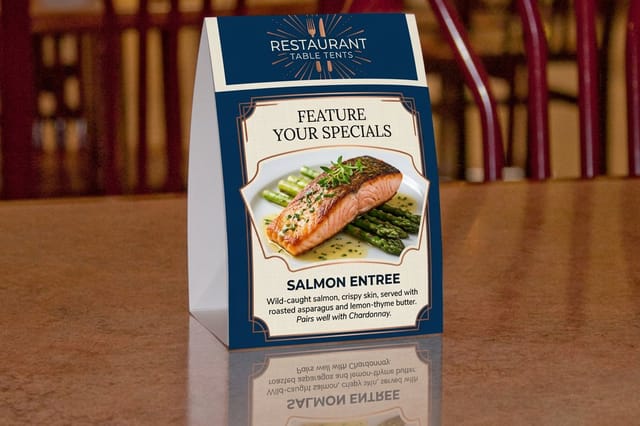
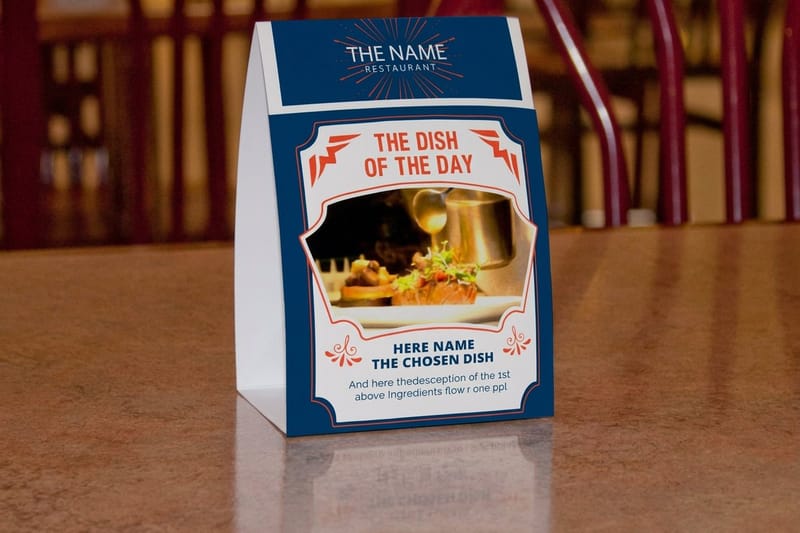
A table tent is a folded card that stands on its own and sells to whoever sits down. A place card names one guest at one seat, and a table number card labels the table so guests can find it from the doorway. Tents are a bulk item, printed 4 by 6 or 5 by 7 on 14pt to 16pt cover with a top fold. Place cards and number cards are short runs on notecard stock, one per guest and one per table, and they usually match the invitations.
Quick answer
One folds at the top, one names a chair, one labels the table
Pick the card by the job, then by the fold. A table tent carries an offer and stands unaided because it folds at the top onto two leaning panels, which is also why its second panel has to be rotated 180 degrees in the file. A place card is small, folded or flat, and exists to name one guest at one setting. A table number card is bigger, ideally double sided, and only needs a holder if you print it flat. Restaurants buy tents in bulk and rotate the copy; receptions buy short, exact runs that match the invitations.
The Four Cards That End Up on a Table

People call all of them table cards, then order the wrong one. The four formats look similar in a catalog and behave nothing alike once they are on a table.
| Card | What it does | Typical finished size | How it stands |
|---|---|---|---|
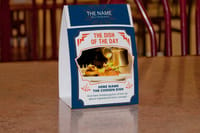
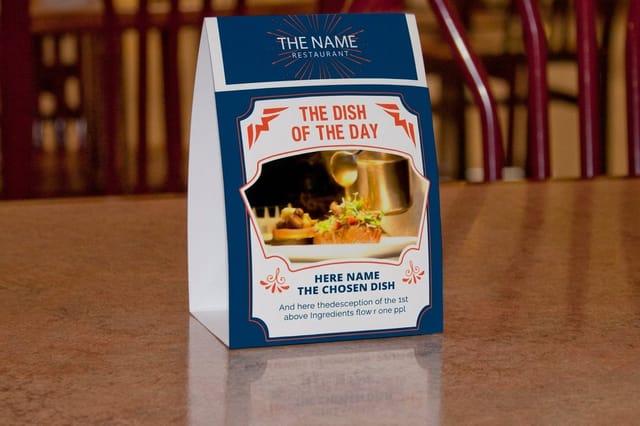
| Table tent | Sells to whoever sits down: specials, cocktails, a QR code to the online menu. | 4 by 6 or 5 by 7 | Folds at the top and leans on its own two panels. |
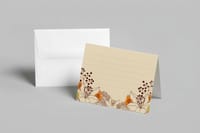
| Place card | Assigns one named guest to one chair, and often carries the meal choice for the kitchen. | 3.5 by 2 folded, or 3.5 by 2 flat | Folded tent style at the setting, or flat in a small holder. |
| Table number card | Labels the table so guests holding an escort card can find it from the doorway. | 4 by 6 tent or 5 by 7 flat | Tent stands alone, flat needs an acrylic stand. |
| Counter card | Works at a register, a host stand or a bar rail rather than at a seat. | Larger and rigid | Sits against something or in a stand, read from standing height. |
Read the last column before you decide anything else. A format that stands by itself costs nothing to set up and nothing to collect; a flat card that needs a holder adds a per unit cost and a job for someone at the end of the night. That single difference is why restaurants order table tents by the box and why a reception with sixteen tables can get away with flat cards in stands it already owns.
The other split is quantity. Table tents are a bulk item and priced like one, from $554.39. Place cards and numbers are printed short, on flat notecards from $19.77 or folded notecards from $38.22, because the run is your guest list rather than a marketing campaign.
Sizes, Folds, and the Panel That Prints Upside Down
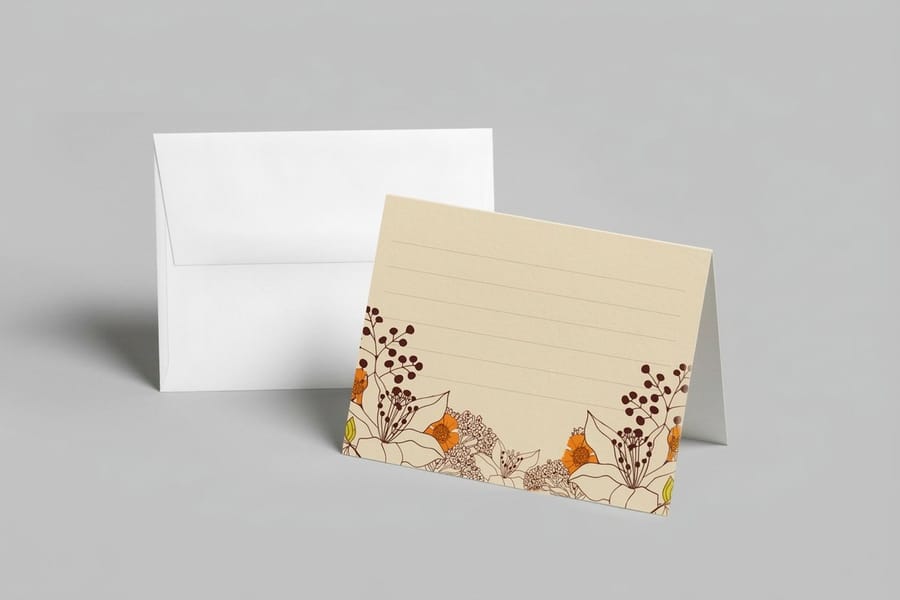
A tent card is one sheet with a score across it. Fold it at the score, tuck the flap under, and the two panels lean against each other. Everything that goes wrong with the format goes wrong at that score.
The flat size is not the finished size. A 4 by 6 finished tent is printed on a sheet around 4 by 12.5 inches: two 6 inch panels plus roughly half an inch of tuck flap. Build the file at flat size with the score positions marked, not at 4 by 6, or the artwork lands in the wrong half.
The back panel is rotated 180 degrees. Because both faces hang from a top fold, the second panel has to be upside down on the flat sheet so it reads upright once folded. It looks wrong in the layout and correct on the table. This is the single most common file mistake we see on tent jobs, and it is invisible until the box is opened.
Score, then fold, and mind the grain. Anything heavier than 100lb text needs a score before it folds, and the fold should run with the grain of the sheet. A cross grain fold cracks along the crease and the panel bows outwards, which is exactly the failure that makes a card lie down instead of standing.
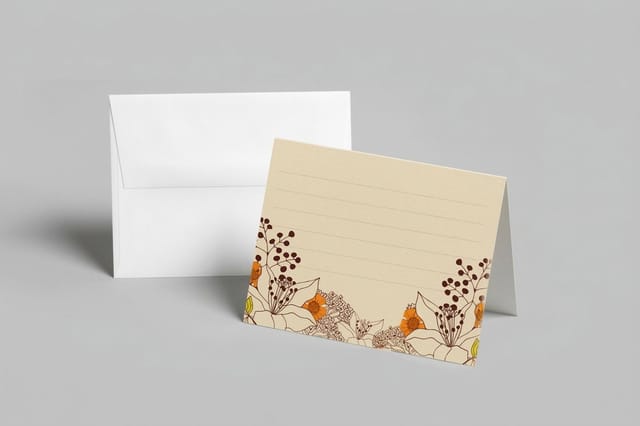
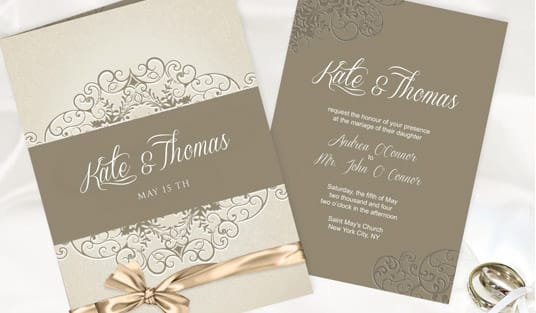
Place cards follow the same logic at a smaller scale: 3.5 by 2 finished, folded from a 3.5 by 4 flat, which is why they come off notecard stock rather than business card stock. Our card sizes guide lists every finished format side by side, and you can start from a correctly scored layout in the blank template library or from the free table tent templates.
Stock and Coating Decide How Long the Card Survives
A table card lives in the wettest, greasiest part of the room. Choose the stock for that, not for how it feels in your hand at the desk.
Fourteen point cover is the floor for a 4 by 6 tent. Move up to 5 by 7, or put the card on a table where people set down bags and lean on their elbows, and 16pt is worth the small step in price because the extra rigidity is what keeps the base from splaying. Coating is the second decision. Gloss and aqueous shrug off the ring a cold glass leaves and wipe clean with a service towel, at the cost of showing every fingerprint under warm lighting. Uncoated stock is the opposite: it takes a calligraphy pen or a fountain nib beautifully, which is why wedding place cards are almost always uncoated, and it absorbs a spilled drink permanently.
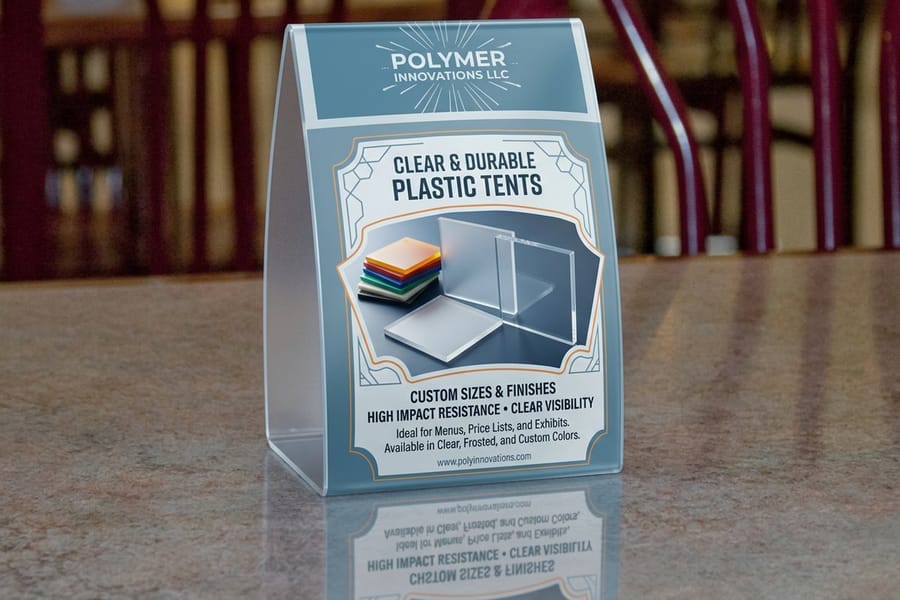
Where water and grease are a certainty, card stock is the wrong material. Plastic table tents wipe down, go through a bus tub without softening, and hold their fold for months on a patio or a bar top. They cost more per piece and less per month, and the arithmetic favours them anywhere you would otherwise reprint every few weeks.
Two file habits save most reprints. Keep an eighth of an inch of bleed and pull live text a quarter inch away from both the trim and the score, because a fold that drifts a millimeter will otherwise slice a descender. And put the message in the top third of each panel: a seated guest reads the upper part of a tent card and rarely turns it around. If you want the stock in your hand first, the cardstock weights guide explains what 14pt and 16pt actually mean in thickness.
What to Order for a Restaurant, and What to Order for a Reception

The two use cases pull in opposite directions, and mixing their rules is how budgets get wasted.
Restaurants buy in bulk and rotate. Count every surface that holds a card, not every table: two tops, banquettes, the patio, the bar rail, the waiting bench. Print a run of restaurant table tents with one offer per face so a single card carries the cocktail list and the dessert menu at once, and keep the design frame constant so the next seasonal run only changes the copy. Match the stock and the type to your menus and the table reads as one piece of design rather than three suppliers. At the register, a counter card does the job a tent cannot, because it is read standing up from four feet away.
Receptions buy exactly, then a little over. Place cards run to the attending guest count plus about ten percent for name corrections, late changes and the ones that get creased. Table numbers are one per table plus two, printed on both faces so the number reads from either side of a round. Print them with the rest of the stationery in one order, on the same stock as the invitation cards, so nothing arrives a half shade off from a separate run weeks later.
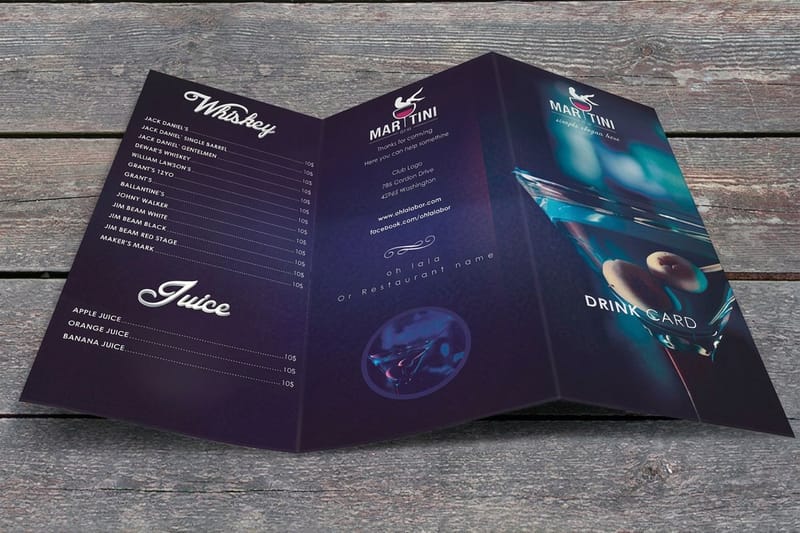
If you are pricing a whole restaurant refresh, the table tent range and the menu range sit next to each other and share sizes and stocks. For a dine in and takeout set that works with the tent on the same table, the restaurant menu sizes guide covers what fits where.
Wally sets the table
One card sells, one names a chair, one numbers the table
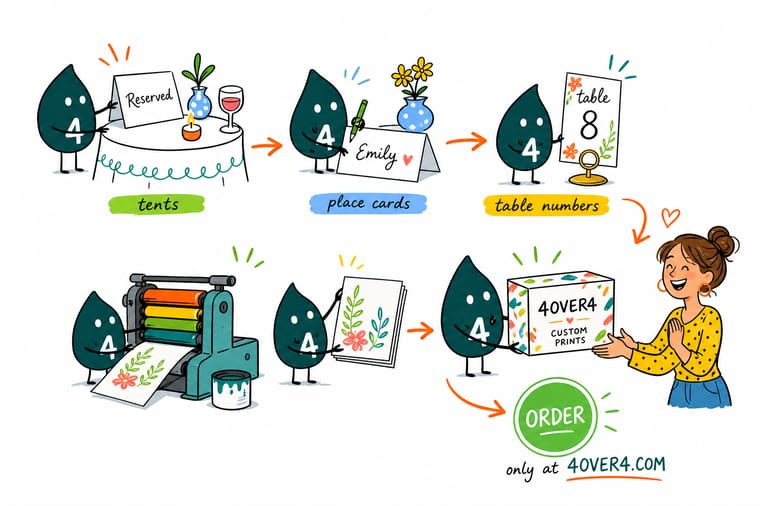
Wally folds the tent card at the top score and stands it up between the salt and the pepper, where it pushes the dessert list at everyone who sits down. The little folded card by the fork is a place card and it carries one name. The bigger one in the middle is the table number, printed on both faces so the far side of the round can read it too. His one rule: rotate the back panel 180 degrees before you send the file, or half the table gets the special upside down.
Order table tents →Specs and pricing
Sizes, stocks and starting prices for the table set
Table tents, folded notecards for place and number cards, and the menus that sit beside them, with live configuration choices and starting prices from the 4OVER4.COM configurator.
Print it
Print the cards your tables actually need
Explore more
Where to go next

By the numbers
Table cards printed to spec at 4OVER4
Common Questions
Your table card questions, answered
What size is a standard table tent?
Four by six inches finished is the everyday restaurant size, and five by seven is the one to pick when the card has to be read from across a six top or carries a QR code. The flat sheet is roughly twice the finished height plus a tuck flap, so a 4 by 6 tent starts life around 4 by 12.5 inches with two scores across it. Anything taller than 7 inches starts catching sleeves and elbows, which is usually the point where a counter card or a small sign is the better answer.
What is the difference between a place card and an escort card?
An escort card is picked up at the entrance and tells a guest which table to walk to. A place card is already sitting at the setting and tells that guest which chair is theirs. Plenty of weddings use only escort cards and let people choose their own seat at the table; plated dinners with a meal choice usually need place cards as well, because the kitchen matches the plate to the name and the marker on the card.
How many place cards and table numbers should I order?
One place card per attending guest, plus about ten percent, covers late RSVP changes, spelling corrections and the two that get creased in transit. Table numbers are one per table plus two spares, and worth printing double sided so the number reads from both sides of a round. Order both at the same time as the rest of the stationery so the stock and the ink match instead of arriving a shade apart from separate runs.
Do table number cards need a holder?
Only if you print them flat. A flat 5 by 7 number card has to sit in an acrylic or metal stand, which adds cost and one more thing to collect at the end of the night. Printed as a tent on 16pt cover it stands by itself, holds its position when someone reaches across the table, and stacks flat in a box afterwards.
What stock stands up to a working restaurant table?
Coated 16pt cover is the practical minimum, and plastic table tents are the honest answer for a bar top, a patio or anywhere near a fryer. Card stock absorbs condensation from a cold glass within a couple of shifts and the base starts to curl. Plastic wipes down, survives a bus tub and keeps its shape for months, which is why it costs more per piece and less per month.
Can I print a different offer on each face of a table tent?
Yes, and it is the most useful thing about the format. One face can push the cocktail list and the other the dessert menu, so the card works twice from a single print run. Keep each face to one message with the headline in the top third, because a seated guest reads the upper part of the card and never turns it around to look for more.
Get Started
Flat notecards run 25 for $19.77, table tents 250 for $554.39
Choose 4 by 6 or 5 by 7, pick 14pt or 16pt cover, and we score and fold tents that stand up through a full service, plus the place and number cards to match.
Legal Disclaimer
Gold Standard guarantees apply to all standard orders placed through 4over4.com. Price match requires verifiable proof of a competitor's published price for an equivalent product with matching specifications and turnaround time. Satisfaction guarantee covers manufacturing defects and print quality issues. Contact support with order number and documentation. On-time delivery rate based on tracked orders 1999 to 2026. Individual results may vary based on shipping carrier performance.
