
The 5S Methodology That Streamlines Work and Survives Past Month One


Sort, Set in Order, Shine, Standardize, Sustain. Each step asks something different of a team, the red tag rule keeps sorting moving, and an audit decides whether any of it lasts.
5S is a five step routine for organizing a work area and holding it there: Sort what does not belong out of the area, Set in Order what stays, Shine on a fixed schedule, Standardize the correct state in a photo, and Sustain it with a scored audit. The first two steps finish in a few days. The last three repeat for as long as the area exists, and that is where nearly every program stalls. What you can see afterwards is labeled locations, marked floor positions and a weekly score on the wall with a name against it.

Quick answer
Two steps are a project, three are a habit
5S organizes a work area in five fixed steps and then defends the result. Sort and Set in Order are a one time pass you can finish in a few days with the team that works there. Shine, Standardize and Sustain are small and repeating: a few minutes at the end of a shift, a photo of the correct state posted at the area, and a scored audit roughly once a week. Programs rarely fail on the cleanup. They fail when the three repeating steps lose their owner.
The Five Steps and What Each One Actually Asks You To Do

Each S is a separate decision, and each one leaves something you can see when it is done. That last part is the test. If a step finished and nothing about the area looks different, the step did not happen.
| Step | Japanese | The question it answers | What you can see afterwards |
|---|---|---|---|
| 1. Sort | seiri | Does this item belong in this area at all? | Emptier shelves and a red tag holding area with dated items in it. |
| 2. Set in Order | seiton | Where does it live, and how fast can someone find it? | Labeled shelf edges, marked floor positions, outlined tool boards. |
| 3. Shine | seiso | What is the cleaning telling us about the equipment? | A short end of shift routine, and leaks or wear found early. |
| 4. Standardize | seiketsu | What does correct look like when nobody is watching? | A photo of the finished state posted at the area itself. |
| 5. Sustain | shitsuke | Who checks, how often, and what happens on a fail? | A scored audit on the wall with a name and a date on it. |
The order is not decoration. Arranging before sorting gives every unnecessary item a permanent home, and standardizing before the layout settles means reprinting everything a month later. Work the steps forward, one area at a time, and finish an area before you start the next one.
Sort: the Red Tag Rule That Ends the Arguing

Sorting stalls on one sentence: we might need that. The red tag exists so nobody has to win that argument in the moment.
Set up a holding area away from the work zone. Anything the team cannot justify keeping gets a tag with the date it was moved, who moved it, and what it is. It goes to the holding area instead of the bin. Pick a window, commonly thirty to sixty days, and mark the review date on a calendar. If someone needs the item, they take it back and the tag comes off, which is real evidence that it belonged in the area. If nobody comes looking, it is sold, scrapped, or moved to long term storage on the review date.
Two things make this work. The tag must be filled in, because an untagged pile in the corner becomes permanent within a month. And the review date must actually arrive: a holding area that is never emptied has simply moved the clutter somewhere less convenient. Printed tags on adhesive stock or hanging card do the job; the point is that they are pre printed and identical, so filling one in takes ten seconds and nobody improvises with masking tape.
Sort with the people who use the area. A manager clearing a bench alone will throw out the one fixture that saves an hour a week, and the team will quietly rebuild the clutter to protect itself. If your program is landing on a workforce that has been through three failed initiatives already, the change management playbook is worth reading before you schedule the first event.
Set in Order: Place by Frequency, Then Make the Place Obvious
The rule that saves the most walking is dull: arrange by how often something is used, not by what it is. A category layout looks tidy in a photograph and costs steps every hour, because the drill bit you need twenty times a shift sits with drill bits you touch once a quarter. Sort the area into three rings instead. Arm reach for anything touched several times a shift, a few steps for daily items, another room for monthly and quarterly ones.
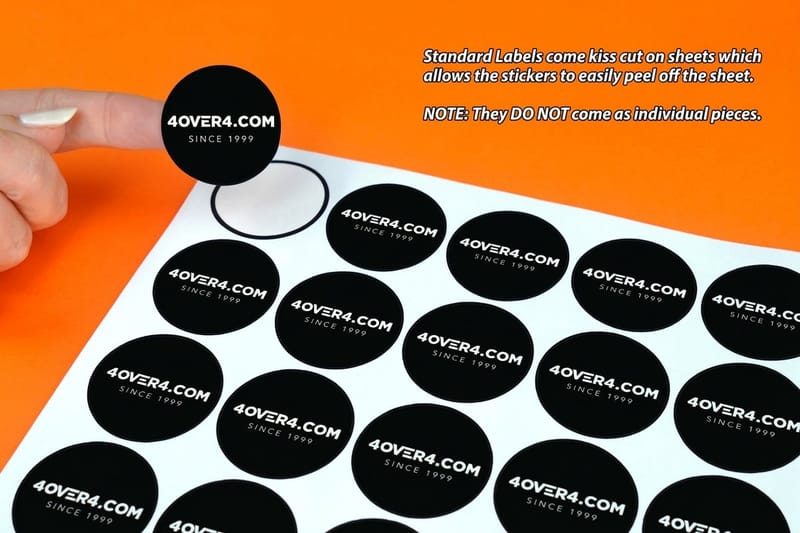
Then make the home visible, which is the part that turns a good layout into one that holds. Label the location, not just the item. A shelf edge that names what belongs there shows a gap the moment something is missing, while a label stuck on a box only tells you what you are already holding. At 4OVER4.COM custom labels start at $25 for shelf edges, bin fronts and drawer faces. In a wash bay, a cold room, or anywhere with oil in the air, paper curls and the adhesive gives up, so premium vinyl labels from $29.16 are the honest choice even though they cost more and are harder to peel off cleanly when the layout changes.
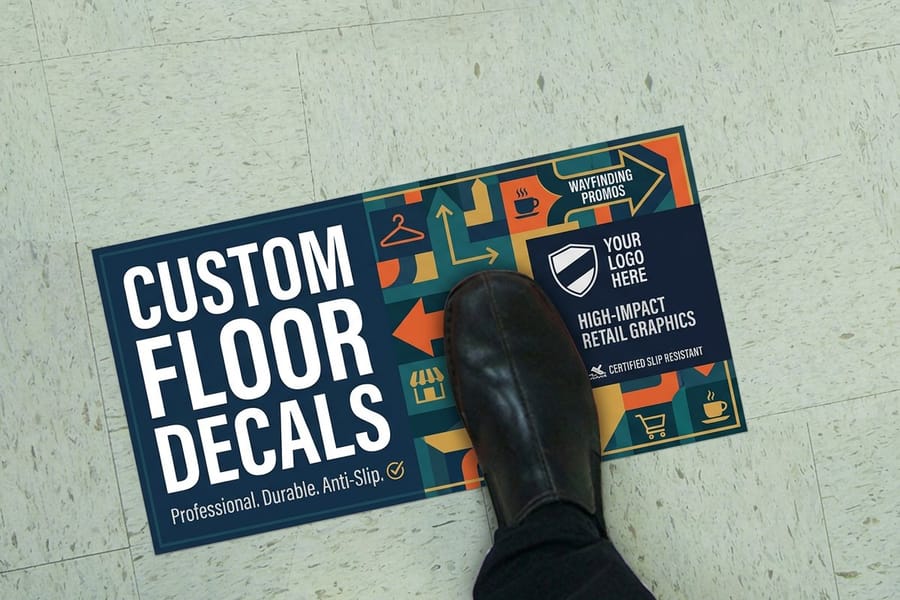
Anything that lives on the floor gets a marked position. Tape is cheaper and it is what most plants start with, but the corners lift under pallet jack traffic and it carries no information. Printed floor decals from $34 hold their shape under a laminate and can name what parks there, which is why an empty rectangle with a label reads as a problem rather than as spare floor. Bigger zones and departments need something readable from across the room: styrene signs start at $29 for interior walls, and outdoor or wash down areas justify the step up to aluminum signs at $36. Our indoor signage guide covers sizing and mounting height, and the label printing guide goes through adhesives and face materials in more detail.
Expect to be wrong somewhere. Print the first pass cheaply, live with it for a month, then reprint the handful of locations the team keeps working around. A layout that nobody adjusted after the first month is usually one nobody is following.
Shine and Standardize: Cleaning Is Inspection, and a Photo Is the Standard

Shine is the step that gets misread as janitorial work. Wiping a machine down is how an operator finds the weeping seal, the loose guard, the swarf building up where it should not. That is why the person who runs the equipment does the cleaning rather than a contractor at night: the cleaning is the inspection, and the value is in what gets noticed, not in the shine.
Keep it short and fixed. A few minutes at the end of a shift, the same few minutes every day, with the tools for it stored in the area rather than fetched from a cupboard down the hall. Write down what to check while cleaning, and note anything found in the same place every time so a pattern shows up over weeks.
Standardize is where you decide what correct looks like and put it where the work happens. A photograph of the area in its finished state, printed and posted at the area, outperforms a written procedure for one blunt reason: comparing a shelf to a picture takes two seconds and reading a page takes two minutes, so only one of them happens on a busy afternoon. Print the standard large enough to read at a glance and hang it at the point of use, not in an office binder. Standard posters start at $108.75 for durable wall format, and the poster printing range covers the sizes and finishes to choose from.
Standards belong to the people doing the work. When a team writes its own and photographs its own bench, the audit stops feeling like an inspection from head office and starts being a comparison the team already agrees with.
Sustain: the Audit, the Owner, and Why Programs Slide Back

Every 5S program that failed did the first three steps well. The photographs from the kickoff week always look excellent. What is missing three months later is a named owner and a scheduled check, and without those an area returns to its old state faster than it took to organize.
Make the audit small enough to survive a bad week. Ten to fifteen questions per area, scored, done at a fixed time, ideally by someone from a different area so a fresh pair of eyes does the looking. Post the score where the team can see it. A dry erase poster from $29 works well here, because the audit grid stays printed while the weekly scores get wiped and rewritten, which costs one print instead of a fresh sheet every week.
Set the response before the first fail, or the audit becomes a scoreboard nobody acts on. A failed line means the area goes back to the step that broke, usually Set in Order, and gets fixed that week. It does not mean a conversation about attitude. The most common cause of a repeated fail is a location that never suited the work, and the fix is a new position and a reprinted label, not more discipline.
Be honest about where 5S does not pay. An area whose layout changes with every job, a workshop of two people who already know where everything is, and any place management runs the program as a tidy up before a customer visit will all get theater instead of results. It earns its keep where several people share the same tools and space, where new starters need to find things without asking, and where searching is a daily cost. The same logic sits underneath a working safety program, which is why plants that run 5S well often add Safety as a sixth step, covered in our safety culture guide. If you want a marked, labeled area rather than a tidy one, the label printing range and decal and floor graphics range are where a first pass usually starts.
Wally runs the five steps
Tag it, place it, label the place, then check it every week
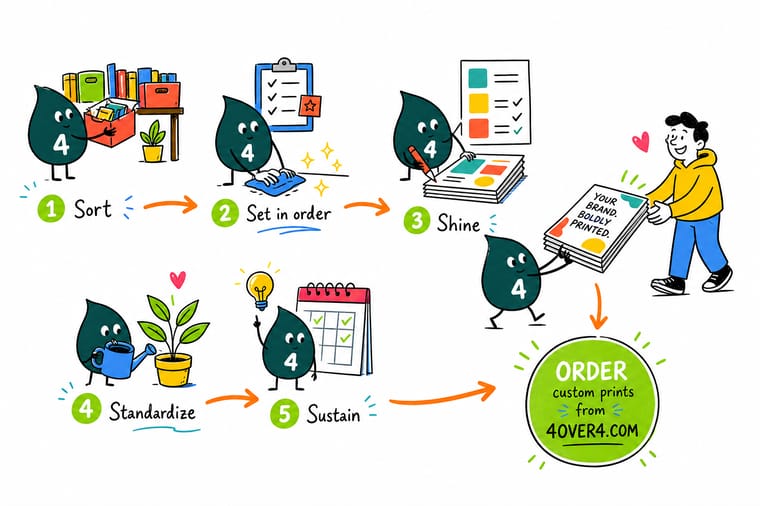
Wally clears the bench first and puts anything doubtful in the red tag corner with a date on it. Then he gives what is left one home each, chosen by how often he reaches for it, and labels the shelf edge rather than the box so a gap is obvious. He cleans at the end of the shift because that is when he spots the drip. He photographs the finished bench and pins the photo above it. Then he scores the area every Friday, because the week he stops scoring is the week it starts sliding back.
Order custom labels →Specs and pricing
Labels, floor markings and audit boards, side by side
The three things a first 5S pass usually needs printed, with live configuration choices and starting prices straight from the 4OVER4.COM configurator.



Print it
Kit out the first area you tackle


Explore more
Where to go next






By the numbers
Printing you can plan a rollout around
Common Questions
Your 5S questions, answered
What does 5S stand for?
Sort, Set in Order, Shine, Standardize and Sustain. The names come from five Japanese words used in the Toyota Production System: seiri, seiton, seiso, seiketsu and shitsuke. Sort removes what the area does not need. Set in Order gives every remaining item one obvious home. Shine cleans the area on a schedule and uses the cleaning as an inspection. Standardize writes down and posts what the correct state looks like. Sustain audits the area so it does not drift back.
Is 5S the same thing as lean manufacturing?
No. 5S is one practice inside lean, not the whole of it. Lean is about removing waste from a process end to end, including waiting, overproduction and rework. 5S only addresses the waste that comes from a disorganized workspace: searching for tools, walking to fetch things, using the wrong part because it sat next to the right one. It is usually the first practice a plant adopts because the results are visible in a week, but a spotless work area running a badly designed process is still a badly designed process.
What is 6S, and do we need the sixth S?
The sixth S is Safety, added by many plants to make hazard work an explicit step instead of a side effect. If your area has moving equipment, chemicals, or forklift traffic, put Safety in as its own step rather than trusting it to appear during Shine. Marked walkways, hazard signage and posted exit routes then get audited on the same sheet as the rest.
How long does a first 5S pass take?
Plan a full working day for Sort in a single area and another one to two days for Set in Order, with the whole team that works in that area present rather than a cleanup crew. Do one area, not the whole building. Standardize takes an afternoon once the layout has settled and someone photographs the finished state. After that the recurring load is small: a few minutes at the end of a shift for Shine, and roughly a quarter hour a week for the audit.
Does 5S work in an office?
It works for the physical parts, and it is often misapplied to the rest. Supply cupboards, print stations, sample shelves, shared meeting kit and file rooms all respond well to the same five steps. Individual desks are where 5S turns into policing, and a program that starts by measuring how tidy someone keeps their own desk usually ends there. Digital clutter is a separate problem with its own rules, and clearing a shared drive is not a 5S event no matter how satisfying it feels.
What should we label first, and what happens when the layout changes?
Label locations before you label items. A shelf edge that says which bin belongs there tells you at a glance when something is missing or in the wrong place, which an item label cannot do. Start with the shelf edges, the bin fronts and the floor positions for anything that lives on the ground. Expect the first layout to be wrong in a few places, so keep the first pass cheap: at 4OVER4.COM custom labels start at $25 and floor decals at $34, which is little enough to reprint a handful after the team has worked with the new arrangement for a month.
Get Started
Posters run 50 for $108.75, labels 25 for $23.88
Print the shelf labels, the floor positions and the audit board for one area, live with the layout for a month, then reprint the few spots the team keeps working around.
Legal Disclaimer
Gold Standard guarantees apply to all standard orders placed through 4over4.com. Price match requires verifiable proof of a competitor's published price for an equivalent product with matching specifications and turnaround time. Satisfaction guarantee covers manufacturing defects and print quality issues. Contact support with order number and documentation. On-time delivery rate based on tracked orders 1999 to 2026. Individual results may vary based on shipping carrier performance.
