
Product Launch Storytelling Secrets That Make Buyers Care


Four beats, in a fixed order, and one sentence short enough to fit on a sticker. Here is the structure, the founder origin trap, and how much of the story each launch surface can hold.
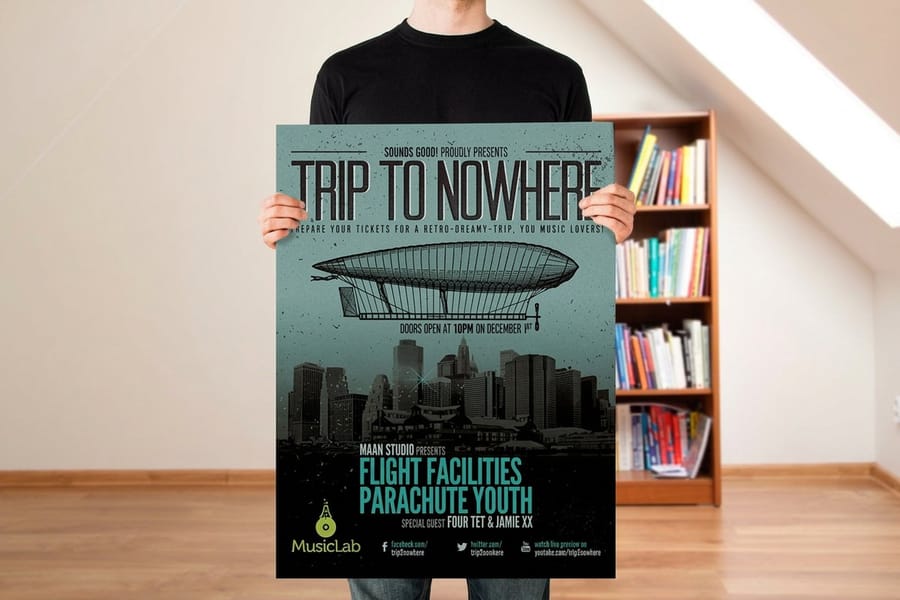
A launch story works when it names one person and the moment they were stuck, the workaround they already used, what changed, and proof that it changed. The founder origin story belongs in the proof beat, not the first one, because beat one has room for exactly one character and it should be the buyer. Beat three has to fit in six words, since that is the only beat a poster, a sticker or a hang tag can carry.
Quick answer
Four beats, and only one of them fits on a sticker
Write the person stuck, the workaround, the shift, and the proof, in that order. Beat two is the one launches skip, and skipping it is why a product sounds optional. Beat three has a hard six word ceiling, because posters, stickers and tags carry that beat and nothing else. Give beat one to the buyer rather than to the founder, keep the origin as a single clause of proof, and lock the six words three weeks before launch so anything printed can be produced in time.
The Four Beats a Launch Story Actually Needs
A launch story is not a narrative arc with a hero and a villain. It is four beats, in a fixed order, and the order carries most of the work.
Beat one, the person and the moment they were stuck. One person doing one thing on a specific day, not a market segment. "A bakery owner printing her own jar labels at eleven at night on a home inkjet" is a beat. "Small business owners face branding challenges" is a press release nobody finishes.
Beat two, what they already tried. This is the beat launches skip most often, and skipping it is exactly why a product sounds unnecessary. The reader has to picture the workaround before they can feel what it costs. The spreadsheet. The second trip to the shop. The pack of blank labels that curled in the printer.
Beat three, the shift. What is different now, in six words or fewer. That limit is not a stylistic preference. Beat three is the only beat that fits on a sticker, a poster or a tag, so if it takes a sentence and a half to say, most of your launch surfaces have nothing to print.
Beat four, proof. A number you genuinely have, a photograph of the thing working, or a customer name you have permission to use. If you have none of those on launch day, state the shift plainly and stop. A borrowed statistic is worse than an empty proof slot, because the first person who checks it will remember that you invented one.
Write the four as four sentences before you write anything else. No headline, no tagline, no deck. Most launches that read as vague are launches where beats one and two were never written down at all, and the team went straight to phrasing. The brand messaging framework is where these four beats sit once the launch is over and they become permanent copy.
Why the Founder Origin Story Usually Fails at Launch

The garage. The frustration. The late nights and the first prototype on the kitchen table. Nearly every founder has this story and, at launch, very few buyers want it.
The problem is structural rather than sentimental. Beat one has exactly one seat in it, and the origin story puts the founder in that seat. The buyer, who was supposed to be the person recognising their own eleven o'clock, is now watching someone else's. Attention that should have gone to the reader's problem goes to your history instead. That trade is worth making only after somebody already cares.
Three cases where the origin genuinely belongs up front. When the founder is the product, which covers chefs, authors, coaches and anyone whose name is on the thing being sold. When the origin explains a capability nobody else can claim, for example twelve years running the kind of shop you now sell to. And when the audience is investors or press rather than buyers, because those readers are evaluating the person on purpose.
Everywhere else, cut the origin to one clause and move it into beat four, where it does real work as evidence. "Built by two people who spent a decade behind a counter" is proof of competence in nine words. Two paragraphs about the garage is a delay. If you want the long version to exist somewhere, give it its own page or a printed booklet, and link to it rather than leading with it. Our guide to pitching in the room covers the spoken version of the same trade-off, where the temptation to open with yourself is even stronger.
Carrying One Sentence Across Every Launch Surface
A launch fails quietly when the website says one thing, the email says a variation of it, and the tag on the product says something a designer wrote at the last minute. Beat three is the fix. Lock the six words, then let every surface carry as much of the rest as it physically can.
Surface size decides how many beats survive, and it is worth planning that before anyone designs anything.
| Surface | Beats it holds | What goes on it | Starts at |
|---|---|---|---|
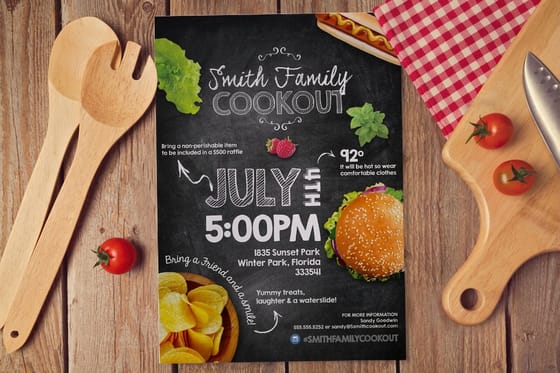
| Posters | Beat 3 only | The six words, large, plus where to go next. Read from several feet away in under two seconds. | $108.75 |
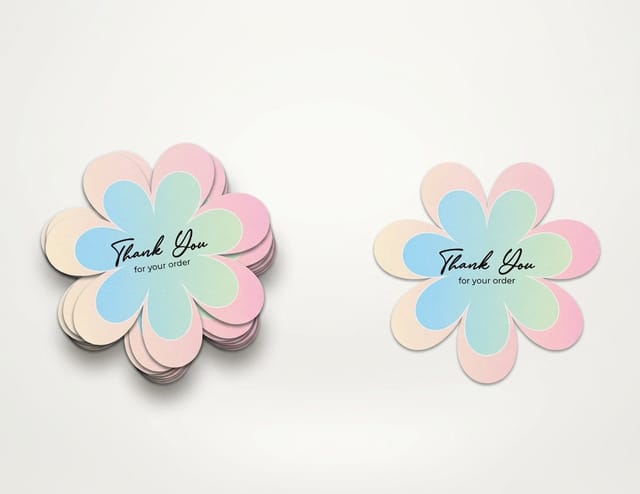
| Die-cut stickers | Beat 3 only | The shift as a phrase somebody would willingly put on a laptop. If it reads as an advert, it never gets stuck to anything. | $93.37 |
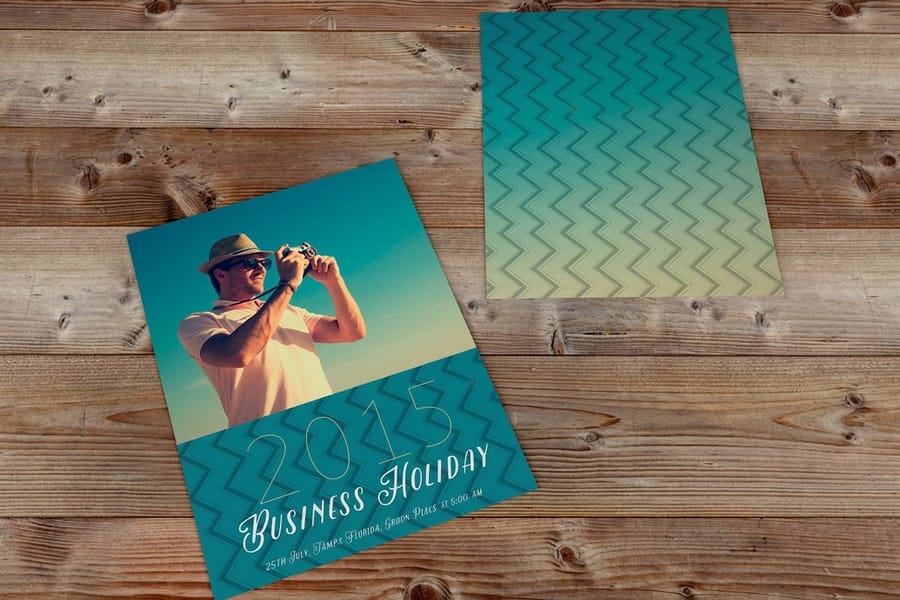
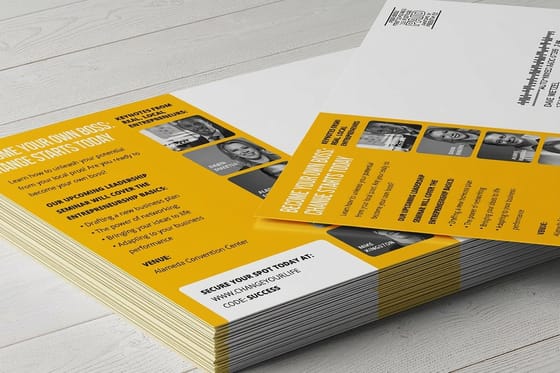
| Postcards | Beats 1 and 3 | The stuck moment on the front, the shift and one action on the back. Two sides is the smallest format that can tell a story rather than announce one. | $16.48 |
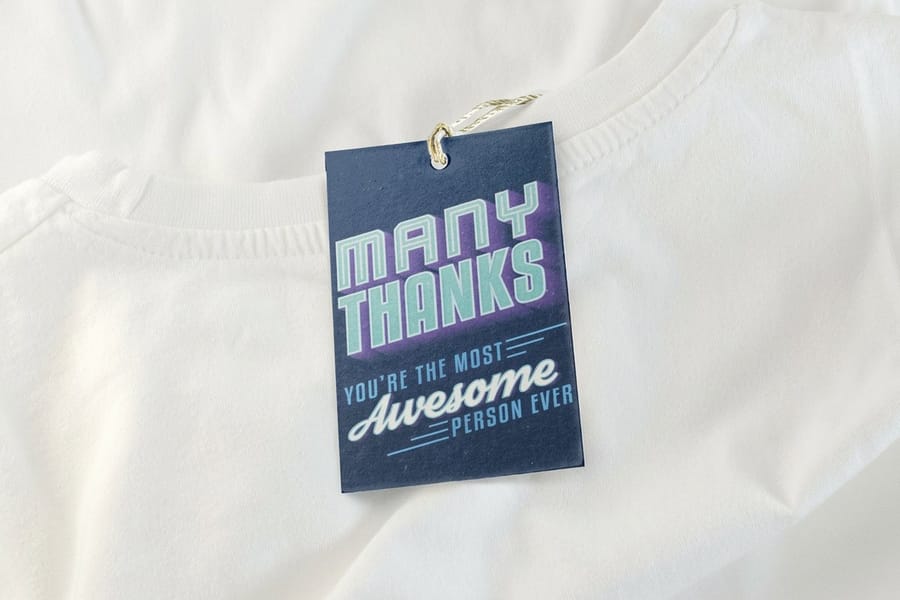
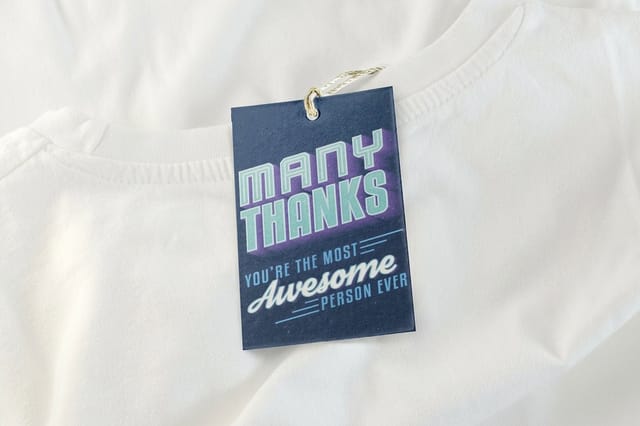
| Hang tags | Beats 3 and 4 | The shift plus the proof, held at the exact second the buyer decides. The only surface that reaches someone already touching the product. | $25.27 |
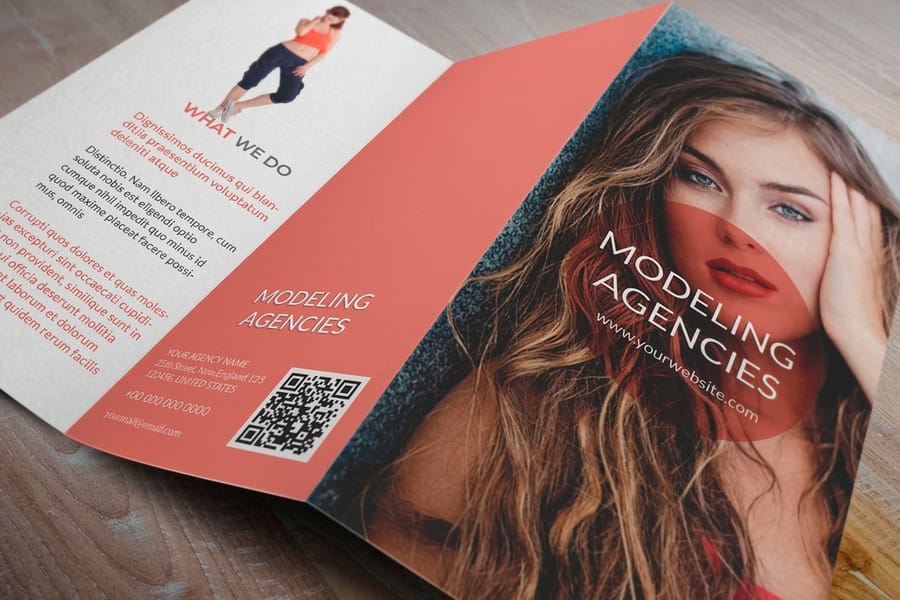
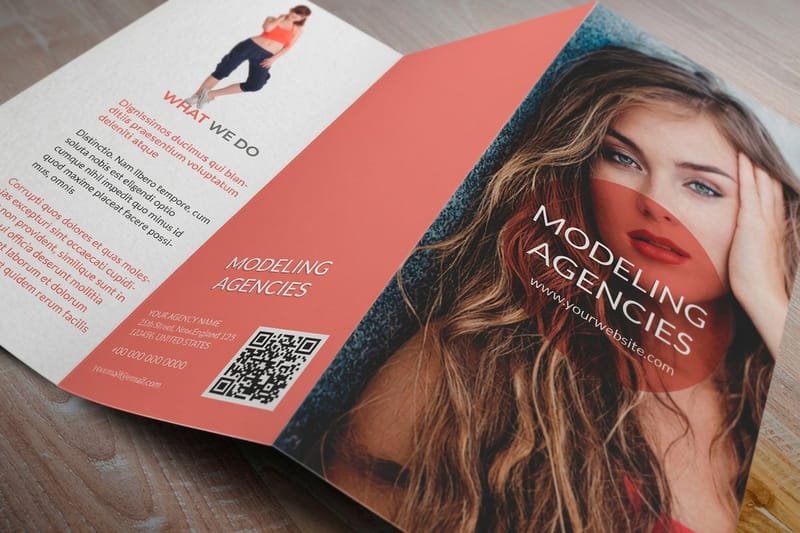
| Brochures | All four | The full sequence across panels, in order, one beat per panel. The panel fold does the pacing for you. | $57.11 |
Read the second column before the fourth. The cheapest piece on the list carries the most story per dollar, which is why postcard printing stays the default launch mailer long after everything else moved to email. A postcard arrives without a subject line to compete with, and the front works even when nobody turns it over. There are dozens of postcard campaign formats that all rest on that same two-sided structure.
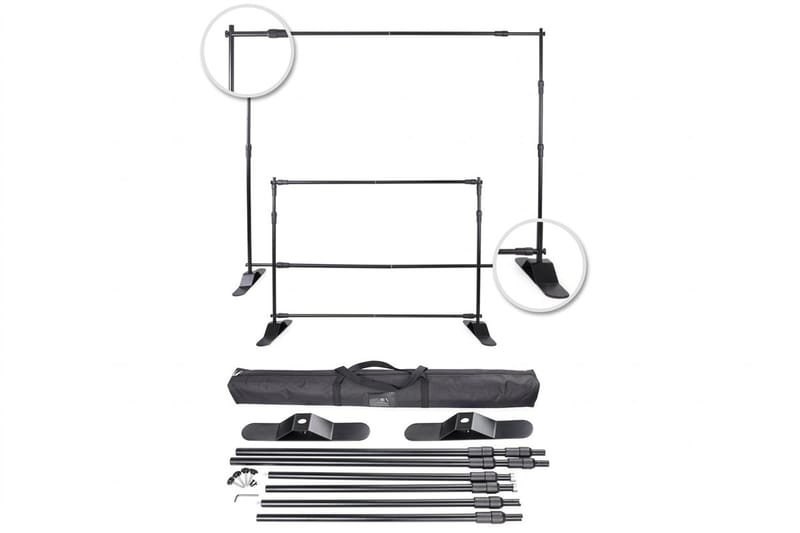
Order in dependency order, not in cost order. Brochures and postcards can go to press while beat three is still being argued about, because they carry enough words to survive a small change in phrasing. Stickers and posters cannot. Print those last, when the six words are final, or you will pay twice. If the product ships in a box, the inside of that box is a surface too, and mailer box design treats it as one.
The Six Weeks Before Launch Day, In Order
Story work has a lead time problem. The words have to be finished before anything gets printed, and printing has to be finished before launch day, so the writing deadline is much earlier than most teams plan for.
- Six weeks out, write the four beats as four plain sentences. No formatting, no adjectives, no logo anywhere near them. Then read them to five people who do not work for you and watch which sentence makes them nod.
- Five weeks out, kill the alternatives for beat three. You will have four or five candidate lines. Pick one and delete the rest in writing, because an undeleted alternative reappears in somebody's slide two days before launch.
- Four weeks out, write the long version. Two hundred to four hundred words, all four beats, in order. This becomes the landing page, the brochure copy and the press note. Every shorter piece is now a cut of this, never a fresh write.
- Three weeks out, send anything printed to press. This is the real deadline. Brochures, postcards and tags all need production and transit time, and a launch with the story only online is a launch with no surface anyone can hold.
- Two weeks out, seed the story with people who will retell it. Staff, retail partners, the ten customers who already like you. Give them the six words and beat one. Do not give them a document.
- One week out, stop editing. Late changes to beat three break every printed piece you already committed to and gain almost nothing.
- Launch day, lead with the shortest version. Beat three plus one action. The long version stays one link away for the small number of people who want it.
- Two weeks after, swap the shift for the proof. By then you have a real number or a real photograph, and beat four becomes the strongest thing you own.
If you are running your first launch, sequence the rest of the work around that three week printing deadline. The first time founder launchpad lays out what else has to be ready by then, and the marketing materials range shows what can realistically be produced inside a three week window.
How to Tell Whether the Story Actually Works
Asking people whether they like the story tells you nothing. They will say yes. Three tests give you a usable answer instead.
The retell test. Tell someone the whole thing, wait a day, then ask them to tell it back to you. What survives that gap is your real story. What they drop is what you should have cut, and what they add is the sentence your version was missing. Do this with five people and the pattern is unmistakable by the third.
The six word test. Write beat three on an index card. If it does not fit, or if it fits only by removing the verb, you are still describing a category rather than a change. "Labels that survive the freezer" fits. "A comprehensive labelling solution for modern food businesses" does not, and it is also not saying anything.
The objection test. Read beat three to somebody who sells for a living and ask what they would push back on. A story with no obvious objection is usually too vague to argue with, which means it is also too vague to believe. A story that draws a sharp objection is specific, and the objection is what beat four exists to answer.
Then be honest about where none of this helps. A sealed procurement bid is scored against a specification. A regulated claim is limited by what you are legally permitted to say. A buyer comparing two identical items on price is comparing price. In those situations the effort belongs in the spec sheet, the certification and the delivery date, and a story layered on top reads as evasion. Storytelling earns its keep when the buyer has a choice and no easy way to compare, which is most consumer launches and almost every new category.
One more failure worth naming. A story that outruns the product creates a return rate, not a brand. If beat three promises a shift the product delivers only sometimes, the launch works and the second month does not. Keep the claim inside what the thing actually does, then let the brand refresh checklist handle it later, once the product has caught up with the story you wanted to tell.
Wally explains the launch story
Four cards, and only the third one fits everywhere
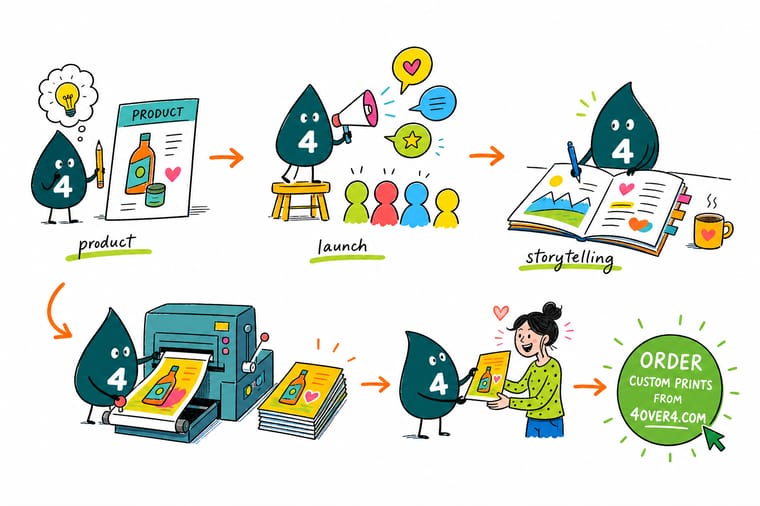
Wally lays out four cards. Card one is the person stuck at eleven at night. Card two is the messy workaround they already used. Card three is what changed, and he keeps shaving words off it until it fits on a sticker. Card four is the proof, which he leaves blank until he genuinely has one. Then he checks the founder story, finds it sitting on card one, and moves it to card four where it belongs.
Print your launch postcards →Specs and pricing
The three pieces that carry the most story
Sizes, stocks and starting prices straight from the 4OVER4.COM configurator, for the postcard, the brochure and the hang tag your launch story ends up printed on.


Print it
Put the six words somewhere people can hold them
Explore more
Where to go next

By the numbers
Launch print you can schedule around at 4OVER4
Common Questions
Your launch storytelling questions, answered
What is product launch storytelling?
It is the practice of introducing a product as a change in someone's situation rather than as a list of features. The working structure is four beats: one named person stuck in a specific moment, the workaround they were already using, the shift your product creates, and proof that the shift is real. Everything a launch produces, from the email subject line to the tag hanging on the product, is one of those four beats cut to fit the space available.
How long should a launch story be?
You need three lengths of the same story, not one. Six words for beat three alone, which is what goes on a poster, a sticker, a tag or a subject line. Roughly forty words for beats one and three together, which is what fits on a postcard or a social post. Two hundred to four hundred words for all four beats, which is the brochure, the landing page and the press note. Write the long one first, then cut down. Cutting reveals which beat you were actually leaning on.
Should the launch story be about the founder or the customer?
The customer, at launch. The founder origin story competes for the same slot as beat one, and only one character can be the person who was stuck. Keep the origin as a single clause inside beat four, where it works as evidence that you know the problem. The exceptions are real but narrow: when the founder is the product, as with a chef, an author or a coach, or when the origin explains a capability nobody else has.
What if the product is technical or boring?
Technical products have the sharpest beat two, so start there. The workaround engineers put up with, a spreadsheet passed by email, a script one person maintains, a manual reconciliation every Friday, is concrete and instantly recognisable to the buyer. Boring is usually a symptom of describing the category instead of the moment. Name the Friday. Nobody finds their own Friday boring.
How many times can I repeat the story before people tire of it?
Far more than feels comfortable. You have heard the internal draft several hundred times by launch week and your buyer has seen it once, if at all. The practical limit is not repetition, it is unchanged wording in the same channel. Keep beat three identical everywhere, since that consistency is the point, and vary which of the other three beats you lead with. Swap the shift for the proof beat about two weeks after launch, once you have something real to show.
Which print pieces carry a launch story best?
It depends on how much of the story the piece has to hold. A postcard is the workhorse because two sides give you room for beat one on the front and beat three on the back, and Standard Postcards start at $16.48 at 4OVER4.COM. A hang tag puts the shift in the buyer's hand at the moment of purchase and Standard Hang Tags start at $25.27. A brochure is the only common print piece that holds all four beats comfortably, starting at $57.11 for Standard Brochures. Stickers and posters carry beat three alone, so order those last, once the six words are locked.
Get Started
Six words locked? Get them printed.
Postcards for the announcement, hang tags for the moment of purchase, brochures for the full four beats. Set the quantity, pick the stock, and we print it in time for launch week.
Legal Disclaimer
Gold Standard guarantees apply to all standard orders placed through 4over4.com. Price match requires verifiable proof of a competitor's published price for an equivalent product with matching specifications and turnaround time. Satisfaction guarantee covers manufacturing defects and print quality issues. Contact support with order number and documentation. On-time delivery rate based on tracked orders 1999 to 2026. Individual results may vary based on shipping carrier performance.
