
Printed Workwear That Puts Your Brand On Every Shift


"Printed workwear turns a team into a walking, working billboard while making everyone look unified and professional. Here is what counts as printed workwear, how to choose shirts, which print method holds up, and where branding belongs."
Printed workwear is branded work apparel, most often shirts, that carries your logo so a team looks unified and advertises the business on every job. Choose a shirt type for the work, pick a print method sized to durability and quantity, place the branding where it reads, and order in the sizes your crew needs. Done right, uniforms build trust with customers and turn staff into visible marketing.
What counts as printed workwear
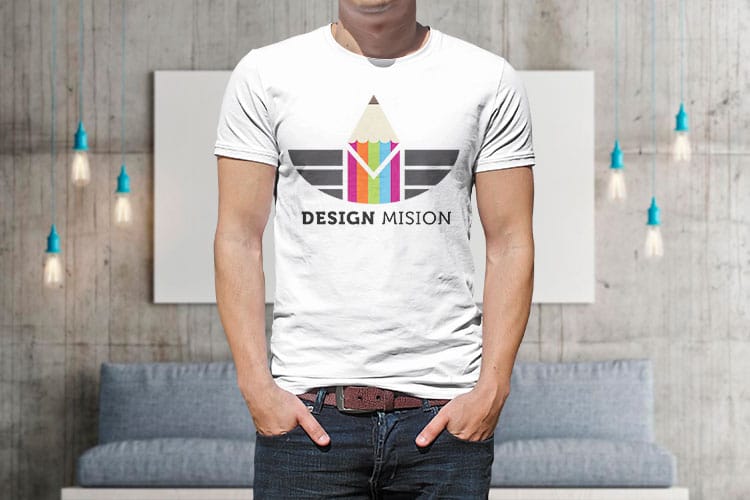
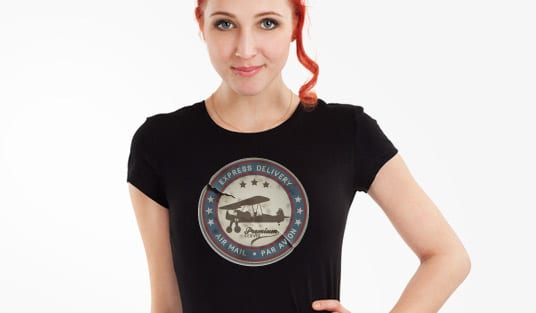
Printed workwear is any work apparel that carries your branding, and in practice it usually starts with shirts. A custom t-shirt with a logo is the workhorse, but the category spans polos for a more polished look, long-sleeve shirts for cooler conditions or added coverage, and hi-visibility styles for safety-critical work. The common thread is that the garment does double duty: it dresses your team and it markets your business.
The value is bigger than it looks. A crew in matching branded shirts reads as organized and trustworthy to customers, which matters enormously for service businesses that enter people's homes or workplaces. At the same time, every shirt is a moving advertisement seen by everyone the team passes. Start with custom t-shirt printing as your base layer, and browse the full t-shirts range to match garments to your trade.
Think of workwear as the wearable half of your brand identity, the same logo that lives on your cards and signage, now walking into every job with your crew.
Choosing the right shirt for the job
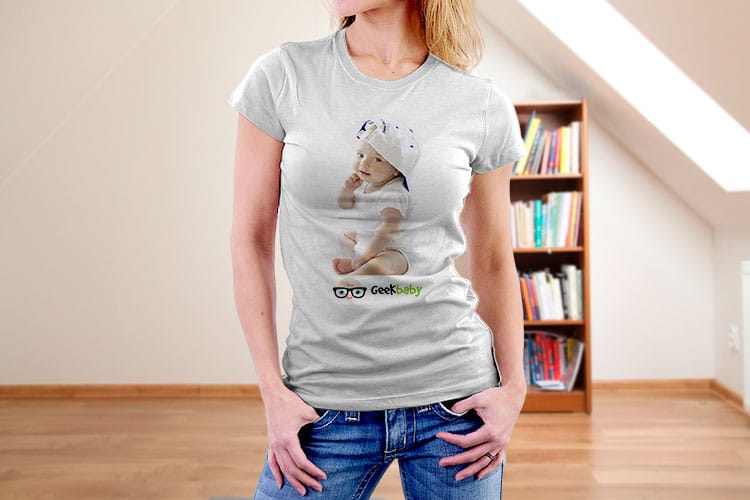
The right garment depends on the work and the impression you want. A classic cotton t-shirt is comfortable, affordable, and takes a print beautifully, which makes it the default for most crews. For hot or active work, a moisture-wicking poly blend keeps staff cooler and dries faster. For a more professional customer-facing look, a collared polo lifts the whole team's presentation while still carrying your logo.
Weight and fit matter too. A heavier cotton feels more durable and premium, while a lighter blend is better for movement and heat. If your team includes a range of body types, choose a style available across a full size run so everyone is comfortable, and consider a premium t-shirt when the shirt itself is part of the impression. Not sure how a fabric feels or how the color prints? Order free samples before committing to a bulk order.
Pick one core garment for consistency, then add a second style, say polos for management or hi-vis for field crews, only where the job genuinely calls for it.
Garment color and what it does to your artwork
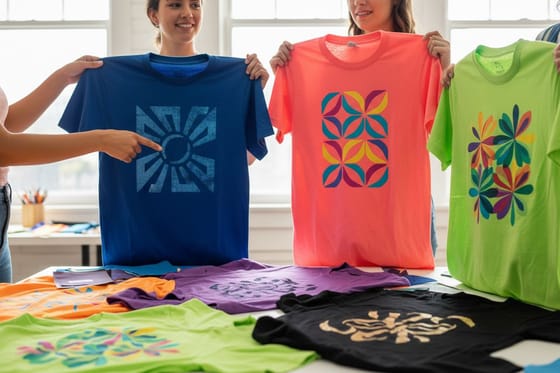
The shirt color is half the design, and a logo drawn for white paper does not always survive on a navy or black tee. Dark fabric swallows dark ink, so a one color mark in your brand's deepest blue can read as a smudge from a few steps back. Hold the logo against the actual garment color before you approve anything.
On dark garments the ink has to sit on a white base. Screen printing lays a white underbase down first and puts the colors on top of it, and direct to garment works the same way with a white layer under the art. That is why a simple high contrast version of your mark, or a single color white version, holds up better on a dark shirt than a full color original built on soft gradients.
Light garments are the easy case, since the print lands close to what you drew. Either way, settle on one shirt color for the crew and stay with it, so the team still reads as one team across a parking lot.
Print method and durability
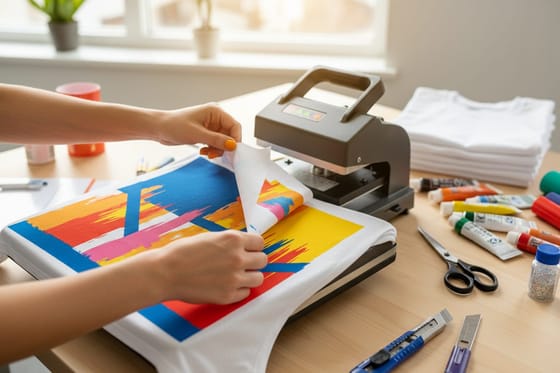
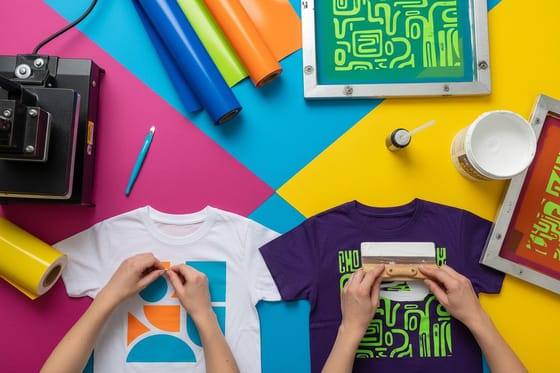
How your logo is applied determines how long it survives repeated washing and hard wear, so match the method to the job. Screen printing pushes ink through a stencil and is the most durable and cost-effective choice for larger quantities of the same design, which makes it the standard for uniform runs. Direct-to-garment, or DTG, prints detailed full-color art straight onto the fabric and shines for small quantities or intricate logos.
Heat-applied vinyl is ideal for names, numbers, and simple graphics, and it lets you personalize individual shirts, which is handy for staff names on a uniform. Each method has a sweet spot: high volume favors screen printing, detail and low volume favor DTG, and personalization favors vinyl. Our guides on making custom t-shirts and vinyl versus screen printing break down the trade-offs so your workwear survives the wash for years.
For workwear specifically, durability usually wins, since a uniform is washed constantly. When in doubt for a standard logo across a crew, screen printing is the reliable choice.
Branding placement and ordering for your team
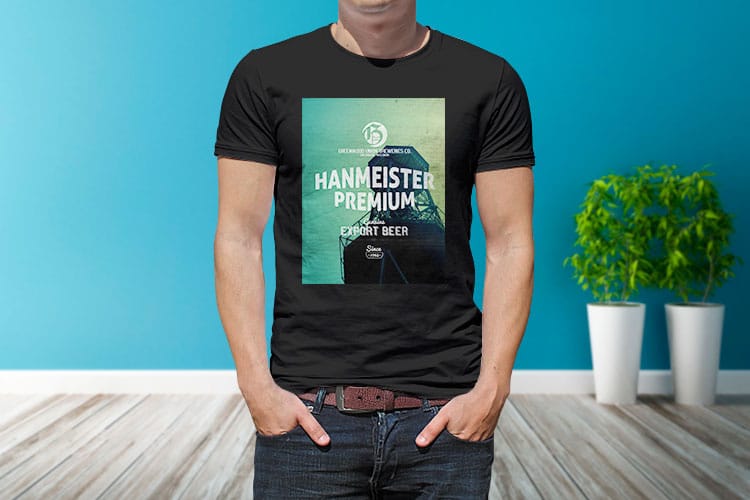
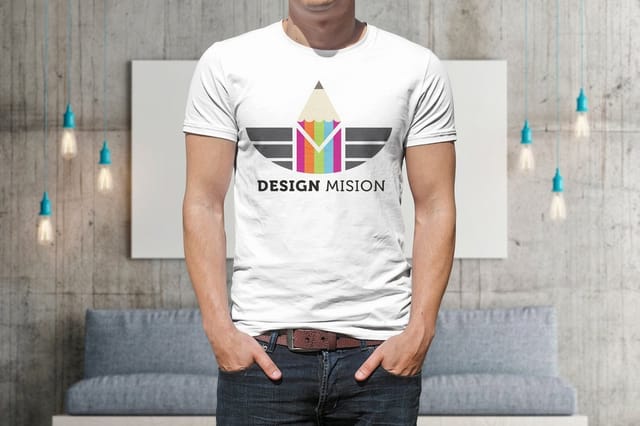
Where the branding sits changes how it works. A left-chest logo, roughly 3 to 4 inches wide, is the professional standard: subtle, clean, and instantly readable up close. A large full-back print, around 11 to 13 inches, turns the shirt into signage visible across a room or a job site, ideal when you want the business name seen from a distance. Sleeves and collars are for accents like a website or a secondary mark.
A common, effective combination is a small left-chest logo for professionalism plus a bold full-back name for visibility, giving you both a polished front and a billboard back. Design your artwork at the recommended size for each placement and export it clean, following our print-ready files guide, or use the online design tool and templates to lay it out correctly.
When you order, plan the full size range so every crew member fits comfortably, and set your quantities per size. Use the live specs and pricing panel below to configure your custom work shirts and see how quantity drives the per-shirt price down.
Washing printed workwear so the print lasts
A uniform shirt goes through the wash more than anything else anyone owns, and the print almost always gives out before the fabric does. Most of that damage happens in the dryer rather than the washer, so heat is the thing to control.
Give the crew four rules and the shirts hold. Turn them inside out first, so the print rubs against itself instead of the drum. Wash cold. Skip bleach, and skip fabric softener too, since softener leaves a film that lifts ink over time. Dry on low or hang them, and if a shirt needs pressing, press it inside out or lay a cloth over the print rather than putting the iron straight on it.
Say all of that once, in writing, on the day the shirts are handed out. A logo treated this way keeps its edges, while the same shirt run hot every night starts to crack far sooner.
Wally turns a crew into a walking billboard
One logo, every shift, every job site
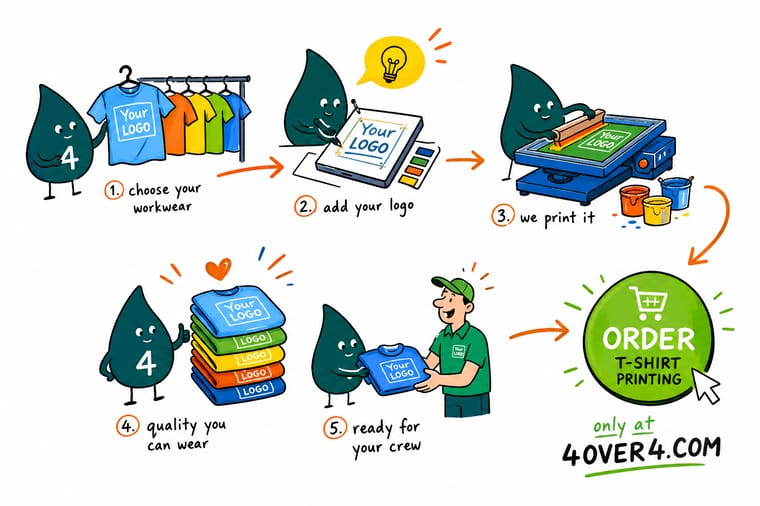
Wally puts the same logo that lives on the cards and the sign onto a shirt, and now the whole crew reads as one organized, trustworthy team, while advertising the business to everyone they pass. Left chest for polish, full back for distance, screen-printed so it survives the wash for years. Pick the garment and placement, order the full size run, and 4OVER4 prints the team.
Order custom work shirts →Quick reference
The key details, at a glance
| Detail | What to know | Why it matters |
|---|---|---|
| Base garment | Cotton t-shirt | Comfortable, affordable, and takes a print beautifully. |
| Alternatives | Poly blend or polo | Blend for heat and movement; polo for a professional look. |
| High volume | Screen printing | Most durable and cost-effective for larger uniform runs. |
| Detail or low volume | DTG printing | Full-color detail straight onto the fabric for small orders. |
| Names and numbers | Heat-applied vinyl | Personalize individual shirts with staff names. |
| Left-chest logo | 3 to 4 in wide | The subtle, professional standard placement. |
| Full-back print | 11 to 13 in wide | Turns the shirt into signage visible across a room. |
Step by step
How to do it in 7 steps
- Pick a core garmentChoose a cotton tee, a moisture-wicking blend, or a polo based on the work and the impression you want to make.
- Confirm the full size rangeList every crew member's size so you order S through larger sizes and everyone is comfortable.
- Choose a print methodUse screen printing for durable high-volume runs, DTG for detailed or small orders, and vinyl for names and numbers.
- Design artwork per placementSize a left-chest logo to 3 to 4 inches and a full-back print to 11 to 13 inches, then export print-ready files.
- Decide on placementsCombine a subtle left-chest logo with a bold full-back name for both professionalism and distance visibility.
- Order samples if unsureRequest free fabric and print samples to confirm feel and color before committing to a bulk run.
- Configure quantities and orderSet your quantity per size in the configurator, review the live per-shirt price, and place the order.
Specs and pricing
Live specs and pricing
Once your file is ready, the print decisions come down to size, stock, and finish. Here are the live specs and price per unit at 4OVER4.COM, straight from the configurator.
| Quantity | Price Per Unit | Total |
|---|---|---|
| 1 | $21.96 | $21.96 |
| 2 | $16.47 | $32.93 |
| 3 | $16.46 | $49.39 |
| 4 | $15.93 | $63.71 |
| 5 | $15.93 | $79.63 |
| 6 | $15.93 | $95.56 |
| 7 | $15.85 | $110.94 |
| 8 | $15.38 | $123.02 |
Order it
Bring your project to 4OVER4
Explore more
Where to go next
By the numbers
Left chest placement and 60+ apparel options
Common Questions
Common questions
How do I keep the uniform consistent when new staff join?
Write the order down once and reorder against it. Record the garment and its color, the print method, the artwork file, and the print width at each placement, a left chest logo at 3 to 4 inches and a full back at 11 to 13 inches. A new hire then gets a shirt that matches the crew instead of a near miss that everyone notices. Keep a few spares in the common sizes so someone starting on Monday is in uniform on day one.
Do printed work shirts shrink after washing?
Cotton shirts move a little the first time they are washed, mostly in length, and poly blends move less. Allow for it when you take sizes, and if someone sits between two sizes in a cotton tee, the larger one is usually the safer call. Free samples are worth using here: wash one before the bulk run and you learn how that particular garment behaves.
What makes a shirt hi visibility?
A hi visibility shirt is built from fluorescent fabric, usually yellow green or orange, with retroreflective tape running across the body and over the shoulders. The fluorescent base does the work in daylight and the tape does it under headlights at night. Branding sits on the plain panels and never across the reflective tape, which is why a left chest logo is the usual spot on a hi vis shirt. Check what your site or your client asks for before you settle on a style.
What is printed workwear?
Printed workwear is branded work apparel, most often t-shirts but also polos, long-sleeves, and hi-visibility styles, that carries your logo so a team looks unified and professional. It does two jobs at once: it dresses your crew consistently and it advertises your business to everyone they meet. For service businesses especially, matching branded shirts build customer trust while turning every staff member into visible, moving marketing.
How do I choose the right printed workwear?
Match the garment to the work and the impression you want. A cotton t-shirt is the comfortable, affordable default, a moisture-wicking blend suits hot or active work, and a collared polo raises a customer-facing team's presentation. Pick one core garment for consistency, add a second style only where the job needs it, and choose a shirt available across a full size run so everyone on the crew is comfortable. Order samples to check feel and color first.
What does printed workwear cost and how is the price set?
Price depends on the garment, the print method, the number of print locations, and the quantity. Screen printing is the most cost-effective for larger runs, while detailed DTG or added placements raise the per-shirt cost. Ordering more shirts lowers the unit price significantly. You set the garment, print options, and quantity in the 4OVER4 configurator and the price updates live, so you can compare a one-location left-chest print against a front-and-back setup before ordering.
What print method is most durable for work shirts?
For workwear that is washed constantly, screen printing is usually the most durable and cost-effective choice for a standard logo across a crew. DTG prints fine full-color detail and is ideal for small quantities or intricate art, and heat-applied vinyl is best for names, numbers, and personalizing individual shirts. Since a uniform sees heavy laundering, durability generally wins, which makes screen printing the reliable default for uniform runs.
How long does it take to print and ship custom workwear?
Turnaround depends on the garment, print method, number of locations, and quantity, and the product page shows the current production time for your configuration. Screen-printed runs of a single design produce efficiently, while multi-location or highly detailed jobs may take a little longer. You can add expedited shipping to meet a start date or event, and preparing your artwork at the correct size for each placement avoids reprint delays.
Get Started
Ready to put your brand on every shift?
Configure your printed workwear on the garment, print method, and placements your team needs, and watch the per-shirt price drop as the quantity climbs.
Legal Disclaimer
Gold Standard guarantees apply to all standard orders placed through 4over4.com. Price match requires verifiable proof of a competitor's published price for an equivalent product with matching specifications and turnaround time. Satisfaction guarantee covers manufacturing defects and print quality issues. Contact support with order number and documentation. On-time delivery rate based on tracked orders 1999 to 2026. Individual results may vary based on shipping carrier performance.
