
Pop Up Step and Repeat Backdrops That Travel in One Case


The frame, the skin, and the measurements people get wrong. What a pop-up backdrop is made of, how big it really stands, where the logos go, and when a flat banner beats it.
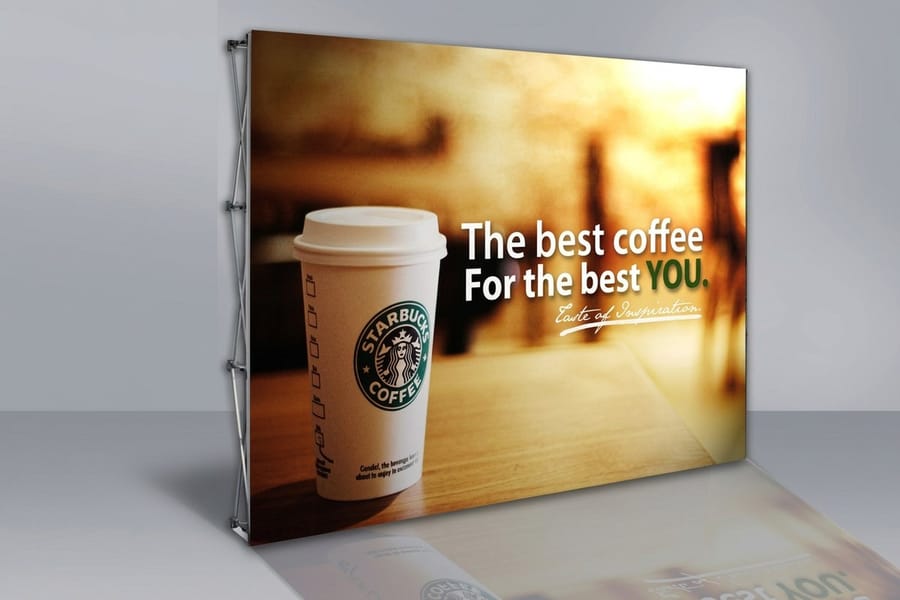
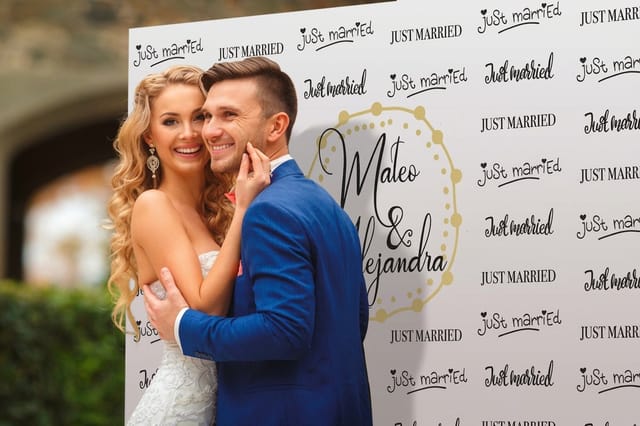
A pop up step and repeat is a collapsible accordion frame with a printed, logo-tiled skin stretched or magnetted over it, used as a portable photo backdrop. The frame folds into a wheeled case and goes up in about ten minutes with two people and no tools, and only the skin gets reprinted when the sponsor changes. Frames come in 8 and 10 foot widths standing 7 to 8 feet tall, and on a curved frame the graphic prints longer than the wall stands.
Quick answer
A reusable frame, a reprintable skin, and a ten-minute build
Buy the frame once and reprint the graphic for every sponsor. An accordion lattice expands into a curved or flat wall between 7 and 8 feet tall, in 8 or 10 foot widths, and the printed skin either slips over it like a pillowcase or hangs from magnetic bars. Order the graphic to the flat print length rather than the standing width, keep the logos inside the 3 to 7 foot band a camera actually captures, and choose dye-sublimated fabric over vinyl anywhere a flash is going to fire.
What a Pop-Up Step and Repeat Actually Is
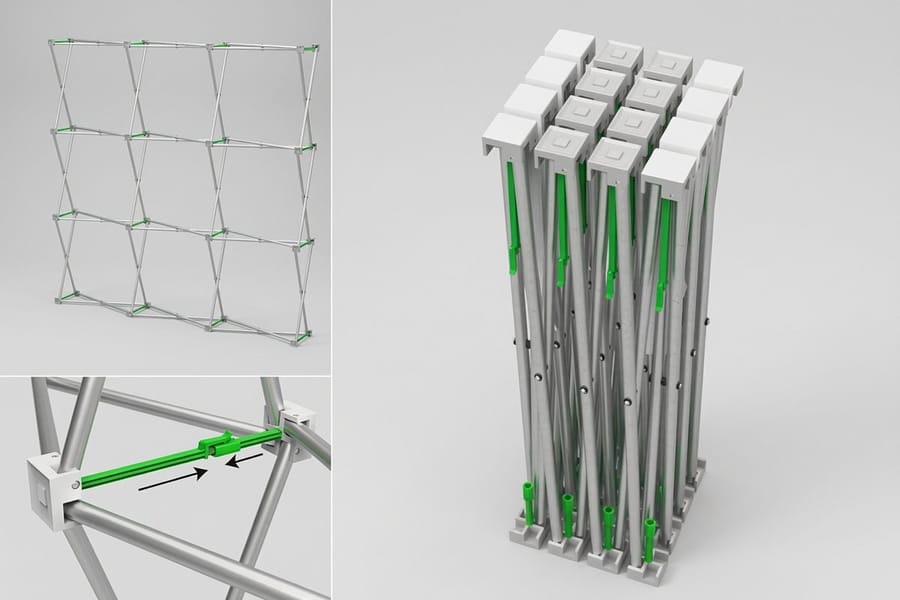
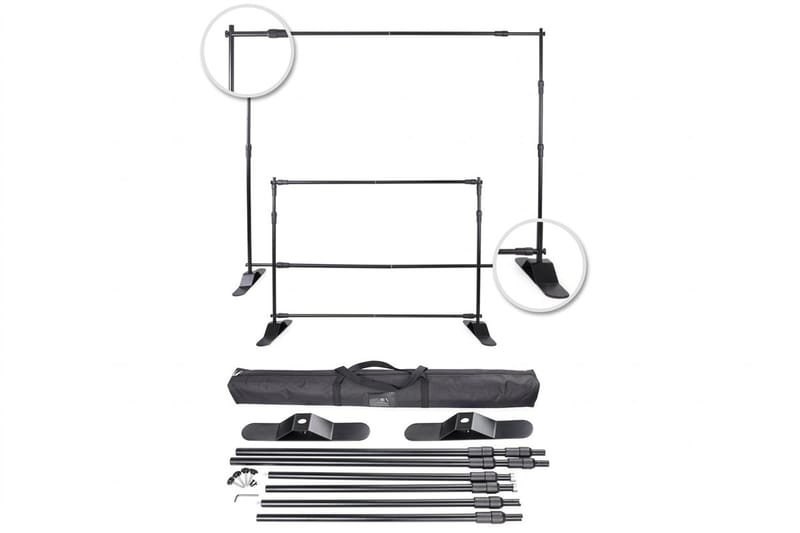
Two objects sold as one. The frame is a folding aluminum lattice with hinged struts, the same mechanism as a collapsible laundry hamper scaled to a wall. You lift it by the middle, it expands, and a set of locks holds it open. The skin is the printed part: the step-and-repeat graphic that carries the tiled logos.
There are three ways the skin attaches, and they are not interchangeable. Stretch fabric slips over the whole frame like a pillowcase and zips at the bottom, which is the fastest and the one that hides the frame completely. Magnetic panels hang from bars that clip into the top and bottom channels, usually three or four overlapping strips across a 10 foot frame. Hook-and-loop fabric presses onto the face of the lattice itself, which is the oldest system and the one most likely to show a vertical seam where two panels meet.
Which one you have decides what you can reorder. A magnetic-panel frame needs panels cut to its own bar spacing, not a single wide print. If you inherited a frame from a previous event team and nobody kept the spec, measure the bars before ordering anything. Our pop up displays start at $752.39 for the frame and graphic together, and the frame is the half that survives a decade of sponsors.
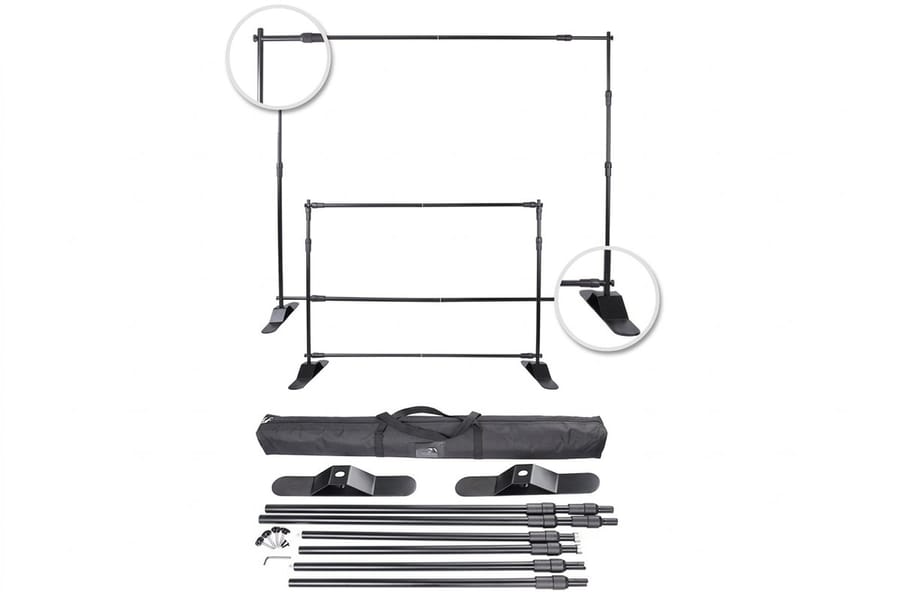
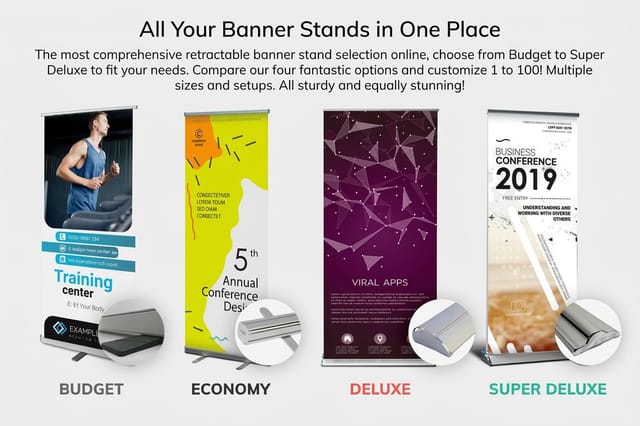
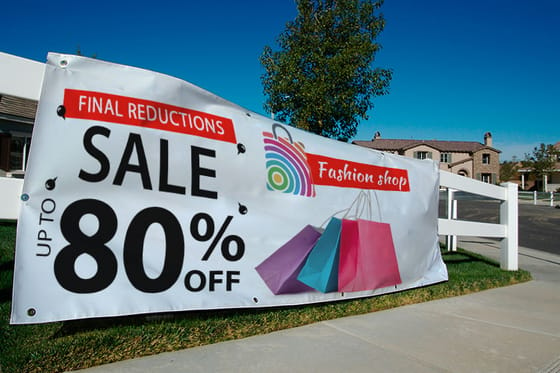
If the whole thing sounds like a lot of hardware for a two-hour reception, it might be. A flat step-and-repeat banner starts at $217.50 and hangs from a telescopic crossbar. The last section on this page is about which of those two you should actually buy.
Sizes, and Why the Print Is Longer Than the Wall
Pop-up frames are sold by nominal width, almost always 8 foot or 10 foot, and they stand somewhere between 7 and 8 feet tall. That height is the first real constraint. A pipe-and-drape rig can be cranked to 8 feet and beyond; an accordion frame cannot, so on a full-height backdrop a tall guest's head sits close to the top edge and you lose the band of logos you were counting on above the shoulders.
The second constraint is width, and it catches almost everyone once. A curved frame's printed graphic follows the arc, and it wraps a few inches around each end to reach the back of the lattice. The distance the backdrop occupies on the floor, measured straight across, is shorter than the print. Order to the standing width and the skin will not reach; order to the flat print length and it fits.
| Frame | Typical face | Guests in one shot | Watch for |
|---|---|---|---|
| 8 ft pop-up | Roughly 8 feet wide, 7 to 8 feet tall | Two, comfortably three if they stand close | Fits through a standard door and into most cars once cased. |
| 10 ft pop-up | Roughly 10 feet wide, 7 to 8 feet tall | Three to four | The case is wheeled for a reason. One person can move it, not carry it upstairs. |
| Curved frame | Arc longer than the chord | Same as flat, with a softer edge | The print length exceeds the standing width. Order to the print. |
| Flat frame | Print length equals the face | Same | Easier to butt two frames together into a wider wall. |
Two 10 foot frames pushed together give you a 20 foot press wall, but only if both are flat. Curved frames leave a wedge of daylight where the two arcs meet, and no amount of shuffling closes it. For the guest-count arithmetic behind each size, the step and repeat sizes guide works through 8x8, 8x10, 10x10 and 8x20 against how many people you need in frame.
Laying Out the Logos for a Frame, Not a Flat Sheet
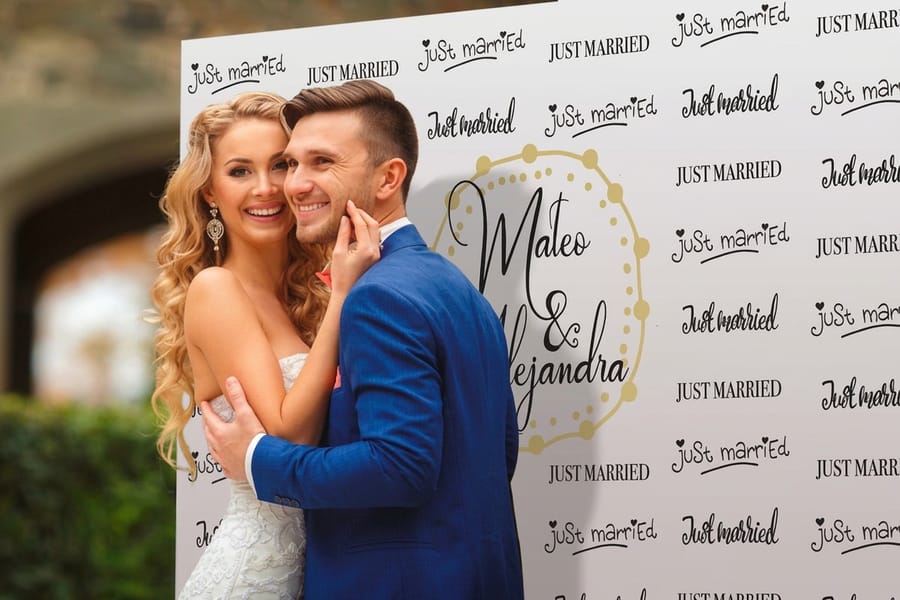
Start from the part of the backdrop a camera actually contains. A posed photo crops around the knee and stops above the head, so everything under 3 feet and above about 7 feet is decoration. Fill the band between those two heights first, then let the pattern run to the edges.
The tile itself follows three rules that hold on any step and repeat, pop-up or not.
- Stagger the rows. Offset each row by half a tile. Aligned rows create vertical corridors of blank backdrop, and a guest standing in one produces a photo with no logo in it at all.
- Repeat often enough to survive a crop. Any square foot of the head-and-shoulders band should contain a readable mark. If two people stand together and the only logo lands between their heads, the pitch is too wide.
- Keep the ends clear. On a curved frame the outer strips turn away from the lens and then wrap behind. Treat the last few inches at each side as bleed and put nothing there you need read.
Alternating two marks, a company logo and an event lockup, reads better than one logo repeated, because it breaks the wallpaper effect without adding clutter. Rotating a tile slightly is the other common trick, and it works up to about 15 degrees before it starts to look like a mistake. The design guide for step and repeat banners goes deeper on pitch and rotation, and building the wall itself covers the rigging side.
Build the file at full size with fonts converted to outlines. Start from a correctly proportioned layout in the blank template library, and if the handoff is unfamiliar, how online printing works walks the file from upload to shipped box.
Fabric or Vinyl on a Pop-Up Frame

This is the decision that changes how the photos look, and the honest answer depends on whether a flash is involved.
Dye-sublimated polyester is matte. The dye sits inside the fiber rather than on top of it, so a speedlight scatters off the surface instead of returning a white disc into the middle of the shot. It folds into the case and the crease relaxes out within an hour or two of being stretched on the frame. It also washes, which matters more than people expect once a backdrop has been through three catered events. What it gives up is edge definition: very fine type and hairline marks soften slightly on woven fabric compared to a smooth sheet.
Vinyl is the opposite trade. It holds a harder edge, wipes clean rather than washing, and takes abuse outdoors. But it reflects, so direct flash produces a hotspot, and it cannot be folded without keeping the crease, which means a tube rather than a case and a much less convenient trip. Vinyl banners start at $79 and fabric banners at $57.20, so cost is not what decides it.
| Property | Dye-sub fabric | Vinyl |
|---|---|---|
| Under a flash | Matte, scatters the light | Reflects, hotspots are common |
| Travel | Folds into the frame case | Must be rolled on a tube |
| Creases | Relax out, or steam from the back | Permanent once folded |
| Fine type | Slightly softer on the weave | Crisper edge |
| Cleaning | Machine washable | Wipe with a damp cloth |
| Outdoors | Indoor use, wind passes through poorly | Handles weather and sun |
For a press wall, a red carpet, or anything a photographer will light, choose fabric and do not think about it again. For a trade-show frame that also gets stood outside a booth entrance in daylight, vinyl earns its place. The full material comparison sits in banner material types.
When a Pop-Up Is the Wrong Answer
A pop-up frame is worth its price when the same backdrop goes up repeatedly, gets moved by staff rather than a crew, and has to look finished without a rigger. Roadshows, conference circuits, recurring press nights and any team that sets up their own booth. The graphic is reprintable, the frame is not consumable, and the ten-minute build is the whole product.
It is the wrong answer in three situations. If the backdrop is for one evening and then goes in a cupboard, the frame cost never amortises and a step-and-repeat banner on a telescopic crossbar does the same job for a fraction of it. If you need a wall wider than 20 feet, pipe and drape is cheaper and scales without the seam problem. And if the venue is outdoors, an accordion frame with a fabric skin is a sail: it catches wind, it has no meaningful ballast, and it will go over.
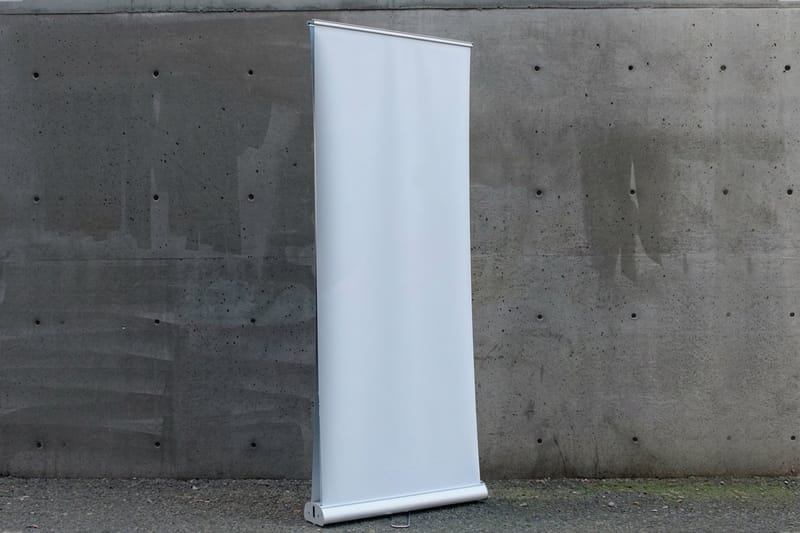
There is also a middle option people forget. Two retractable banner stands at $139 each, placed either side of a doorway, give sponsors visible placement without any backdrop at all, and they fit in a car boot. Not every photo opportunity needs a wall. Browse the full range of frames and stands in banner stands and displays, or the wider large format printing catalog if the piece is bigger than a backdrop.
Wally sets up the photo wall
Frame first, skin second, logos where the lens looks
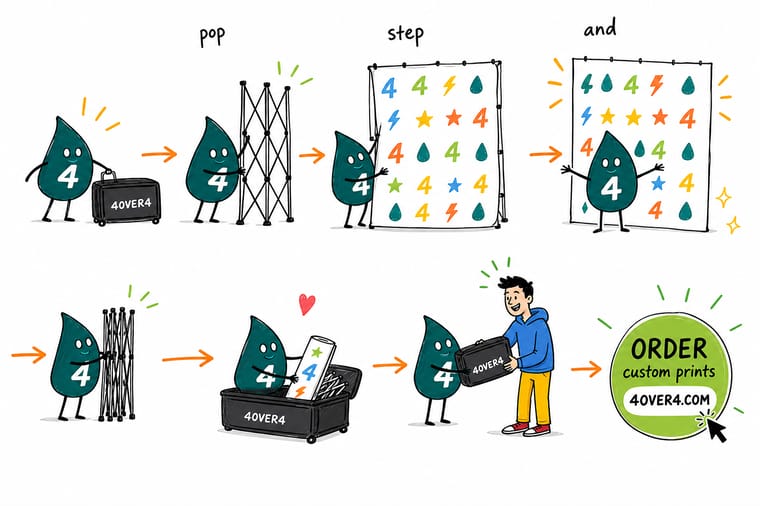
Wally lifts the folded lattice, it springs open into a curve, and he pulls the fabric skin over it like a pillowcase. The print is longer than the wall is wide, because the graphic follows the arc and wraps behind at both ends. He keeps every logo between knee height and just above head height, staggers the rows so no guest stands in a blank stripe, and picks matte fabric because the photographer is shooting with a flash. Ten minutes, two people, no tools.
Order a pop up display →Specs and pricing
Frames, backdrops and banner sizes with live pricing
Configure the frame or the flat banner side by side, with the size and material choices and the starting prices pulled straight from the 4OVER4.COM configurator.


Print it
Order the backdrop your team can build alone
Explore more
Where to go next
By the numbers
Photo walls, pop up displays and fabric banners
Common Questions
Your pop-up backdrop questions, answered
What is a pop up step and repeat?
It is a portable photo backdrop built from two parts. The first is a pop-up frame, a folding aluminum lattice that expands like an accordion and locks into a curved or flat wall. The second is the printed skin, a step-and-repeat graphic that tiles a logo across the whole face so that whichever way a guest turns, a mark lands in the shot. The frame collapses into a wheeled case and gets reused. Only the skin is reprinted when the sponsor changes.
How long does a pop-up backdrop take to set up?
Around ten minutes with two people and no tools once you have done it twice. The frame expands and locks, the magnetic bars snap along the top and bottom channels, and the graphic goes on. The slow part is never the frame, it is leveling the whole thing on carpet and getting the light bar aimed. Budget half an hour for the first build so you are not learning the hardware while guests are arriving.
Can I reprint the graphic and keep the frame?
Yes, and that is the main financial argument for the format. The frame is the expensive half and it does not date. When the title sponsor changes or the tagline moves, you order a new skin against the same frame dimensions and the old graphic goes in a tube. Keep the exact print dimensions on file, including the wrap allowance, because ordering a replacement to the standing width instead of the flat print length is the usual way people end up with a skin that will not reach.
Will the curve distort the logos?
Not enough for anyone to notice at the tile sizes used on a step and repeat, because the curve is gentle and the logos are small and repeated. What the curve does change is the ends. The last few inches at each side turn away from the camera and then wrap around the frame, so any logo that lands there is either edge-on or invisible. Design from the center out and treat the outer strips as bleed.
Fabric or vinyl for a pop-up step and repeat?
Fabric for anything photographed with a flash, vinyl for anything read at distance. Dye-sublimated polyester is matte, so a speedlight scatters rather than punching a white hotspot into the middle of the shot, and it folds into the case without a permanent crease. Vinyl holds a crisper edge on thin type and small marks, and it wipes clean, but it is heavier, it has to travel rolled, and its surface reflects. Most red-carpet and press walls are fabric for exactly that reason.
How do I get the creases out of a fabric backdrop?
Hang it and wait. Most dye-sublimated polyester relaxes within an hour or two of being stretched on the frame, which is why the backdrop goes up first and everything else happens around it. If a fold line is stubborn, a handheld steamer on the back of the fabric clears it in seconds. Do not press a hot iron on the face, and do not fold the skin along the same line every time it goes back in the case.
Do I need a light bar?
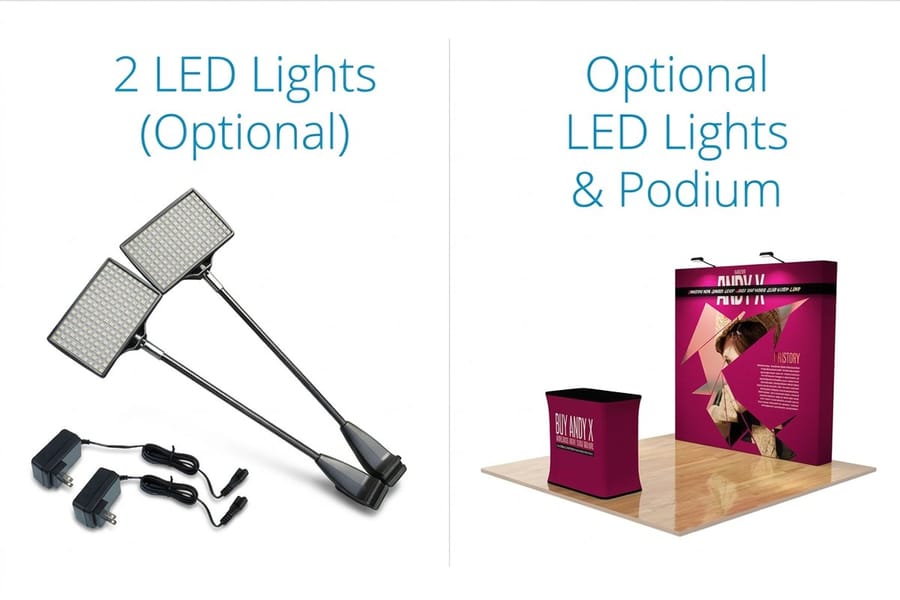
Only if the room is dim and the photographer is not bringing strobes. A pop-up frame takes clip-on LED bars along the top, and they lift the graphic enough for phone cameras in a hotel ballroom. If a professional is shooting with off-camera flash, the light bar is usually turned off because it puts a warm gradient across the top of the wall that has to be corrected later.
Get Started
A pop up display costs $752.39 and ships in six business days
Pick the frame width, choose matte fabric or vinyl, and we print a step-and-repeat skin that reaches the ends and keeps every logo where the camera looks.
Legal Disclaimer
Gold Standard guarantees apply to all standard orders placed through 4over4.com. Price match requires verifiable proof of a competitor's published price for an equivalent product with matching specifications and turnaround time. Satisfaction guarantee covers manufacturing defects and print quality issues. Contact support with order number and documentation. On-time delivery rate based on tracked orders 1999 to 2026. Individual results may vary based on shipping carrier performance.
