
Life-Size Cardboard Cutouts Near Me and How to Order a Custom Standee


The search rarely finds one on a shelf, because a cutout is a print job made from your file. The board it runs on, how to shoot and size the photo, and the one situation where the shop across town still wins are all below.
A life-size cardboard cutout is a die-cut rigid print: your photo printed at full height, mounted on 3/16 inch foam core board, then cut to the outline of the figure. No shop stocks them, because every one is made from a customer file, which is why a local search mostly returns sign makers who quote the job. Ordering online gets the same construction, cut to your artwork up to 40 by 60 inches, from $49.99, with a free online proof first. The local shop wins on one thing only: having it in your hands today.

Quick answer
A photo, a rigid board, and a cut line
A standee is three decisions, not a product you go and collect. Pick the board, which for an indoor figure is 3/16 inch foam core in white or black. Size the artwork, remembering that a single custom board stops at 40 by 60 inches, so anything taller than five feet needs two panels joined behind or a stand instead. Then supply a clean cut path about 1/8 inch outside the ink. Get those right and the print is the easy part.
What a Life-Size Cutout Is Actually Made Of
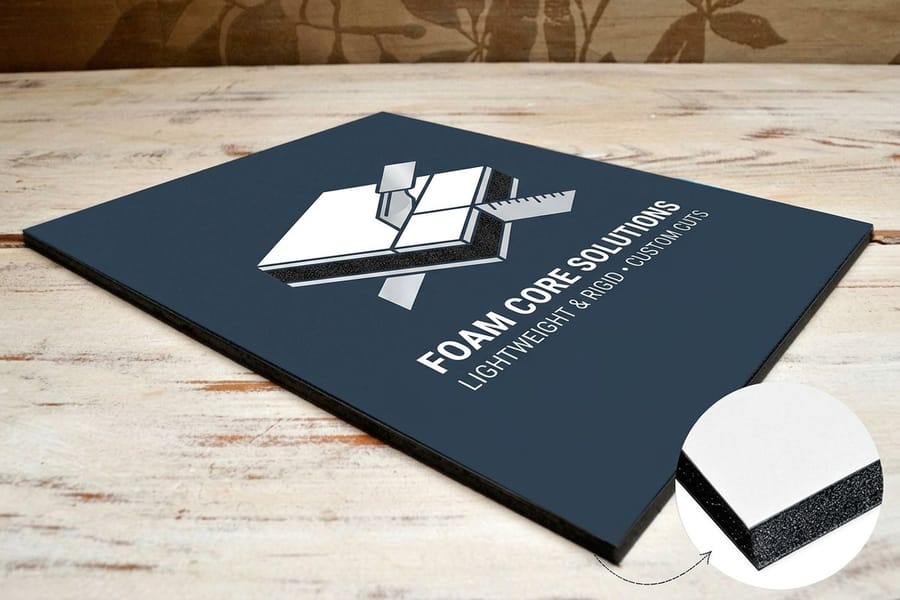
Nobody prints a standee on cardboard. The word stuck because the first ones were corrugated, but corrugated board is a bad surface for a photograph: the flutes running underneath telegraph as faint stripes across skin and flat color, and the cut edge frays into a fuzzy line as soon as a blade goes through it.
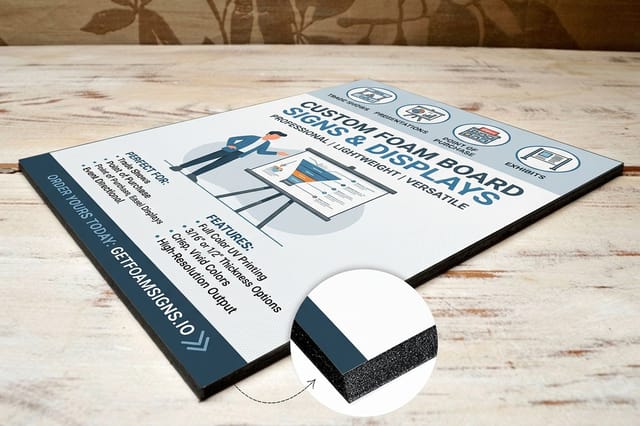
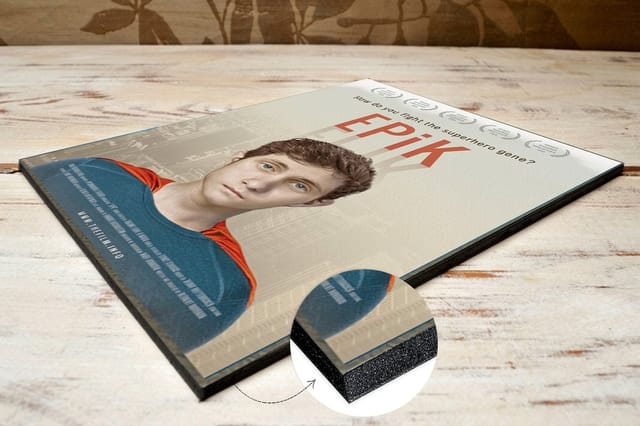
What the trade uses instead is foam core, a sheet of polystyrene foam sandwiched between two paper faces. It holds dead flat, weighs almost nothing, takes a clean cut, and at 3/16 inch it is thick enough to stand on an easel without sagging. That is the whole trick behind a standee: a photograph printed at full height, mounted on that board, then cut to the outline of the figure. Everything else is a choice about size, finish and support.
| Option | Board | Largest cut | Indoors or out | From |
|---|---|---|---|---|
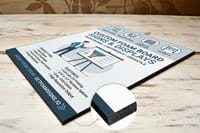
| Foam core signs | 3/16 in foam core, white or black | 40 x 60 in custom | Indoors | $49.99 |
| Foam core prints | 3/16 in foam core, gloss lamination optional | 40 x 60 in custom | Indoors | $49.99 |
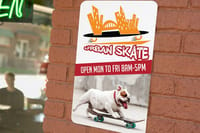
| PVC rigid plastic | 3mm rigid PVC, grommets optional | 36 x 40 in custom | Indoors or out | $25 |
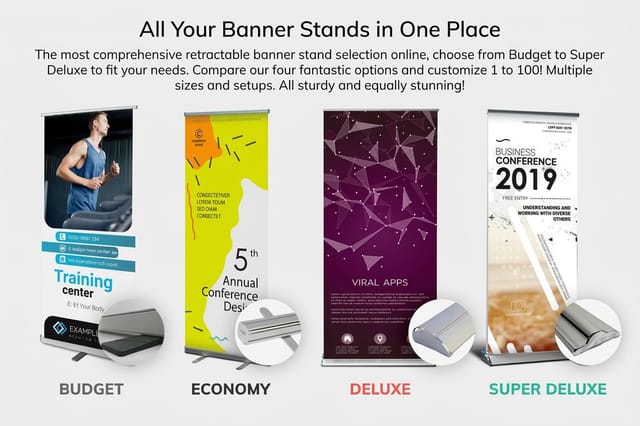
| Retractable banner stands | 13oz blockout vinyl on an aluminum base | 59 x 92 in | Indoors | $139 |
Read the third column before you fall in love with an idea. A full-height adult does not fit on one board, and the honest options are a two-panel join or a stand. The rest of this page is about making that decision before you shoot the photo rather than after. If you want the full size chart for the board itself, the foam board sizes guide lists every stock size next to the custom range, and the foam core printing collection shows what else runs on the same stock.
Turning a Photo Into a Cutout File
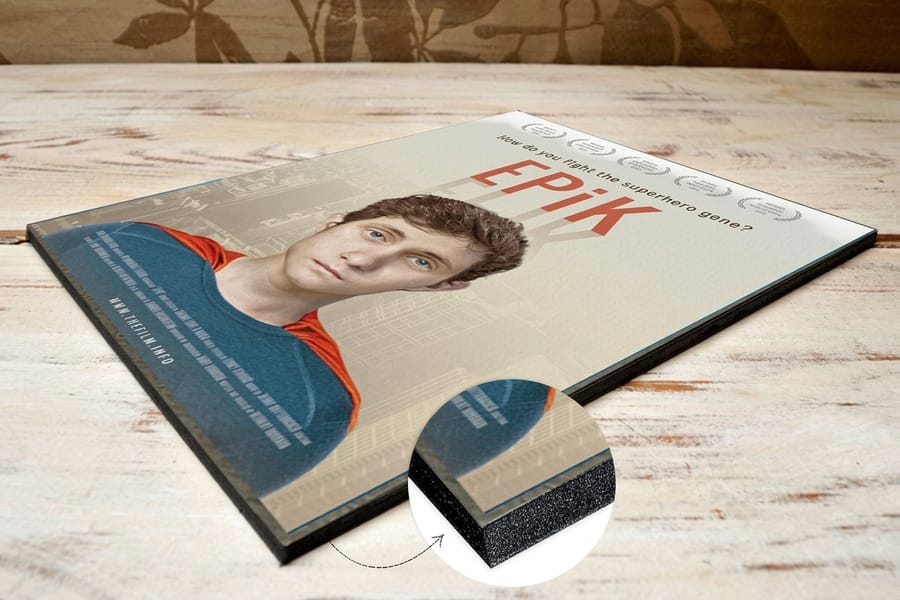
The photo does more damage than the printing ever will. Three things decide whether a cutout looks like a person or like a bad school project: the angle, the background, and the pixel count.
Angle. Shoot from about the subject's chest height with the whole body in frame, shoes included. A phone held at your own eye level and tilted down shortens the legs, and at snapshot size nobody notices. Printed at five feet, standing next to a real person, it reads instantly as wrong. Step back and zoom rather than moving in close, because a wide lens at three feet swells whatever is nearest to it, usually the hands and the shoes.
Background. A plain wall that contrasts with both the hair and the clothing. The edge of a cutout is only as good as the mask you can draw around it, and hair against a busy background is where the whole thing falls apart. Dark hair on a dark door is a lost afternoon in Photoshop.
Pixels. At arm's length, 100 ppi at final size is plenty for a figure this large, so a 60 inch tall print wants roughly 6,000 pixels of height. A vertical full-frame shot from a 24 MP camera gives about 6,000 pixels on the long edge, which just covers it when the person fills the frame top to bottom. Check the actual pixel dimensions rather than a megapixel badge, and never upscale a crop from a group photo. The big print resolution guide works through the same arithmetic for wall-sized prints.
Then the cut path. Supply it as its own vector path, clearly named, sitting about 1/8 inch outside the artwork so no ink gets trimmed away and no white halo appears along the edge. Simplify it around hair instead of tracing every strand, because a contour with hundreds of tiny points chips at the fine spikes. Keep fingers inside the path, and if an arm is held away from the body, decide whether the gap under it gets cut out or left as board. Our die cutting guide covers what a cutter can follow, and you can start from a correctly sized layout in the blank template library.
What the Shop Near You Will Actually Do
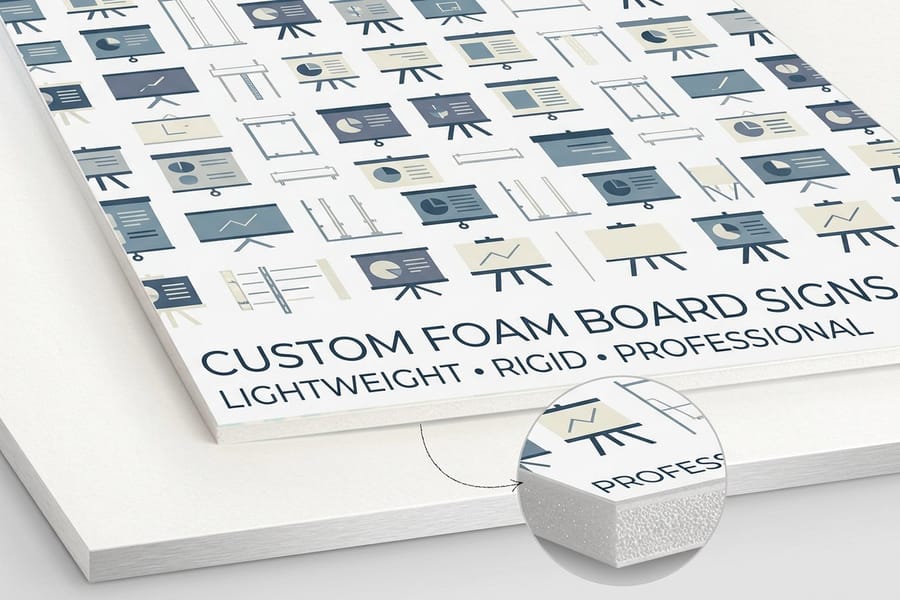
Search results for a cutout near you split into two kinds of business, and they behave nothing alike. A sign shop with a flatbed cutter prints and cuts in house. A copy or shipping storefront almost never owns that machine, so it takes your file, sends it to a partner, adds a margin, and hands you a date several days out. If you are going to wait days either way, you may as well know who is actually doing the work.
The local shop wins on exactly one thing, and it is a big one: today. A birthday tonight, a leaving party at five, a last-minute booth. No online printer beats a drive across town. Pay the premium and be glad the shop exists.
Everything else favours ordering online. Standard production on foam core is 4 business days, with 3 day, 2 day and next day rush available, and there is a free online proof before anything is printed, which matters more on a cutout than on a flat sign because the cut path and the crop at the feet are the two places these jobs go wrong. Boards start at $49.99. Do add shipping into the comparison rather than reading the unit price alone, since a 40 by 60 board travels in a large flat carton, and factor in that the local quote usually includes a design or masking charge for cleaning up the photo edge.
One more thing worth checking before you order anywhere: whether you actually need a cut figure. Half the jobs that start as a cutout end up better served by a straight rectangular board or a stand, because the piece is going against a wall where the outline is never seen in silhouette. The signage types guide is a fast way to sanity-check that, and the rigid signs range lists the flat-panel alternatives.
Standing It Up, and Where a Cutout Fails
The board arrives flat, so decide in advance how it stays upright. On an easel it stands fine and travels under one arm. Against a wall it leans. Free-standing in the middle of a room it needs a strut taped on behind or a weighted base, and a five-foot board catches enough draft that a doorway or an air vent will put it on the floor at some point in the evening.
For a full six-foot figure, the two-panel join is the traditional answer: cut the artwork at a natural horizontal line, a belt or a hem rather than the middle of a face, print both panels, then bridge the seam behind with a strip of the same board. Done at a belt line the seam disappears at conversational distance. Done across the chest it never does.
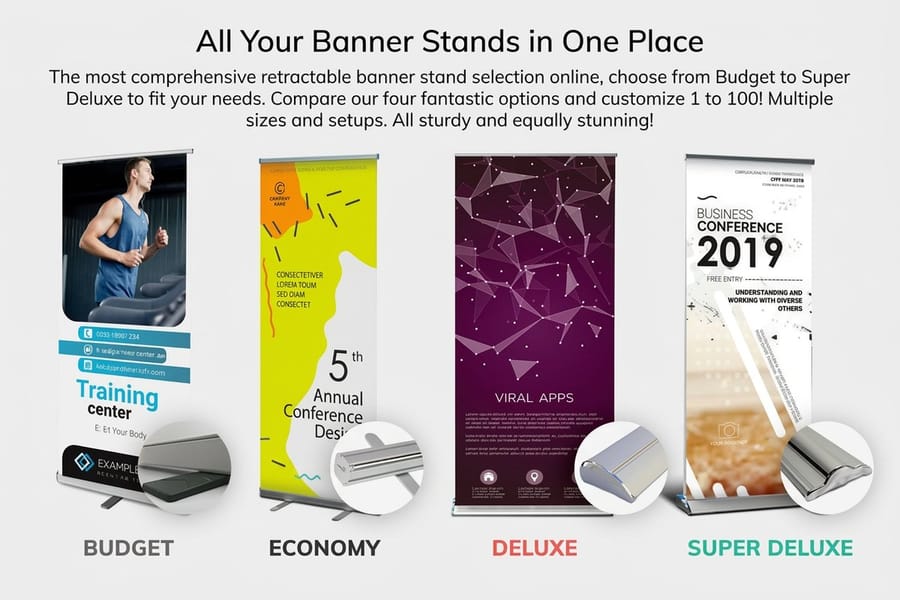
The other answer is to stop fighting the board. A retractable banner stand prints the figure on 13oz blockout vinyl at 79, 85 or 92 inches tall, includes the aluminum base from $139, sets up in under a minute with no tools, and rolls back into its own case at the end of the night. Blockout means a window behind it never ghosts through the graphic. What you give up is the silhouette: it is a rectangle, so the figure is printed against a background rather than cut around. For a trade show booth or a store entrance that trade is usually worth it, and the same stand works events for years.
Where cutouts genuinely fail is outdoors. Foam core is indoor stock, and a night of rain or a humid garage separates the paper faces from the foam. If the piece has to live outside, move to 3mm rigid PVC from $25 with grommets on the top edge or all four corners, and accept the 36 by 40 inch ceiling. If it is going to be touched all day at a booth, add the gloss lamination on a foam core print, which puts a clear layer over the surface and takes the fingerprints instead of the ink. The foam core against PVC comparison goes deeper on that choice.
Wally explains the standee
A photo, a board, and a cut line
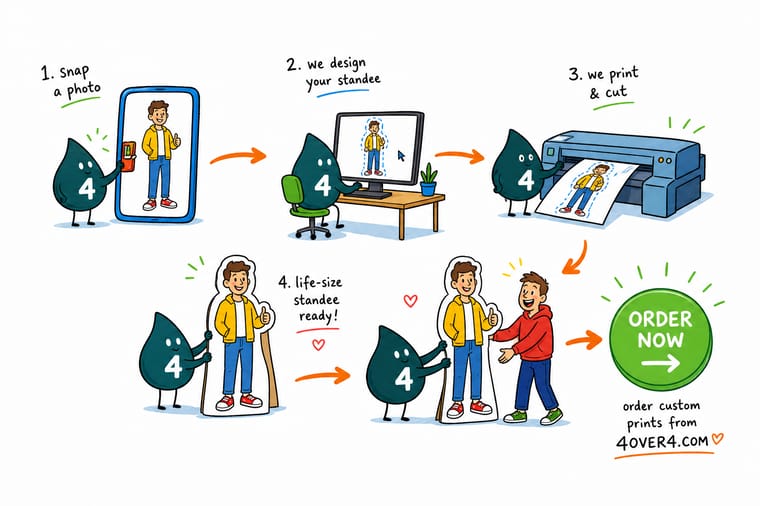
Wally takes one photo of the whole body from chest height, against a plain wall so the hair edge stays clean. He draws the cut path about an eighth of an inch outside the ink so nothing gets trimmed and no white halo shows. Then he checks the ruler, because one custom foam core board stops at 40 by 60 inches. Anything taller gets split into two panels joined behind at the belt line, or moved onto a retractable stand that reaches 92 inches. And he keeps it indoors, because paper faces and rain do not mix.
Order a foam core cutout →Specs and pricing
Boards, stands, sizes and starting prices
The three ways a life-size figure gets printed, side by side, with live configuration choices and starting prices straight from the 4OVER4.COM configurator.

Print it
Order the board your cutout runs on
Explore more
Where to go next
By the numbers
Foam core and PVC boards cut to a human outline
Common Questions
Your cutout questions, answered
Is there anywhere to get a life-size cardboard cutout near me?
A local sign shop with a flatbed cutter can make one, and if you need it tonight that is the right call, so call the sign makers rather than the copy chains. Most copy and shipping storefronts do not own a cutter, so they send the job to a partner, which means you wait several days anyway and pay a markup for the handoff. When the deadline is not tonight, ordering the same construction online is usually cheaper and comes with a free online proof so you see the crop and the cut line before anything is printed.
How big can a life-size cutout actually be?
On one board, 40 by 60 inches. That is five feet, which covers a child, a seated figure, a mascot, or a torso-up crop, but it is short of an adult standing at full height. For a genuine six-foot figure you either split the artwork into two panels and join them behind the seam with a strip of the same board, or you move the graphic onto a retractable banner stand, which comes in 79, 85 and 92 inch heights and includes its own base.
What is a life-size cutout printed on?
A 3/16 inch foam core board, white or black, with three print materials to choose from: 10.4 mil Semi Gloss, 10.4 mil Hi Gloss, and 32# Bright White Uncoated. Hi gloss deepens skin tones and works for a photographic figure. Semi gloss keeps reflections down under the overhead lighting you get in a lobby or a hall. The uncoated stock reads flat and matte, which suits graphic artwork more than a photo. Pick black board when the cut edge will be seen against a dark room.
What photo do I need for a full-height cutout?
One frame with the entire body in it, feet included, taken from roughly the subject's chest height. Shooting down from your own eye level foreshortens the legs, and the mistake only becomes obvious once the print is standing at full size. Stand back and zoom rather than stepping in close, because a wide lens at three feet enlarges shoes and hands. Use a plain wall that contrasts with hair and clothing, since the edge of the cutout is only as clean as the mask you can draw around the hair.
Can a cardboard cutout go outside?
No. Foam core is paper-faced with a foam middle, so a shower or a damp garage delaminates the faces and the board warps. For an outdoor figure, 3mm rigid PVC is weather resistant and starts at $25, with grommets available on the top edge or all four corners, but the largest custom cut is 36 by 40 inches. That is a doorway-sized panel rather than a standing person, so plan the artwork around the board instead of the other way around.
How fast can I get one, and can I see it before it prints?
Standard production on foam core is 4 business days, with 3 day, 2 day and next day rush available, and shipping time sits on top of that, so count backward from the event date rather than the order date. A free online proof is offered before production starts, which is the step worth taking on a cutout because the cut path and the crop at the feet are exactly the two things that go wrong. If the date is tomorrow, a local shop wins on that one point.
Get Started
Start a full height cutout in the foam core configurator
Pick the board, upload the photo, send us the cut path, and approve a free online proof before a single sheet runs.
Legal Disclaimer
Gold Standard guarantees apply to all standard orders placed through 4over4.com. Price match requires verifiable proof of a competitor's published price for an equivalent product with matching specifications and turnaround time. Satisfaction guarantee covers manufacturing defects and print quality issues. Contact support with order number and documentation. On-time delivery rate based on tracked orders 1999 to 2026. Individual results may vary based on shipping carrier performance.
