
Letterhead vs Notecards for Business Correspondence, and When to Use Each


Two pieces of stationery, two completely different jobs. The size, the fold, the envelope and the price separate them, and one of the two is worth ordering first.
Use letterhead when the message is a document someone will read, sign or file, and use a notecard when the message is short enough to write by hand. Letterhead is an 8.5 by 11 sheet that folds in thirds into a #10 envelope and goes back through your office printer, so it has to be uncoated. A notecard is a small printed card with a blank panel left for a pen, mailed in an A2 that gets addressed by hand. Flat Notecards start at $19.77 and Folded Notecards at $38.22 at 4OVER4.COM, against $99.95 for Standard Letterheads.
Quick answer
One carries a document, the other carries a sentence
The test is whether the message survives being cut to two sentences. If it does, write it by hand on a notecard, because the handwriting is most of the value. If it does not, print it on letterhead, where there is room for paragraphs, a signature line and an attachment. The fold follows from that choice: two folds into a #10 for the letter, one fold into an A2 for the card. So does the finish, since only the letterhead has to survive a laser fuser at your desk.
What Each Format Is Actually For
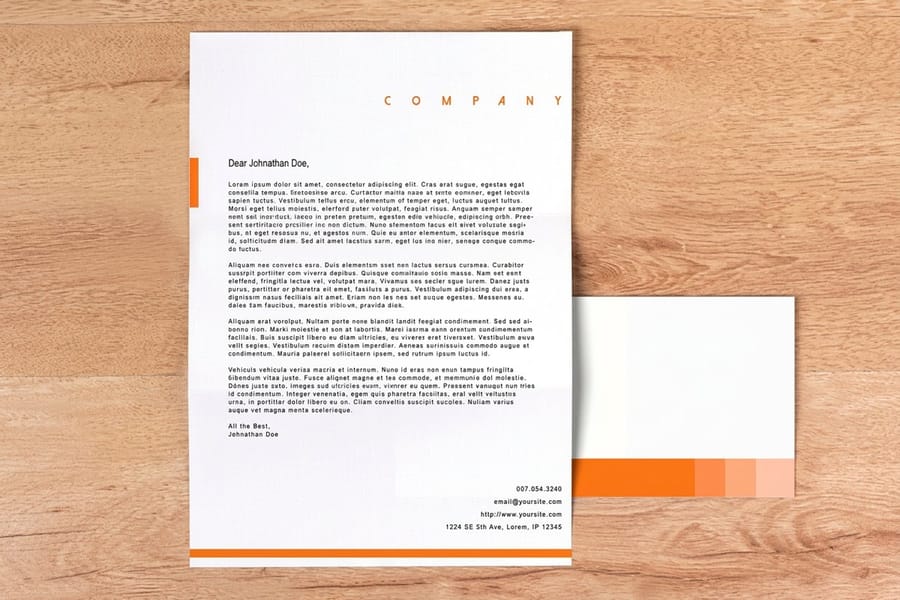
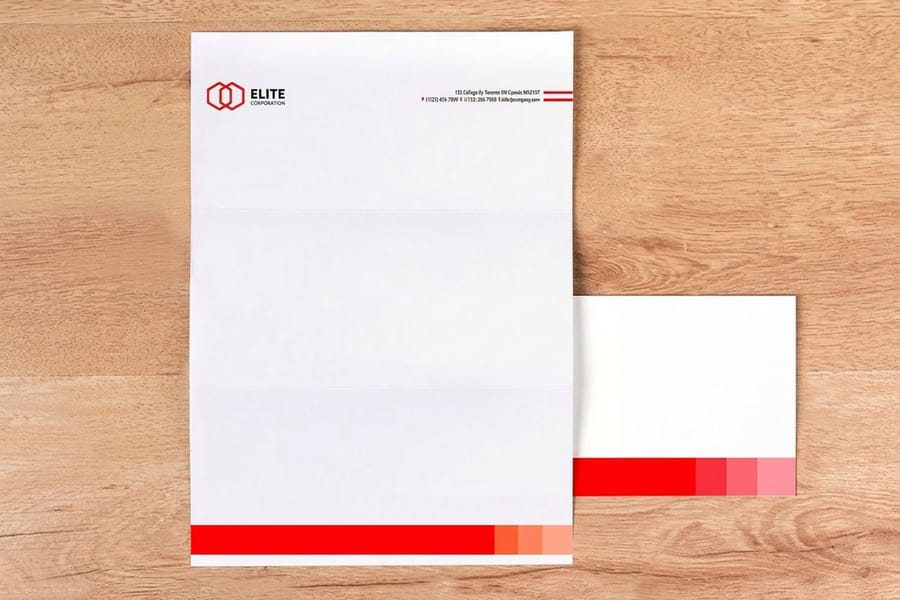
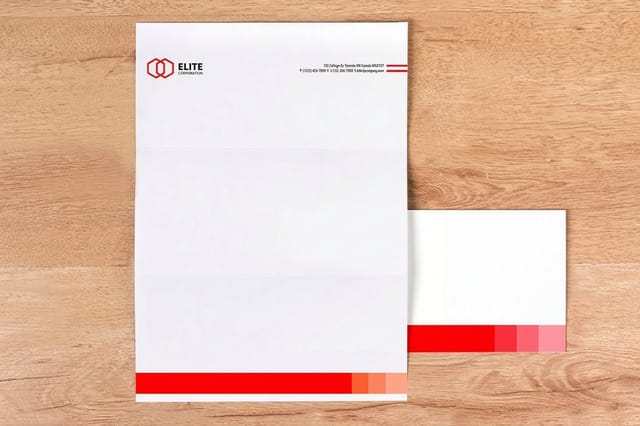
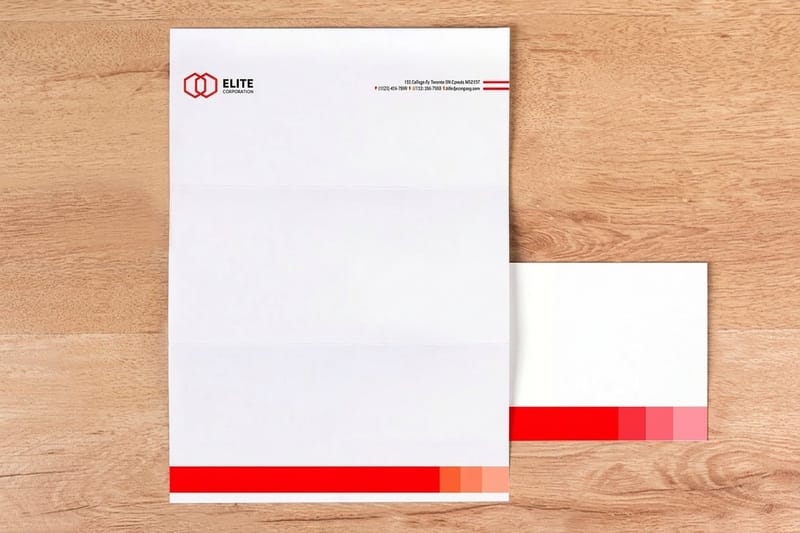
A letterhead is a blank document with your identity already on it. You print the message onto it later, either at a desk or as part of the print run, and the recipient treats the result as paper that carries information: a quote, an engagement letter, a shipping notice, a page with a signature at the bottom.
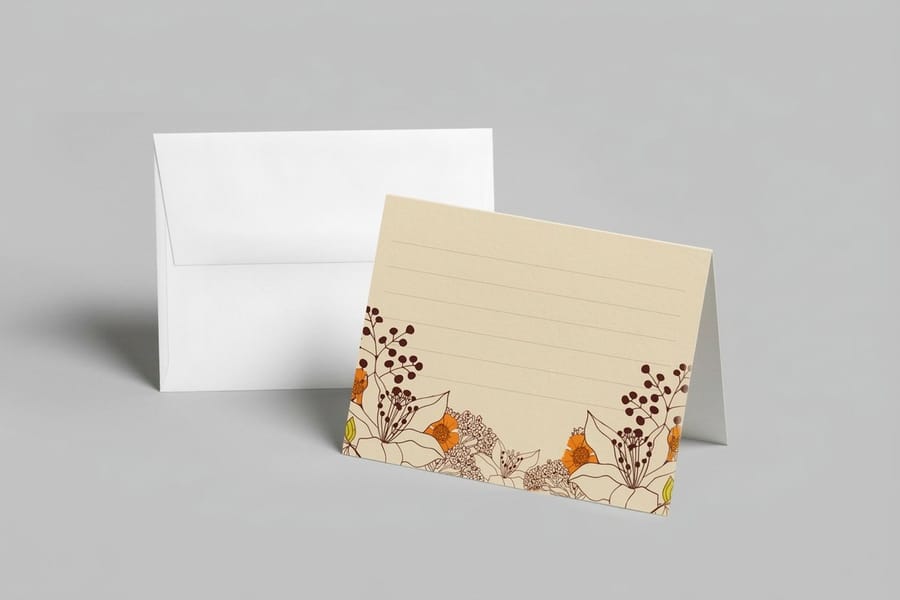
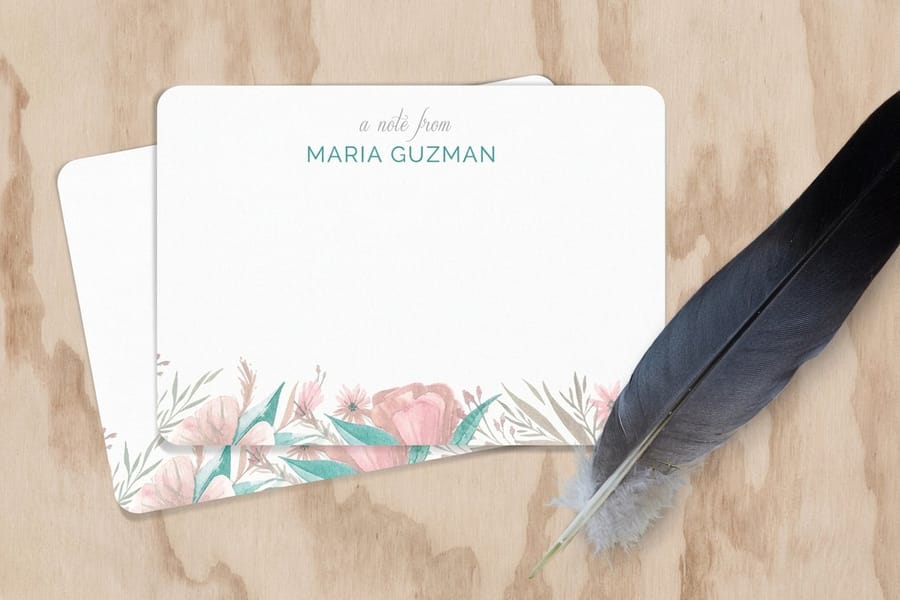
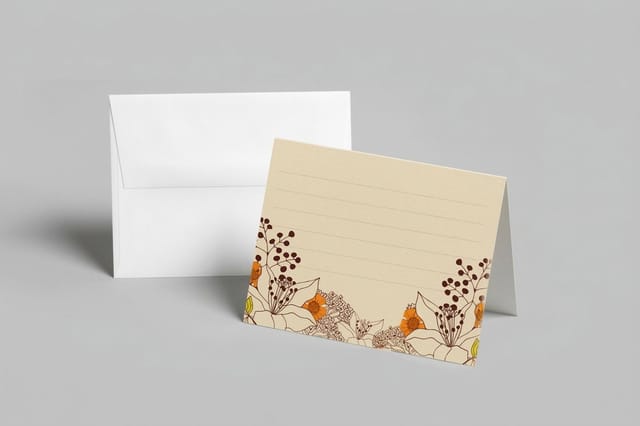
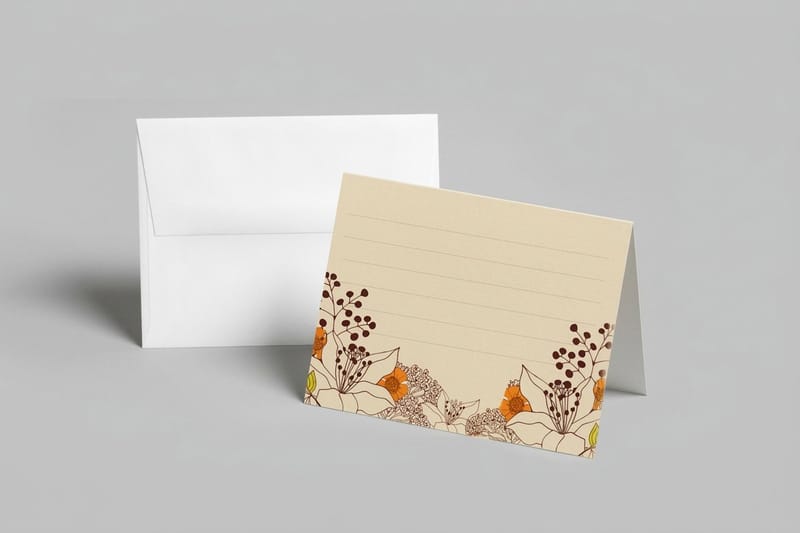
A notecard is the opposite arrangement. The printed part is the identity, and the message is the part that stays empty, because a person writes it. That single difference drives everything else about the two products, including the paper, the envelope and how many you should buy.
The practical consequence is who does the work. A letterhead scales without limit, since a printer produces the hundredth letter as fast as the first. A notecard needs a human with a pen for every unit, which caps a realistic run at whatever your team can genuinely write in a week. Order 1,000 cards for a two-person office and you will find 800 of them in a drawer next year.
It also changes what the recipient reads into it. A printed thank-you on Standard Letterheads reads as procedure. Four handwritten lines on Folded Notecards reads as a person deciding you were worth ten minutes. Neither is better; they answer different briefs.
Size, Fold, Envelope and Price, Side by Side
Most of the confusion between these products disappears once you line up the physical facts. The fold count sets the envelope, the envelope sets how the piece gets addressed, and the addressing is what quietly costs the most on a large run.
| Format | Size | Fold and envelope | Who writes the message | Starts at |
|---|---|---|---|---|
| Letterhead | 8.5 x 11 in | Folds in thirds into a #10, which a machine can stuff and seal. | A printer, at your desk or ours. | $99.95 |
| Flat notecard | Single panel, printable both sides | No fold; slips into an A2 or straight into a package. | A person, on the front or the back. | $19.77 |
| Folded notecard | 4.25 x 5.5 in closed, scored and folded once | One fold into an A2 envelope, addressed by hand. | A person, on the blank inside panel. | $38.22 |
Read the fold column before the price column. A #10 envelope is the only one in that table a mailing house can run through equipment at speed, which is why bulk letters have used the same folded sheet for decades. An A2 gets addressed by whoever is sending it, and that is fine for forty cards and painful for four hundred. Our three-way stationery comparison covers where notepads fit alongside these two, and the thank you card size guide lists the card and envelope pairings above A2.
One warning about the flat card. Being printable on both sides sounds like free space, and it is, until you print a design across the back and leave nowhere clean for a pen. Leave one side quiet.
The Office Printer Question That Only Applies to Letterhead
Product descriptions leave that trade-off out. Letterhead is the one piece of stationery that has to go back through a printer after we ship it, and that constraint rules out finishes you might otherwise want.
Uncoated text-weight stock is the safe answer, because toner fuses into an uncoated surface and stays there. A gloss coating makes toner sit on top of the sheet, where it can crack along a fold or scuff in an envelope. Raised finishes are worse: the resin softens under a laser fuser, so a thermographed monogram is a bad idea on any sheet that will be reprinted in-house. If you want a raised or foiled letterhead, have the full letter printed with it in one pass instead.
Two more habits save reprints. Keep printed elements a quarter inch clear of the trim edge, because desktop printers cannot hold toner to the very edge and your typed text will collide with a full-bleed border. And print one test sheet through the actual office machine before approving a run of 1,000; a stock that behaves in one printer occasionally jams in another.
Notecards escape all of it. Nothing runs them through a fuser, so a heavy uncoated card, a soft-touch finish or a raised element is fair game. Start from a correctly sized layout in our blank template library, and if you are setting margins on the letter itself, the business letter format guide shows where the body copy has to begin so it clears the printed band.
How Many of Each, and What They Pair With
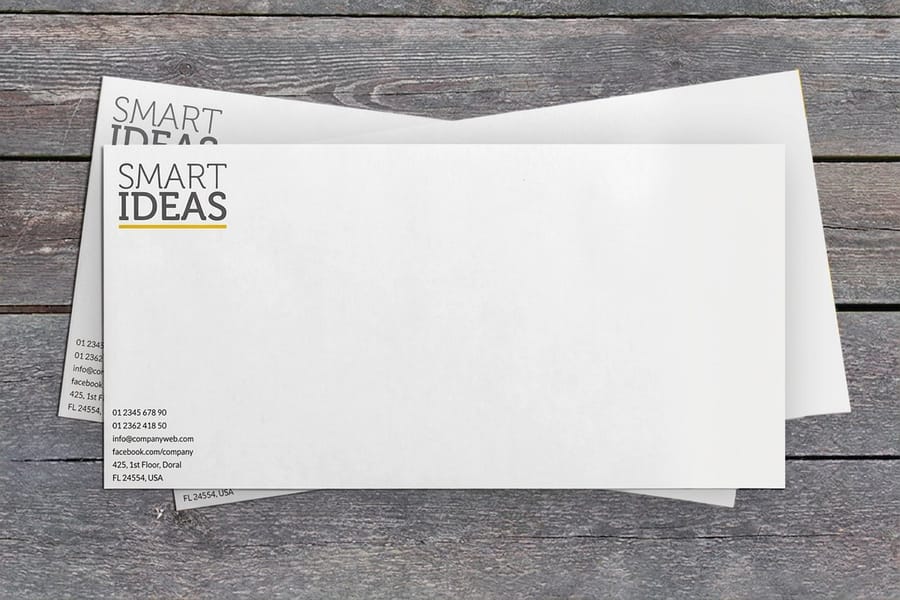
Letterhead is bought by the box and used slowly, so the quantity question is really a design-stability question. If your address, phone number or logo might change in the next year, buy the smaller run. A stack of obsolete letterhead with a crossed-out suite number is a worse look than plain paper.
Notecards work the other way. Buy the quantity your team will genuinely write, and treat that number as an honest estimate of pen time rather than an ambition. A realistic starting point is one card per meaningful customer interaction per month, multiplied by twelve, and most small teams land somewhere well under 250 a year.
Pairing matters too. Letterhead assumes a #10, and Printed Envelopes with a matching return address finish the set, though for internal or hand-delivered letters a blank envelope is enough. Notecards assume an A2, and because those get addressed by hand anyway, most people skip the printed version. If you want the whole set to hang together, matching letterheads and business cards covers keeping ink and type consistent across pieces of very different size, and how to build a business stationery set puts the order of purchase in one list.
Shop the full ranges at letterhead printing, notecard printing and envelope printing to see the stocks and sizes side by side.
The Verdict: Buy the One Your Messages Actually Are
If your business sends documents, buy letterhead first. Agencies, law firms, contractors, clinics and anyone who quotes in writing send paper that has to be read, signed and filed, and a notecard cannot do that job at any price.
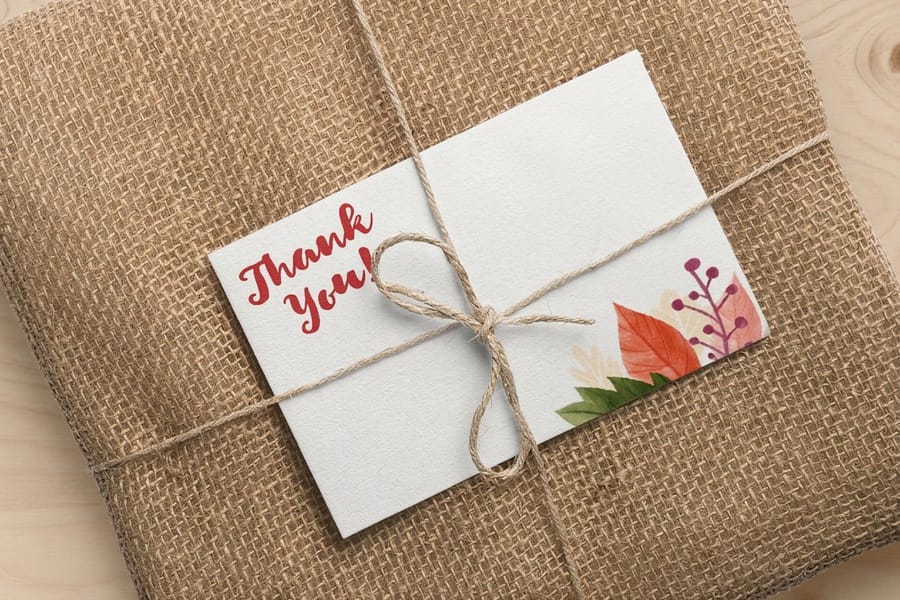
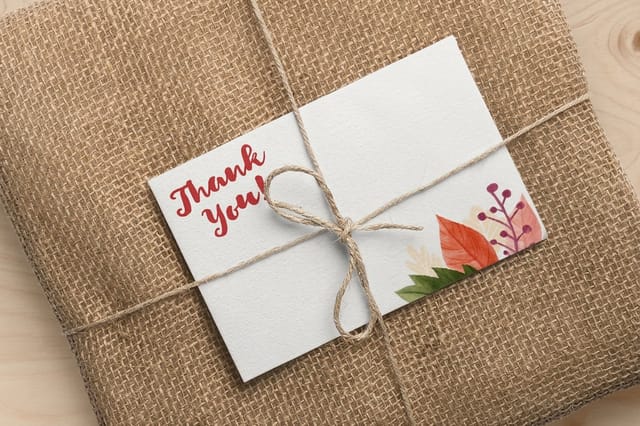
If your business runs on follow-up, buy notecards first. Real estate, salons, wedding vendors, ecommerce brands who tuck a card into every box: the entire value of what you send is that a person wrote it. Flat Thank You Cards at $19.77 are the cheapest reliable loyalty tool we print, and they beat a printed letter every single time in that context.
Most companies eventually own both, in wildly different quantities: one box of letterhead that lasts two years, and a small stack of cards that gets replaced whenever it runs out. Buying them together also keeps the branding honest, because you set the ink color and the typeface once instead of drifting apart across two separate orders. If you want a hand with the layout of either, designing custom notecards and the Flat Notecards configurator are the fastest way in.
Wally explains letterhead vs notecards
Type it or write it, then pick the paper to match
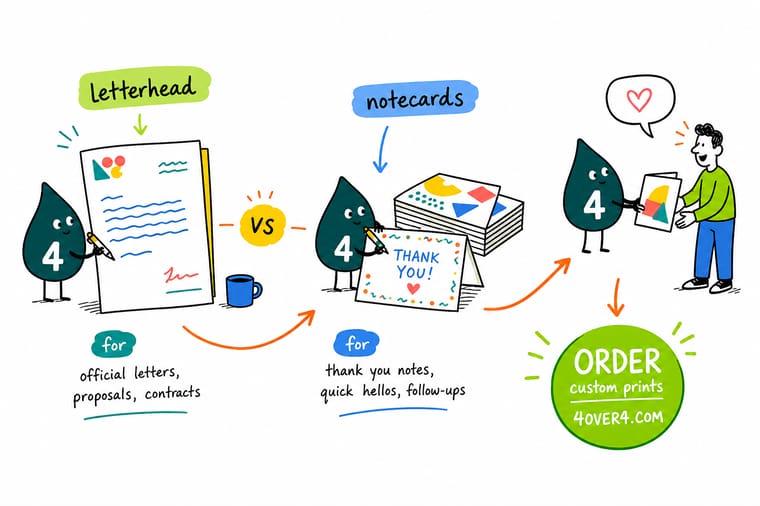
Wally reads the message before he reaches for paper. Paragraphs, a signature and something to file go on a letterhead, folded in thirds into a #10. Three lines that mean something go on a notecard, folded once into an A2 he addresses himself. He keeps the letterhead uncoated because it has to go back through the office printer, and he saves the heavy stock and the raised finish for the card, which never sees a fuser.
Shop letterhead printing →Specs and pricing
Sizes, stocks and starting prices for both
Configuration choices and starting prices straight from the 4OVER4.COM configurator, so you can compare the sheet and the card on the same screen.
Print it
Order the stationery your messages need
Explore more
Where to go next

By the numbers
Business stationery printed to a deadline
Common Questions
Letterhead and notecard questions, answered
When should a business send a letterhead instead of a notecard?
Send letterhead when the recipient has to do something with the paper: read a proposal, check a quote, sign a page, file it, or forward it to someone else. The 8.5 by 11 format exists because that is the shape of a document. A notecard has room for roughly three or four handwritten lines, and any attempt to squeeze a contract onto one reads as awkward. The plain test is whether the message survives being cut to two sentences. If it does, use a card.
What size notecard do businesses actually use?
The two working sizes are the flat card and the folded card. A flat notecard is a single printed panel you write on the front or the back, which suits a short line dropped in a shipping box. A folded notecard prints on the outside and leaves a clean blank panel inside for the pen, which is what people expect for a thank-you or a congratulation. Folded costs more because it is a bigger sheet plus a scoring and folding pass. Our Flat Notecards start at $19.77 and Folded Notecards at $38.22.
Can I run printed letterhead through my office laser printer?
Usually yes, and it is the main reason letterhead exists, but the finish decides it. Uncoated text-weight stock takes toner without complaint. A heavy gloss coating can make toner sit on the surface and flake off a fold, and any raised finish softens under a laser fuser. If staff will print letters onto the sheet at their desks, order it uncoated and keep the printed area away from the last quarter inch of every edge, because most office printers cannot hold toner right to the trim.
Do notecards need matching envelopes?
They need an envelope that fits, and matching is a separate decision. A folded notecard at 4.25 by 5.5 inches goes into an A2 envelope; a larger 5 by 7 card goes into an A7. Blank envelopes are cheapest and are fine when the card is being hand-delivered or slipped into a package. Printing your return address on the envelope only pays off when the card is genuinely mailed, and our Printed Envelopes start at $142.99, so most small runs of notecards ship with blank envelopes instead.
Is a folded notecard worth twice the price of a flat one?
It depends on whether anyone writes in it. A folded card gives you a private interior panel, so the handwritten message is hidden until the card is opened, and the card stands up on a desk afterwards. That is worth the difference for client thank-yous and for anything a recipient might keep. For a printed line in a shipping box that nobody signs, a flat card does the same job for less, and you can print both sides of it.
Should the letterhead and the notecard look identical?
They should share the logo, the type and one color, and they should not share the layout. A letterhead puts the identity in a band at the top and leaves the rest of the page empty for text. A notecard is mostly identity, because there is no body copy to make room for. Copying the letterhead layout onto a small card produces a header that eats half the writing space. Match the ink, not the arrangement.
Get Started
Order 25 folded notecards from $38.22
Pick an uncoated sheet for the letters you print in-house, a folded card for the notes you write by hand, and we ship both from the same press.
Legal Disclaimer
Gold Standard guarantees apply to all standard orders placed through 4over4.com. Price match requires verifiable proof of a competitor's published price for an equivalent product with matching specifications and turnaround time. Satisfaction guarantee covers manufacturing defects and print quality issues. Contact support with order number and documentation. On-time delivery rate based on tracked orders 1999 to 2026. Individual results may vary based on shipping carrier performance.
