
How to Choose an Event Display That Fits Your Space, Budget, and Car


Five display types, four footprints, and one decision. A 6 ft table, a 10 by 10 booth and an open outdoor pitch each take a different piece, at a different starting price and a different setup time on the morning.
Choose by the footprint you rented and the person who has to set it up. A 6 ft table takes a table cover and a table top display from $49.41. A 10 by 10 booth takes an 8 ft back wall plus one or two retractable stands from $139. An outdoor pitch takes an event tent from $987.45 and feather flags from $108.75, because indoor booths cap the back wall around 8 ft and outdoors the real limit is wind rather than height.

Quick answer
Footprint first, setup second, price third
The space you rented eliminates most of the catalog before you open it. A 6 ft table cannot use a back wall and an inline booth cannot use a tent, so the shortlist is usually two products long. After that, judge by who sets it up and how it travels: a retractable stand is two minutes and a tube, a pop up wall is twenty minutes and a wheeled case, a tent is two people and an SUV. Price only breaks the tie between pieces that both fit.
The Five Display Types and What Each One Is For
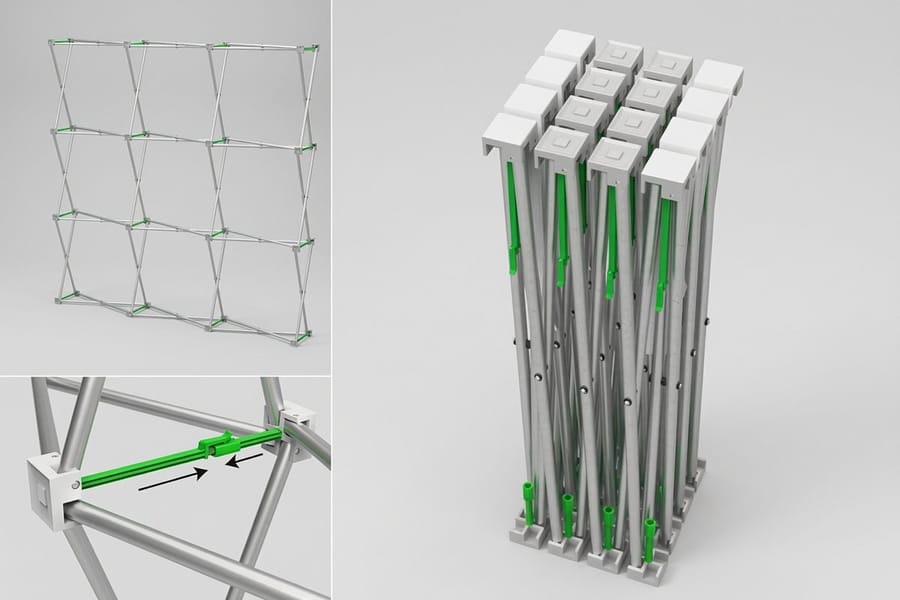
Every event display on the market is one of five things. Once you can name the five, the shopping is quick, because each one has a job it does better than the other four and a place where it plainly fails.
| Display | Starts at | Setup | Travels as | Where it fails |
|---|---|---|---|---|
| Table top display | $49.41 | Under a minute, one person | A bag you can carry with one hand | Too small to be seen from an aisle, and useless without a table |
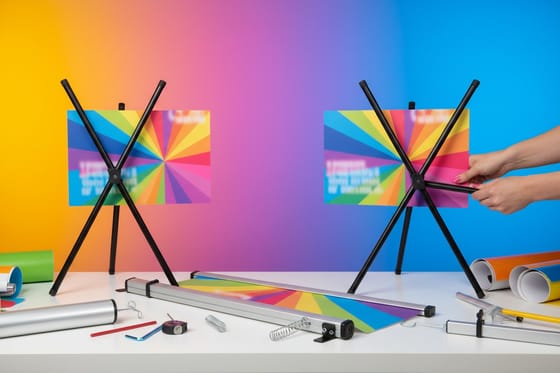
| Retractable banner stand | $139 | About two minutes, one person | A tube that lies across a back seat | Light base, so any wind outdoors puts it on the ground |
| Pop up display wall | $752.39 | Fifteen to twenty minutes the first time | A wheeled hard case | Cost and bulk if you only exhibit once a year |
| Feather flag | $108.75 | Minutes, once the spike is in the ground | A sectioned pole in a carry bag | Too tall for an indoor inline booth, and needs soft ground or a cross base |
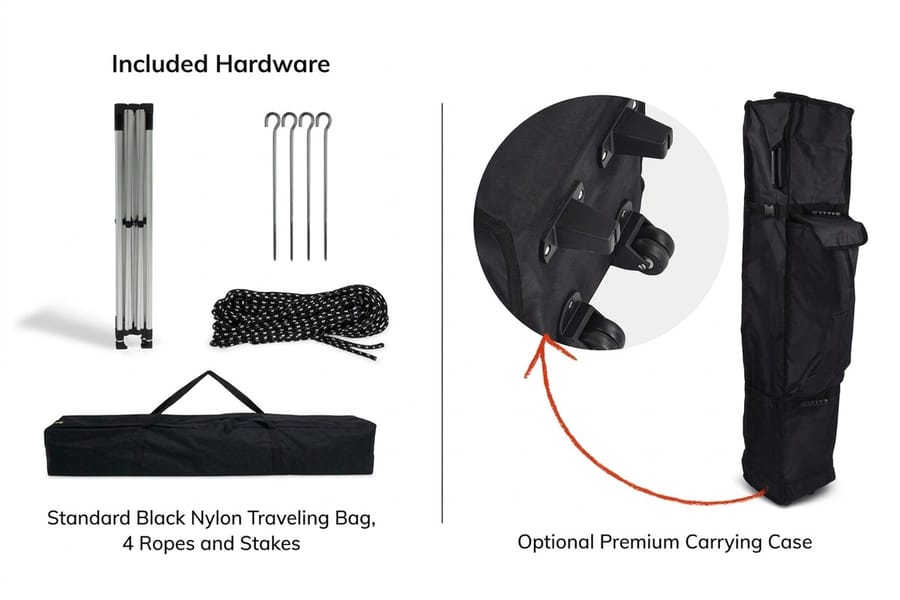
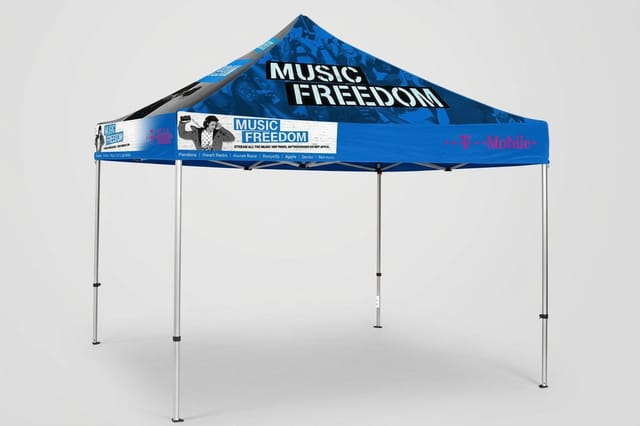
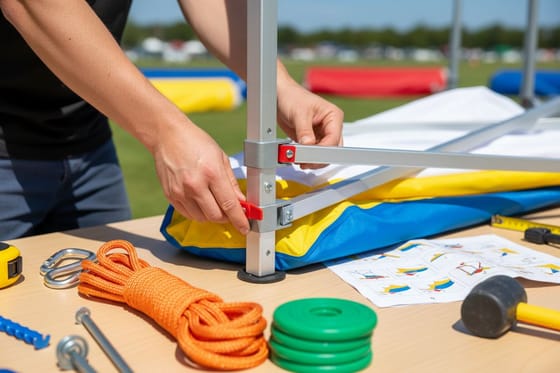
| Event tent | $987.45 | Two people, plus weights before graphics | A frame bag that needs an SUV | Indoors it is pointless, outdoors it is the piece you cannot skip |
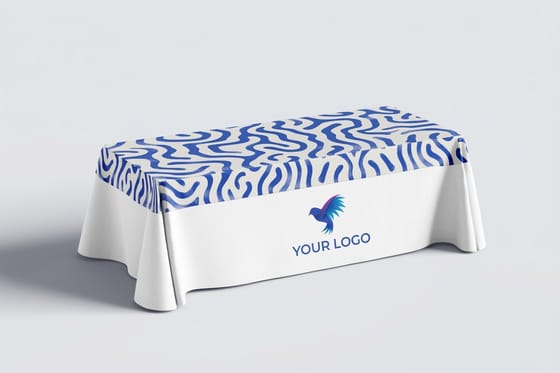
Read the last column before the price column. Most bad booth spending happens because someone bought the piece that looked best in a photograph rather than the piece that fits the space they rented. There is also a sixth item that is not a display at all and still earns its keep: a printed table throw from $225.00, which hides everything stored under the table.
If you want the hardware side compared in more detail, the retractable versus X frame comparison covers the two cheapest stands and why one of them keeps working after twenty setups.
Match the Display to the Footprint You Paid For
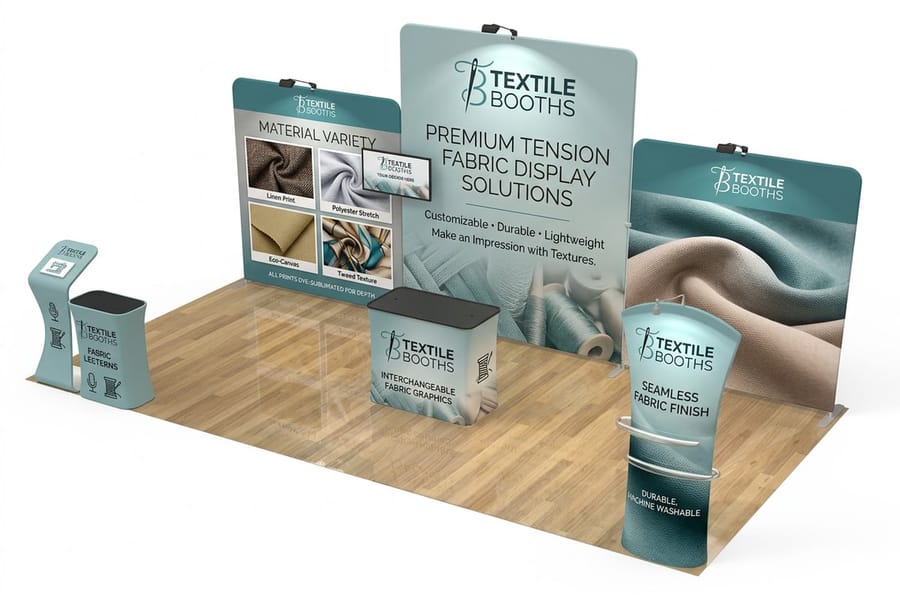
Start with what the organizer sold you. A booth contract says 6 ft table, 10 by 10, 10 by 20, or a marked outdoor pitch, and each of those has one sensible answer.
A 6 ft table, indoors. Order a table cover and a table top display, then stop. Add one mini retractable stand from $49.41 beside the table if you have floor space to the side. The table is the whole booth, so the money goes into what sits on it rather than behind it.
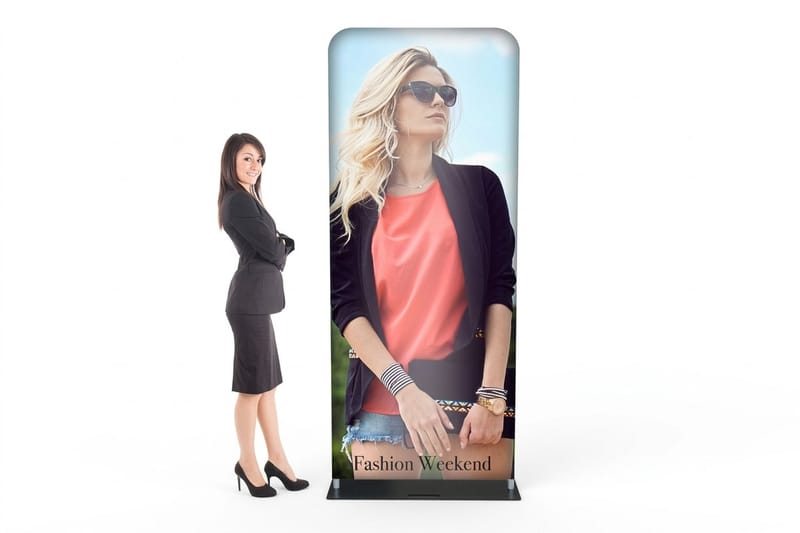
A 10 by 10 booth. This is the standard inline space, and the standard answer is an 8 ft back wall plus one or two stands. A pop up display or a fabric display from $163.67 fills the back, a retractable stand anchors each front corner, and a covered table sits across the middle or along one side. Keep the front half low. Halls usually cap it at about 4 ft so you do not wall off the booth next door.
A 10 by 20 booth. Do not buy twice as much back wall. Buy one wall plus a second focal point: a second stand set, a demo table, or a step and repeat banner from $217.50 for photographs. Two identical walls side by side read as a corridor, and people walk through corridors.
An outdoor pitch. Tent first, flags second, everything else last. An event tent gives you shade, a rain plan and a roof to brand. Feather flags mark you from the far end of the field. A retractable stand does not belong here at all.
The trade show printing collection groups the pieces that work together, and the convention display guide takes the same decision through a full exhibit hall.
Setup Time, Weight, and What Fits in the Car
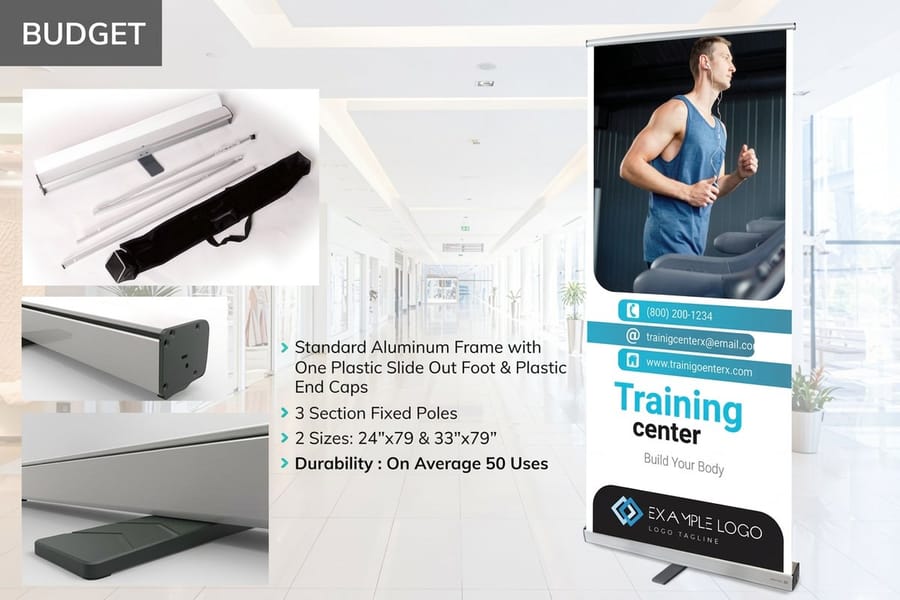
The spec nobody publishes is how the display behaves at 7am with one person and a coffee. It is the spec that decides whether you use the thing again next year.
A retractable stand is the benchmark: stand the base, extend the pole, pull the graphic up, hook it at the top. Two minutes, one pair of hands, and it goes back in its tube just as fast at the end of a long day. That is why exhibitors who travel own several and buy a new graphic rather than new hardware. Our retractable stand setup walkthrough shows the sequence, including the part people get wrong, which is letting the graphic snap back into the cassette.
A pop up wall is a different animal. The frame opens like an accordion and has to be squared before the fabric goes over it, and the first build takes fifteen to twenty minutes with the instructions in your hand. After that it drops to a few minutes. It rewards repetition, which is another way of saying it rewards exhibiting often.
Tents are the honest outlier. Two people raise the frame, and the weights go on every leg before a single graphic is hung, even on a still morning. Every event where a tent goes airborne has the same cause, which is somebody deciding the wind was fine. The event tent setup guide runs the order properly.
Transport follows the same ranking. Tubes and table covers travel in any car. A wheeled hard case wants a folded rear seat. A tent frame wants an SUV or freight. If you fly to your events, the shortlist is a stand, a cover and a table top display, because everything else costs more to ship than to reprint.
What to Buy First, Second, and Only If You Exhibit Often
Spend in the order the audience notices, not in the order the catalog lists.
First purchase, under $400. A table cover from $225.00 and a retractable stand from $139. Those two pieces turn a bare trestle table into something that looks planned, and both survive being packed badly. A cheaper start still works: a table top display at $49.41 plus an X frame stand at $91, which is the right call when the event is a one off.
Second purchase, when you book a third show. The back wall. A fabric display from $163.67 or a full pop up display from $752.39. Buy the version where the graphic swaps out of the frame, because the thing that goes obsolete is the artwork, not the aluminum. Exhibitors who buy a fixed panel first almost always buy the frame system second, and pay for both.
Only if events are a real channel. A fabric booth kit from $2,599.00, which arrives as a matched set rather than pieces you hoped would look related, or an event tent from $987.45 if your season is outdoors. At that level the value is consistency across a dozen dates, not the individual pieces.
One thing worth saying plainly: the display is not the reason people stop at a booth. It buys you the glance. Print enough vinyl banners from $79 for the overflow spaces, keep the artwork readable from three meters, and put the rest of the budget into what you hand people. Set up the artwork itself from a correctly sized layout in the blank template library, and if this is your first show, walk the first time exhibitor checklist before you order anything.
Wally picks a display
Measure the space, then open the catalog
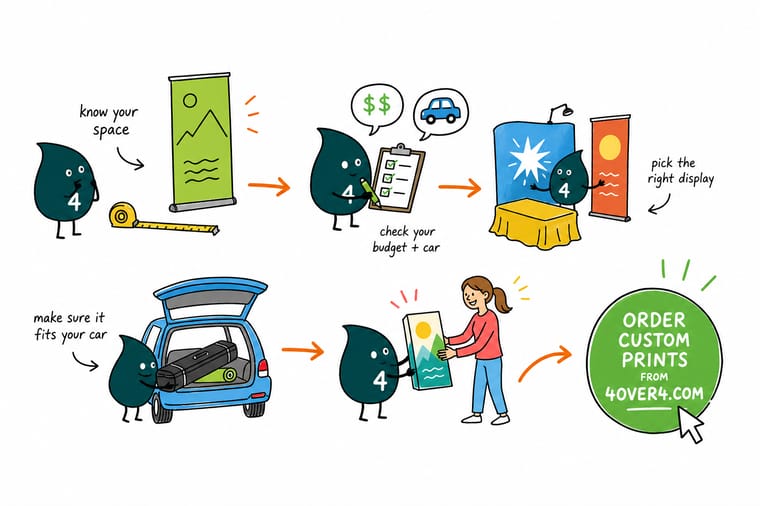
Wally paces out the booth before he shops. Six foot table means a cover and a table top display. Ten by ten means a back wall and a stand in each front corner, with nothing tall in the front half. Outdoor pitch means the tent goes up first and the weights go on before any graphic. He owns two retractable stands because they fit in a car and he can raise them alone, and he only reprints the graphic when the offer changes.
Order a retractable banner stand →Specs and pricing
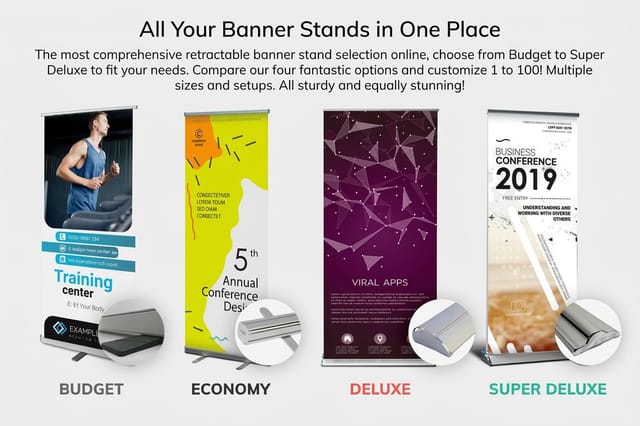
Sizes, options and starting prices side by side
The stand, the wall and the tent, with live configuration choices and starting prices straight from the 4OVER4.COM configurator.


Print it
Order the display that fits your footprint

Explore more
Where to go next

By the numbers
Tents, pop ups and flags shipped as a set
Common Questions
Your event display questions, answered
What is the cheapest event display that still looks professional?
A table top display or a mini retractable banner stand, both starting at $49.41 at 4OVER4.COM. Either one sits on a covered table and reads well from a few feet away, which is all a farmers market or a school fair needs. The mistake at this price point is buying a bare vinyl banner and taping it to a table edge. A vinyl banner starts at $79 and is excellent hung on a wall or a fence, but it sags and curls when it has no frame, and that is what makes a booth look temporary.
How tall can my display be inside a trade show booth?
Most inline booths hold the back wall to about 8 ft and anything in the front half of the space to about 4 ft, so you do not block the neighboring booths. Corner and island booths get more height. The exact numbers live in the exhibitor kit the show sends you, and they vary by hall, so read that document before ordering anything tall. This one rule rules out feather flags and event tents for indoor inline space, no matter how good they look in the photos.
Can I use a retractable banner stand outdoors?
Only in still air with a wall behind it, and even then it is a gamble. The base of a retractable stand is deliberately light so one person can carry it, and the graphic acts as a sail. A gust bends the support pole or drags the whole unit over, and the crease it leaves in the graphic does not come out. Outdoors, use feather flags on a ground spike from $108.75, or an event tent from $987.45 with weights on every leg.
How long does each display take to set up?
A retractable stand is roughly two minutes for one person: stand the base, extend the pole, pull the graphic up, hook it. A table cover is instant. A pop up fabric wall runs fifteen to twenty minutes the first time because the frame has to be opened and squared before the fabric goes over it, and much faster once you have done it twice. An event tent needs two people, and the weights and stakes go on before you hang a single graphic.
Will an event display fit in my car?
A retractable stand will. The tube lies across a back seat or in a trunk, and two of them stack without complaint. A pop up fabric wall ships in a wheeled hard case sized for the frame, so plan on folding a rear seat down. An event tent frame and its weights are the point where most people switch to an SUV or have the show freight it. If you fly to shows, the retractable stand and the table cover are the two pieces that travel without an argument.
Do I still need a table cover if I have a back wall?
Yes, and it is the cheapest fix in the booth. An uncovered table shows the crates, boxes and bags stored underneath, which undoes whatever the back wall achieved. Table throws start at $225.00 and are cut for standard 6 ft and 8 ft tables, so measure the table the show supplies before you order. A printed cover also gives you a second branded surface at the height where people actually look while they talk to you.
Get Started
Order a fabric display from $163.67
Measure the space, pick the piece that fits it, and we print the graphic. Stands, walls, covers and tents ship from our Queens plant.
Legal Disclaimer
Gold Standard guarantees apply to all standard orders placed through 4over4.com. Price match requires verifiable proof of a competitor's published price for an equivalent product with matching specifications and turnaround time. Satisfaction guarantee covers manufacturing defects and print quality issues. Contact support with order number and documentation. On-time delivery rate based on tracked orders 1999 to 2026. Individual results may vary based on shipping carrier performance.
