
How to Choose a Print Advertising Company That Delivers On Time


Agency, broker or printer, they all use the same words. Here are the five questions that tell them apart, and the point where paying a middleman stops making sense.
Choose a print advertising company on five answers: whether it prints in house, the in hand date rather than the turnaround, what the proof actually shows, whether shipping is inside the price, and what happens when a file is wrong. An agency is worth its margin when you need the strategy and the artwork built. Once the design exists and somebody on your side can read a proof, order direct from the press and keep the margin.
Quick answer
Buy the parts of the chain you actually need
A print advertising company can mean an agency that builds the campaign, a broker that places it, or a printer that runs it. The price gap between the three is mostly labor you may already have covered. Work out which parts you need, then judge candidates on in house production, a delivery date rather than a day count, the type of proof, landed cost with shipping, and how they handle a file that arrives without bleed.
What a Print Advertising Company Actually Sells
Three different businesses answer to the same name, and telling them apart is most of the decision.
The full service agency writes the campaign, designs the pieces, buys the printing and often handles the mailing. You get one contact and one invoice. The printing itself is bought from somebody else and marked up, and you are paying a retainer or a project fee for the strategy work on top.
The print broker skips the strategy. It takes your artwork, places the job with a trade printer, and manages the schedule. Useful when a campaign spans five products and three deadlines. The margin is real, and so is the extra handoff on any file problem.
The commercial printer owns the presses. You upload artwork, choose stock and quantity, approve a proof, and the job runs in house. That is the model behind our marketing materials range, and it is why a box of standard flyers starts at $39.54 rather than at an agency rate card.
None of the three is wrong. The mistake is paying agency rates for work you already did yourself, or expecting a trade printer to write your headline. Decide which parts of the chain you actually need before you ask for a single price.
Five Questions That Separate the Good Ones
Every print vendor sounds identical on a website. These five questions do not have marketing answers, and the way a company handles them tells you how the job will go.
| Ask this | Why it matters | The answer to worry about |
|---|---|---|
| Do you print this in house? | In house work means the person who can fix a color shift is in the same building as the press. | A vague we work with a network of partners, with no city named. |
| What is the in hand date? | Turnaround usually means production days only. Proof approval and transit sit outside it. | A day count with no delivery date and no mention of shipping method. |
| What kind of proof do I get? | A PDF proof confirms layout and trim. It cannot confirm color on your stock. | Proof treated as an optional extra, or approval assumed by silence. |
| Is shipping in that price? | Freight on bulk flyers or a crate of signs can rival the print cost itself. | A low unit price that only becomes a real number at checkout. |
| What happens if the file is wrong? | Preflight that catches a missing bleed on Friday is worth more than a discount. | Printed as supplied, with the reprint billed at full price. |
Read the third column as a pattern rather than as five separate red flags. A company that dodges any two of these is telling you where the friction will land later, usually on the week you have the least room for it. Price the same job in our instant quote tool and you get four of those five answers before you speak to anyone, and our price match guarantee settles the fifth.
Agency or Printer, and How to Tell Which You Need

Start from what you already have. An agency earns its fee when you have a message but no artwork, no photography, and nobody who can judge whether a proof is right. It builds the thing, and it carries the risk of the thing being wrong.
Go direct to a printer when the artwork exists and somebody on your side can read a proof. That is the common case for a repeat campaign: the design was signed off last quarter, the sizes have not changed, and what you actually need is 5,000 more postcards at $16.48 to start and a delivery date you can plan around.
The honest limit runs the other way too. A printer will not tell you that your offer is weak, that your headline buries the discount, or that a 5.5 by 8.5 flyer would outperform the 8.5 by 11 you asked for. Those judgments are the agency's job and they are worth paying for the first time you run a campaign. What is not worth paying for is a second round of the same judgment on a reprint. Our small business marketing plan guide covers the strategy side if you would rather build that in house and keep the printing direct.
A middle path works well in practice. Buy the design once, keep the source files, then order every reprint straight from the press. Store your layouts against our blank templates so the sizes stay press ready, and the second run costs the print price alone.
What a Print Campaign Is Usually Made Of
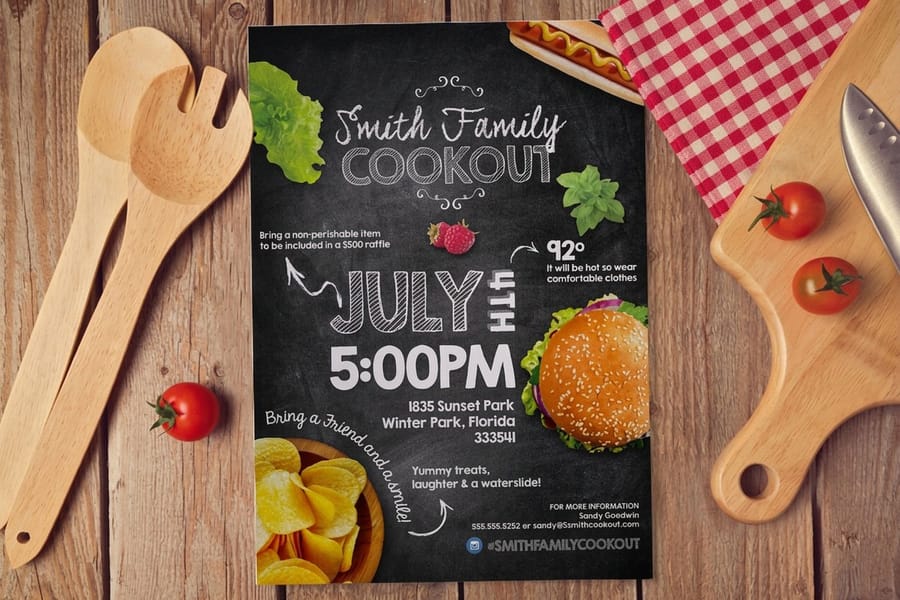
Most print advertising runs on a short list of formats, and each one does a job the others do badly.
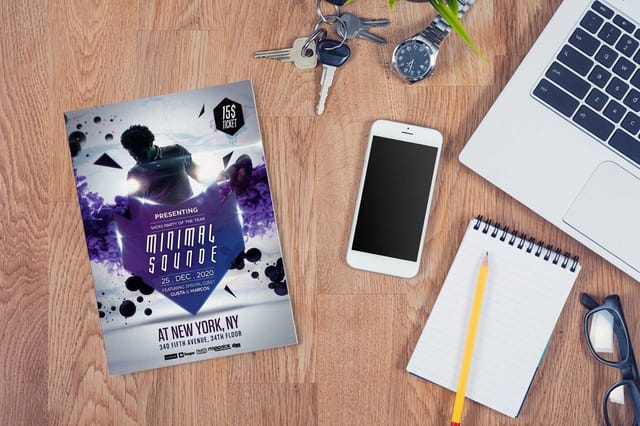
- Flyers are the volume piece: handed out, tucked under wipers, stacked at a counter. Standard flyers start at $39.54, and flyer printing covers the sizes and coatings.
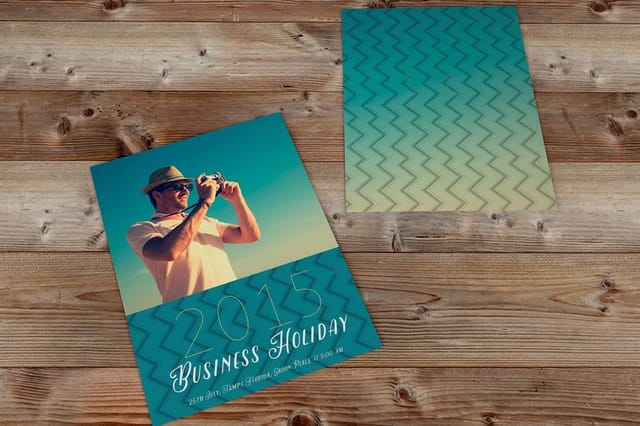
- Postcards are the mailer. They carry an offer, they need no envelope, and postage rules reward staying within a qualifying size. Standard postcards start at $16.48.
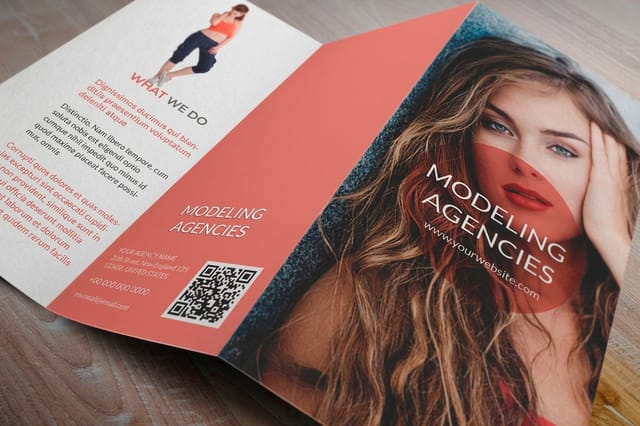
- Brochures are for the considered sale, where somebody needs to read three panels before they call. Standard brochures start at $57.11.
- Posters hold a window, a lobby or an event wall. Standard posters start at $108.75.
- Banners take the campaign outdoors and survive weather. Vinyl banners start at $79.
- Business cards close the loop in person. Standard business cards start at $17.57.
Match the stock to the handling, not to the budget line. A flyer that gets handed over and read once is fine on a light gloss text stock. A brochure that sits in a rack for a month needs weight, or it curls and looks tired before anybody picks it up. Our paper guide for marketing materials walks through the stock choice by piece.
One more thing worth knowing before you commit a budget: quantity moves the unit price far more than any negotiation will. Doubling a run rarely doubles the cost, because the setup is already paid for. Price two quantities in the configurator below and compare cost per piece before you decide how many you need.
Wally compares two quotes
The cheaper number is not always the cheaper job

Wally lays both quotes on the counter and ignores the big number at the top. He checks whether the printing happens in house, what date the boxes actually arrive, whether the proof shows color or only layout, and whether shipping is inside the price or waiting at checkout. Then he asks what happens if the file has no bleed. Four of those five answers are already on our product pages, which is why he skips the sales call and prices the run himself.
Price your marketing materials →Specs and pricing
Campaign staples, sizes and starting prices
Configure the three products most print campaigns are built on, with live options and starting prices straight from the 4OVER4.COM configurator. Price two quantities and compare cost per piece before you commit.



Print it
Order the campaign direct from the press
Explore more
Where to go next




By the numbers
The printing side, handled in house at 4OVER4
Common Questions
Your print advertising questions, answered
What does a print advertising company do?
It takes a marketing idea and turns it into printed pieces that reach people: flyers, postcards, brochures, posters, banners, signs and mailers. Some do the whole chain, from strategy and design through printing and mailing. Others only print, and expect print ready artwork. The word company covers all of it, which is why two quotes for the same job can differ by a factor of three. Establish first which parts of the chain you are buying.
Is it cheaper to go straight to the printer?
On print cost, almost always yes, because you skip the reseller margin. The catch is that you take on the work the agency was doing: art direction, file prep, proof checking, schedule chasing and the decision about quantities. If you have artwork ready and someone who can read a proof, going direct is the cheaper path. If you have neither, the margin buys real labor and going direct just moves the cost onto your own week.
How can I tell if a company prints in house or brokers the job?
Ask three questions. What presses do you run, and is my job digital or offset. Where is the job produced, by city. Who do I speak to if the color is wrong on delivery. A shop with its own equipment answers all three without hesitating. A broker answers the first vaguely and the third with an email address. Neither is disqualifying, but brokered work adds a handoff, and handoffs are where schedules slip.
What turnaround should I expect on a print advertising order?
It depends on the product and the finishing, so ask for the in hand date rather than the number of days. A flat flyer with no coating moves fastest. Folding, scoring, die cutting, mounting and mailing each add a step, and each step is a place the job can wait. Our guide to printing turnaround times explains how the production clock is counted and where transit sits, which is the part most quotes leave out.
Do print advertising companies handle the mailing as well?
Some do, some hand you the boxes. If your campaign is a mailer, that difference decides the whole schedule. Direct mail needs an addressed and sorted list, correct postal indicia, a size that qualifies for the postage rate you budgeted, and a drop date. Ask whether they mail from their own facility or ship to a mail house, and confirm who owns the postage. Our direct mail advertising guide covers the formats and the rules they have to meet.
What files do I need to give them?
A press ready PDF at full size with 300 dpi images, CMYK color, fonts outlined or embedded, and 0.125 inch bleed on every edge that prints to the trim. Keep live text at least 0.125 inch inside the trim so nothing important gets cut. If your file is a Canva export or a Word layout, say so up front rather than hoping. Starting from a correctly sized blank template removes most of the risk in one step.
Get Started
Order 50 flyers direct from $39.54
Pick the size, the stock and the quantity, upload the artwork you already own, and we print the campaign in house with the delivery date shown before you pay.
Legal Disclaimer
Gold Standard guarantees apply to all standard orders placed through 4over4.com. Price match requires verifiable proof of a competitor's published price for an equivalent product with matching specifications and turnaround time. Satisfaction guarantee covers manufacturing defects and print quality issues. Contact support with order number and documentation. On-time delivery rate based on tracked orders 1999 to 2026. Individual results may vary based on shipping carrier performance.
