
Hang Tags vs Die-Cut Stickers vs Product Labels, and Which One Your Product Needs


Three printed pieces that get quoted against each other every week, separated by how they attach, what they have to survive, and what they cost to start.
A hang tag ties on through a drilled hole and lifts off without a mark, a die-cut sticker is adhesive cut to the outline of the artwork, and a product label is adhesive engineered for the container it lives on. Choose by attachment and conditions rather than by look. If the surface is textured, soft or has to stay unmarked, print a tag. If the information has to stay with the product through water, cold or oil, print a label on a premium face stock. If the shape itself is the branding and somebody else applies it, print a die-cut sticker.
Quick answer
One ties on, two stick, and only one is built for a container
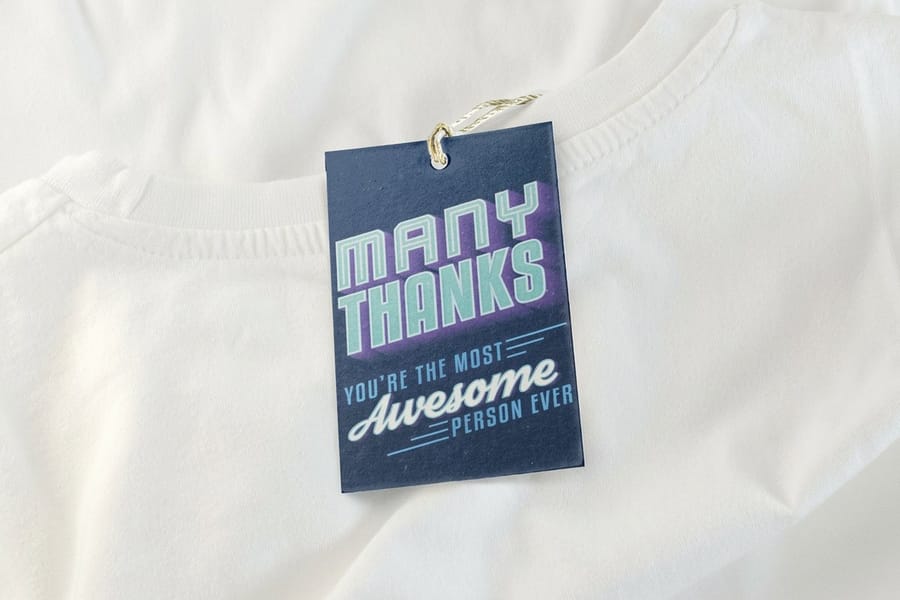
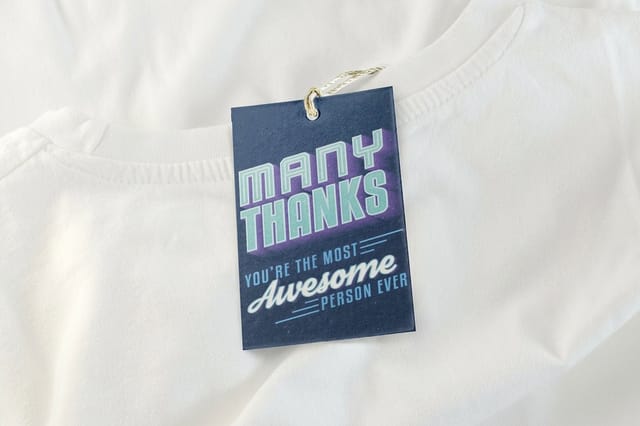
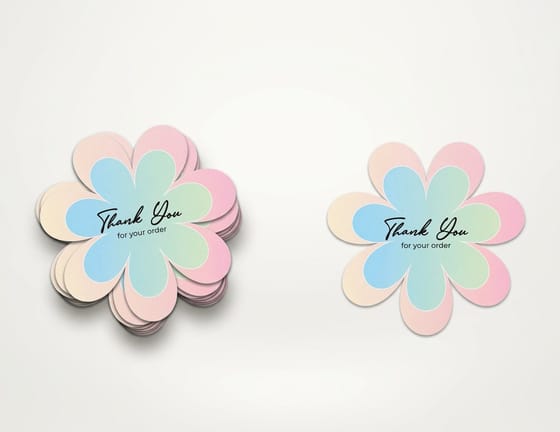
The hang tag is the only one of the three that comes off clean. It hangs from a hole, prints on both sides, and works on knitwear, raw wood and every other surface adhesive refuses. Die-cut stickers and product labels share the same construction, a printed face over adhesive on a release liner, but they are specified for different jobs: the sticker is cut to the shape of the artwork and applied by choice, while the label is sized to the flat panel of a container and built from a material that survives whatever the product does to it.
Attachment First, Then Everything Else Follows
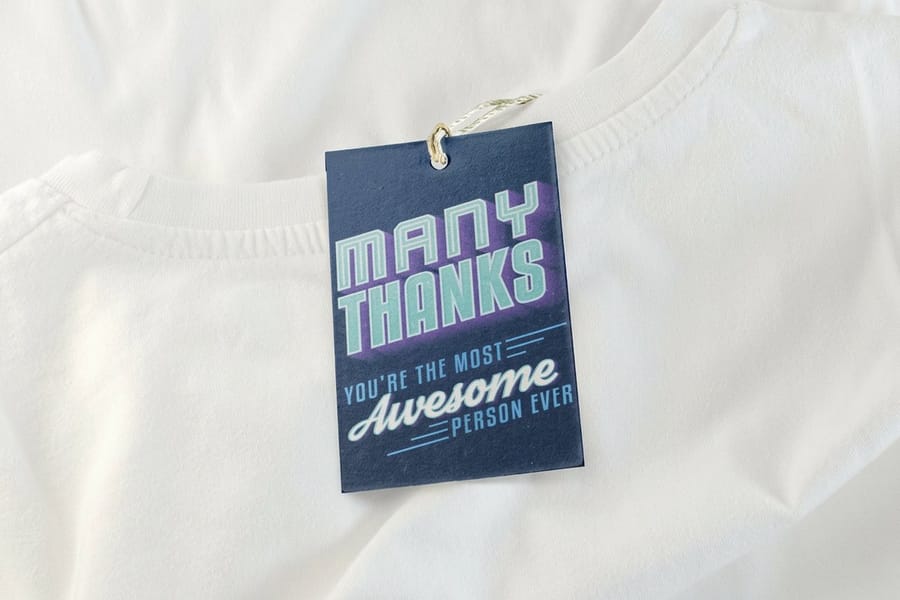
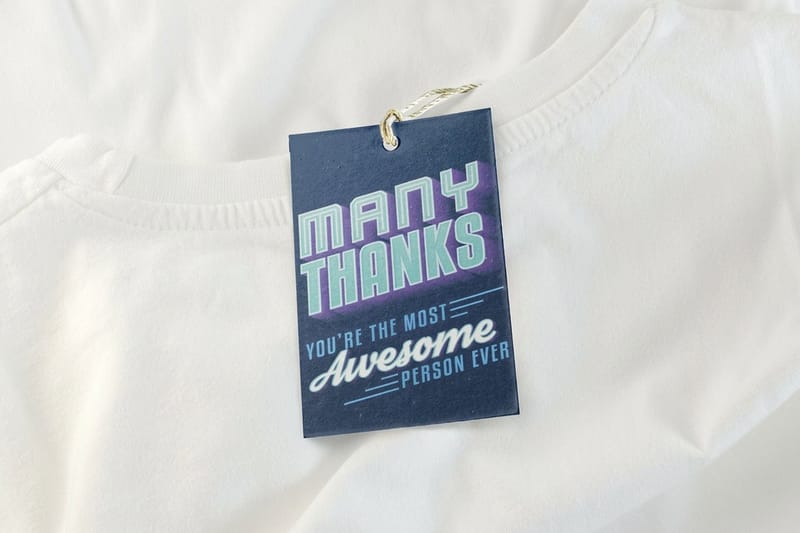
Ask what holds the piece on and the choice usually makes itself. A hang tag has a drilled hole and a string, so it attaches to a garment, a handle or a neck of a bottle without touching the surface. A die-cut sticker and a product label both carry adhesive on a release liner, so they need a surface that will accept it.
The second question is who the piece is talking to. A tag is read once, at the moment of buying, then thrown away or kept as a keepsake. A label lives with the product through its whole life, which is why it ends up carrying the barcode, the batch code and the small print. A sticker sits outside that loop entirely: it is branding somebody chooses to apply, on a laptop, a window, a mailer or a coffee cup.
| Feature | Hang tag | Die-cut sticker | Product label |
|---|---|---|---|
| How it attaches | Drilled hole with string, ribbon or a plastic loop. | Permanent adhesive on a release liner. | Adhesive matched to the container material. |
| Comes off cleanly | Yes, and it leaves nothing behind. | Rarely, and often takes the finish with it. | Not by design. |
| Prints both sides | Yes, and the back is usable space. | No, the back is adhesive. | No. |
| Usual stock | 14pt to 16pt card, kraft, or plastic. | Paper, vinyl or clear film with a laminate. | Paper for dry goods, BOPP or vinyl for wet. |
| Best job | Apparel, gifts, homewares, anything textured. | Branding, giveaways, packaging seals, merch. | Bottles, jars, tubs, cartons, compliance copy. |
| Starts at | $25.27 | $93.37 | $29.16 |
Read the second row before the last one. If the piece has to come off without a mark, the argument is over and a tag wins, whatever the artwork looks like. Our hang tags printing range covers the standard rectangle through die-cut shapes, and the stickers printing range covers the adhesive side.
What the Surface and the Shelf Life Decide for You
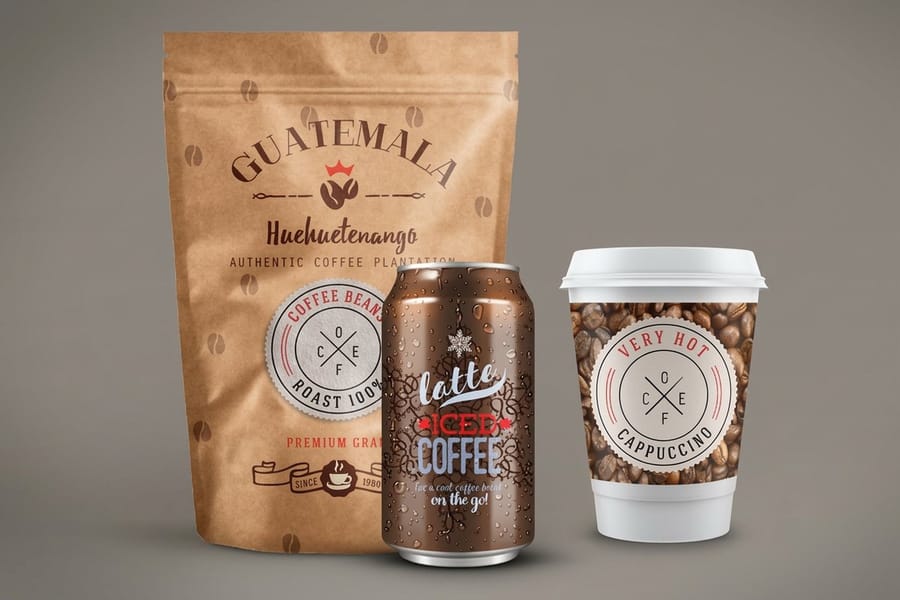
Adhesive is fussier than most design briefs allow for. It wants a surface that is smooth, clean, dry and roughly at room temperature. Knitwear, canvas, raw timber, silicone, powder-coated metal and anything with oil or a release agent on it will all shed a label, sometimes within hours. Cold is the quiet killer: apply a standard label to a bottle straight out of a chiller and the adhesive never keys properly, so it lifts a week later on the shelf.
Curvature is the next trap. Every bottle and jar has a flat panel, the band where the wall runs straight before it starts to shoulder in. A label taller than that panel is bridging a curve at the top and bottom edges, and paper bridging a curve bows. The fix is not a stronger adhesive. Shorten the label, or switch to an oval or a rounded rectangle so the corners are not the part fighting the container. Measure the panel with a strip of masking tape before you design anything, and if you want the arithmetic set out properly, our label size guide walks through it with a tape measure.
Then there is the material itself. Paper face stock is cheap, prints beautifully and dies the first time it gets wet. Vinyl and BOPP cost more per piece and shrug off a fridge, a bathroom shelf, a delivery van in July and a customer with wet hands. If you sell anything liquid, refrigerated or bath related, the premium material is not an upgrade, it is the minimum specification. Premium product labels start at $29.16 and the same body of work in premium clear labels, for the no-label look on glass, starts at $86.17. The BOPP versus vinyl comparison covers how the two waterproof stocks differ in feel and print.
Setting Up the Files, Hole by Hole and Cut by Cut
Each of the three has one setup detail that ruins the job when it is missed, and they are different details.
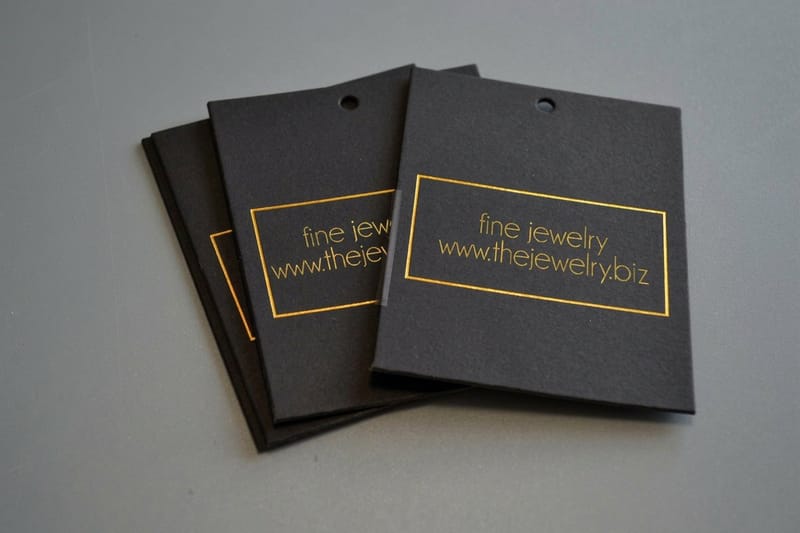
- Hang tags: the hole and its clearance. An eighth-inch hole set about a quarter inch below the top edge is the everyday convention. Leave a quarter inch of clear space around it, because drilling shifts slightly through a stack and artwork sitting tight against the hole gets clipped on part of the run. If the tag needs string or an elastic loop, ask for it when you quote, since attachment is a separate operation.
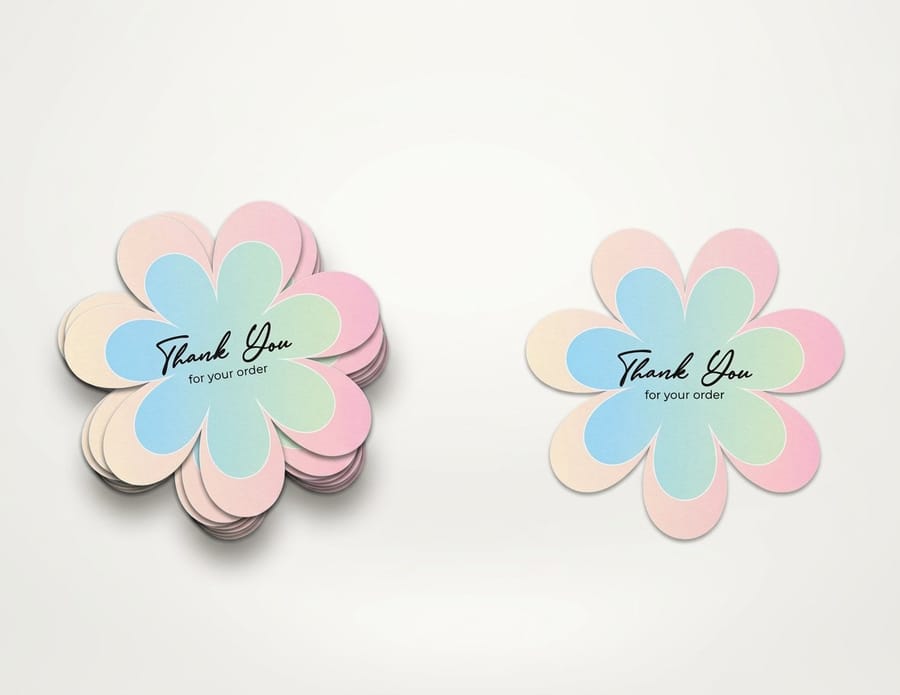
- Die-cut stickers: the cut path. The outline has to exist in the file as a vector path on its own layer, not as a shape you hope the printer will trace from the artwork. Keep the path simple. Deep notches and thin spikes are where a weeded sticker tears, and a corner tighter than about an eighth of an inch radius fights the die. Extend the background art past the cut line so a small shift still shows color to the edge.
- Product labels: the panel and the wrap. Size to the flat panel, not to the bottle. If the design wraps all the way round, allow an overlap so the join sits at the back and does not gape. Keep the barcode on a flat area and away from the curve, because a scanner reads a distorted bar pattern badly.
All three want artwork built at final size with bleed, fonts converted to outlines and images at print resolution. Correctly sized starting files for tags, stickers and labels sit in the blank template library, which is faster than building a page from a size chart. If the piece is a clothing tag specifically, how to make hang tags for clothing covers the size, stock and string choices that garment brands settle on.
The Verdict, Job by Job
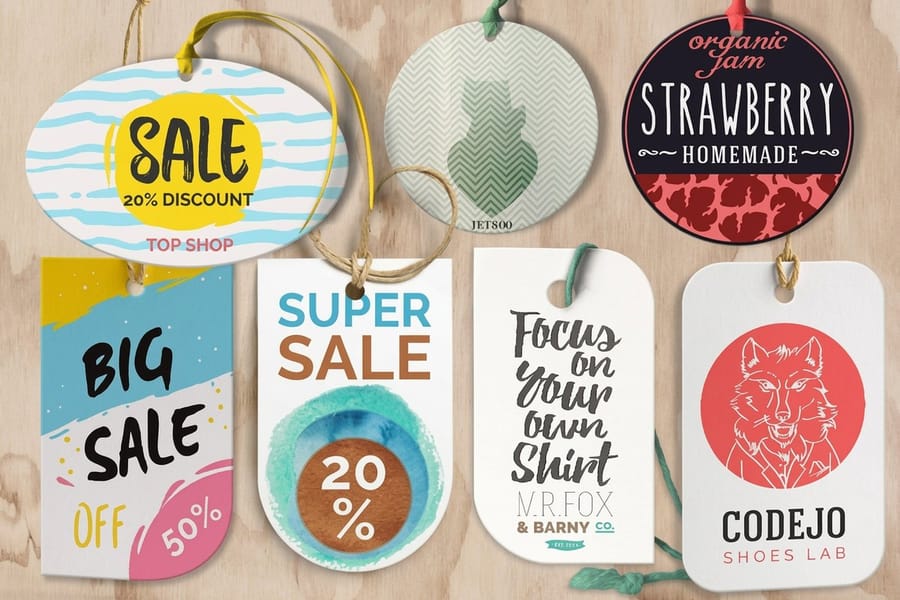
There is no winner in the abstract, so here is the call for the jobs that actually come through the shop.
Apparel, accessories, homewares and anything handmade: hang tag. The surface is textured or soft, the buyer wants the tag gone before use, and the back of the card is free space for care instructions and a size chart. Standard hang tags start at $25.27, die-cut hangtags at $36.26 when you want a shape rather than a rectangle, and kraft hangtags at $57.96 for the uncoated brown look small brands lean on. Sizing is covered in the hang tag size guide.
Anything in a bottle, jar, tub or pouch: product label. The information has to stay attached, the container is smooth, and the material has to match what the product does to it. Start at product labels printing and choose the face stock by conditions rather than by budget.
Branding somebody applies by choice: die-cut sticker. Event handouts, mailer seals, laptop merch, box closures. Shape is doing the work, so pick the cut line first and the finish second. Die-cut stickers start at $93.37, which is the highest entry price of the three, so if volume is small it pays to configure a labeled alternative alongside it before deciding.
The pairing worth knowing is tag plus label. A jar of preserves with a compliant label on the body and a tied kraft tag on the lid gets both jobs done: one piece satisfies the rules, the other sells the story and costs very little to add. Browse the whole adhesive and tag range in the sticker and label printing hub.
Wally sorts the three out
Does it tie on, stick on, or belong to the bottle?
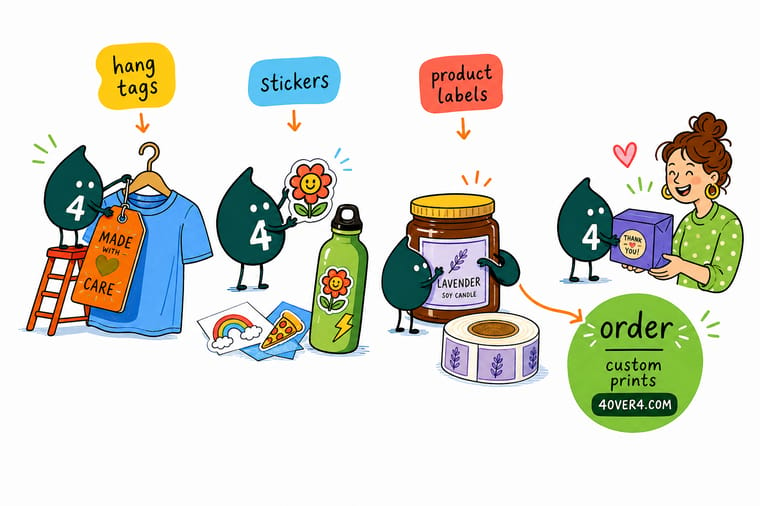
Wally asks one question first. Does the piece have to come off without a mark? Then it is a hang tag, drilled and strung, and the back is free space for care instructions. Does the information have to stay with the product through water, cold or oil? Then it is a label, sized to the flat panel of the container and printed on a material that will not swell. Is the shape itself the branding, applied by whoever wants it? Then it is a die-cut sticker, and the cut path matters more than the finish.
Configure custom hang tags →Specs and pricing
The three side by side, with live options
Build each one in the configurator and compare the real numbers for your size, stock and quantity rather than the starting prices.

Print it
Order the one your product actually needs
Explore more
Where to go next



By the numbers
Tags, stickers and labels printed to order at 4OVER4
Common Questions
Your tag, sticker and label questions, answered
What is the actual difference between a sticker and a label?
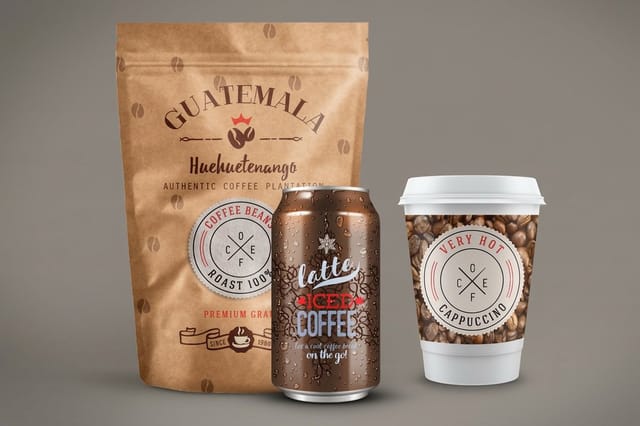
Both are printed face stock with adhesive on a release liner, so the difference is job rather than construction. A label is designed for one container and carries the information the buyer needs on it: the product name, the ingredients, the net weight, the barcode, the warnings. A sticker is designed for the artwork, cut to the shape of the mark, and it goes wherever somebody chooses to put it. That difference shows up in the specification. Labels are quoted around a face material that has to survive moisture, oil, cold or sunlight, while stickers are usually quoted around shape and finish.
Can a hang tag replace a label on a food or cosmetic product?
No. Consumer product rules put the required information on the container itself, and anything tied on with string can be pulled off between the shelf and the checkout. Use a label for ingredients, net weight, allergen statements and lot codes, then add a hang tag if you want a story, a recipe or a gift message. That combination is common on jars of preserves and bottles of oil, where the label does the compliance work and the tag does the selling.
What does die-cut mean, and how is it different from kiss-cut?
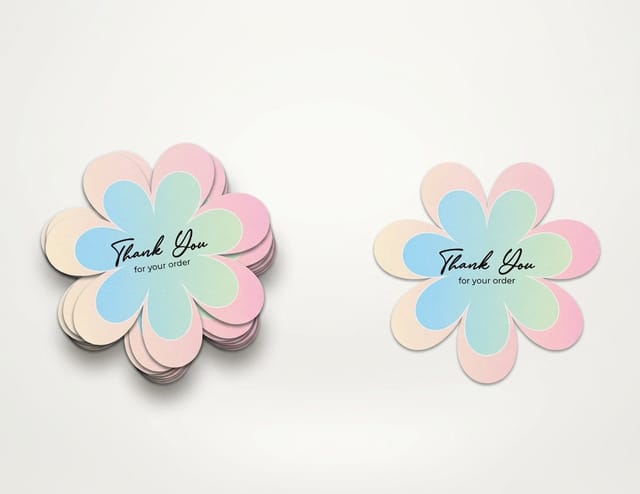
Die-cut means the cutting die follows a custom outline instead of a rectangle. In the sticker trade, a kiss cut goes through the face and the adhesive only, so the shape sits on a larger square of backing that makes it easy to peel. A full die cut goes through the liner as well, so the sticker and its backing share the same silhouette. Kiss-cut is easier to hand out at an event because there is a border to grip. Full die-cut looks better in a product box. Either way the artwork needs a separate cut path drawn as a vector, not a shape you expect the printer to trace.
Where does the hole go on a hang tag?
An eighth of an inch is the usual hole, centered and set about a quarter inch down from the top edge so the paper between the hole and the edge does not tear when the tag is pulled. Keep live artwork a quarter inch clear of the hole in every direction, because a drilled hole moves a fraction between stacks and a logo that sits tight to it will get clipped on part of the run. If you want string or a plastic loop fitted, say so at quoting time, since attachment is a separate operation from printing and drilling.
Will a label stick to fabric, raw wood or a textured bottle?
Usually not for long. Adhesive needs a surface that is smooth, clean, dry and near room temperature. Knitwear, canvas, untreated timber, silicone, powder-coated metal and anything with a release agent or oil on it will all shed a label within days, and a cold surface stops the adhesive keying at all. Those are exactly the jobs hang tags were made for, which is why apparel, homewares and craft goods still tie a printed card to the product instead of sticking one on it.
Do I need a premium label or will a standard one do?
Standard labels are fine for anything that stays dry and indoors: shelf-stable boxes, asset tags, address labels, packaging seals. Move to a premium material as soon as the product meets water, cold, oil or sun. Bath and body, drinks, candles, food in a fridge and anything shipped in a hot van all justify the upgrade, because a paper label that swells and peels does more damage to a brand than a plain one ever did. Premium product labels start at $29.16 at 4OVER4.COM, and premium clear labels, which suit a glass container you want to look unlabelled, start at $86.17.
Get Started
Still deciding between a tag, a sticker and a label?
Order free samples, feel the stocks against your own product, then configure the one that fits. Tags, die-cut stickers and premium labels all print from the same shop in Queens.
Legal Disclaimer
Gold Standard guarantees apply to all standard orders placed through 4over4.com. Price match requires verifiable proof of a competitor's published price for an equivalent product with matching specifications and turnaround time. Satisfaction guarantee covers manufacturing defects and print quality issues. Contact support with order number and documentation. On-time delivery rate based on tracked orders 1999 to 2026. Individual results may vary based on shipping carrier performance.
