
How to Create Case Studies That Decide the Deal


Which customer to feature, the eight interview questions that produce figures, the five part structure, and how to get the finished study in front of a buyer who never opens the PDF.
A case study decides a deal when it features a customer whose problem matches your next buyer's, and when it carries a before figure, an after figure and the time between them. Choose for problem match rather than logo size, interview for numbers instead of adjectives, and build the page in five parts: situation, constraint, decision, result, proof. Draft the headline, the pull quote and the result line first, because a skimming reader sees those three and often nothing else.
Quick answer
Match the problem, get the figures, write for a skimmer
The study a buyer acts on is the one that shows a company like theirs solving the problem they have today, with numbers attached. Pick the customer for problem match rather than fame. Run an interview built to produce a before figure, an after figure and the period between them. Structure the page so situation, constraint, decision, result and proof each land where a skimmer can find them, and give the whole thing a physical form for the meetings where a link never gets clicked.
Choose the Customer Whose Problem Matches Your Next Buyer
The selection decides the study. Get it wrong and no amount of writing rescues it, because a reader who does not see their own situation on the page stops reading at the second paragraph.
Four filters, applied in this order. Does the customer have the problem your next buyer has, in the same words they would use? Are they close enough in size that the reader believes the result transfers? Did the work produce something countable? And will they say yes to being named, or at least to being described? Notice that brand recognition is not on the list. A household name that hired you for a small side project is a weaker study than an unknown company in exactly your buyer's segment with a number attached.
The temptation is to pick the biggest logo in the client list and write around the thin material it gives you. Resist it. What a buyer wants is not reassurance that important companies use you, it is evidence that a company like theirs got out of the situation they are in right now. That is also the argument that survives contact with a procurement team, because it is the one somebody internal can repeat without your slides in front of them.
One more filter worth adding once you have a few studies: coverage. If three of your four studies feature software companies, the fourth should not. Map the set against the segments you actually sell into, and treat a segment with no proof story as a gap in the sales kit rather than a writing task for later. Getting the underlying promise straight first helps, which is what the brand messaging guide works through.
The Interview That Produces Figures Instead of Adjectives
Thirty minutes on a call with the right eight questions gives you a case study. Two hours of the wrong questions gives you a page of praise you cannot use. Record it with permission, because the exact phrasing a customer uses is the single most valuable thing in the transcript and you will not reconstruct it from notes.
- What was happening before you called us? Let them ramble. The situation section lives here.
- What was the cost of leaving it alone? This is where the number usually appears, unprompted.
- What else did you consider? Names the alternatives your next buyer is also weighing.
- What nearly stopped you from going ahead? The most useful question on the list. Print the answer.
- What did we actually do, in your words? A description of your service by somebody who bought it beats your own copy every time.
- What is the figure now, and when did it change? Before, after, and the period between the two. All three or the result is unquotable.
- What surprised you? Produces the detail that makes the study read as real rather than assembled.
- Who else should hear this? Ends the call with a referral rather than a thank you.
Question four is the one most teams skip because it feels like inviting criticism. It is the opposite. When a printed study says the customer worried the switch would take six weeks and it took nine days, you have answered the objection sitting in your next buyer's head before they had to raise it, and you have done it in a peer's voice rather than your own. That is the paragraph sales quotes back to you.
Watch for the answer that is all adjective. If a customer says the team was fantastic, ask what they did that a less fantastic team would not have done. The follow-up is where the concrete answer lives. The same discipline runs through a pitch that wins clients: specific beats enthusiastic, every time.
The Five Part Structure That Survives a Skim
Assume the reader gives you eleven seconds before deciding whether to give you three minutes. The structure below is built for that: five parts, each with a job, each short enough that a skimmer landing anywhere in it gets something.
| Part | Its job | Rough budget | What ruins it |
|---|---|---|---|
| Situation | Let the reader recognise themselves inside two sentences. | 80 words | Company history nobody asked for. |
| Constraint | Name what made it hard, including budget and time. | 90 words | Vagueness. "Challenges" is not a constraint. |
| Decision | What they chose, what they nearly chose instead, and the doubt they had. | 150 words | Turning into a feature list about you. |
| Result | Before figure, after figure, period between them. | 120 words | A percentage with no base number. |
| Proof | Named quote, role, and anything checkable. | 60 words | An anonymous quote that could be invented. |
Write the headline, the pull quote and the result line before you write any of the five parts. Those three carry the whole argument for a reader who never gets past the top third, and drafting them first stops the body from wandering. A headline that reads "How Meridian Logistics cut quoting time from three days to four hours" has already done the job; one that reads "A success story in logistics" has done nothing.
Keep the customer as the subject of most sentences. The study is about what they did, with you in it. Studies written the other way round read as advertising and get discounted accordingly, which is the same reason a good sell sheet leads with the buyer's problem rather than the product name. If you want the wider set of pieces this sits inside, the sales collateral examples lay out the funnel around it.
Give It a Form the Buyer Will Actually Hold
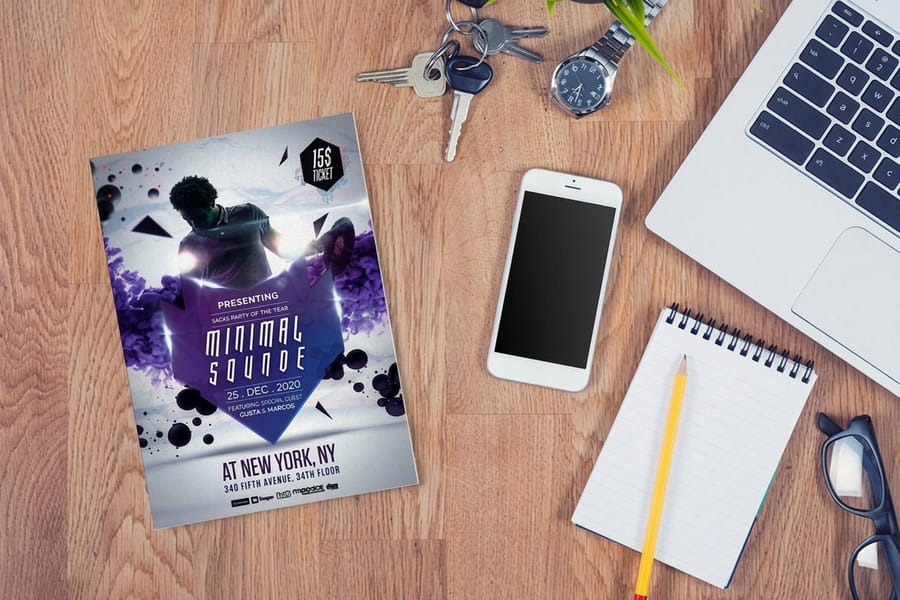
A finished study that lives only as a PDF link in a follow-up email gets opened by a fraction of the people it was written for. Paper changes that arithmetic, because a document placed on the table gets read in front of you and stays on the desk after you leave.
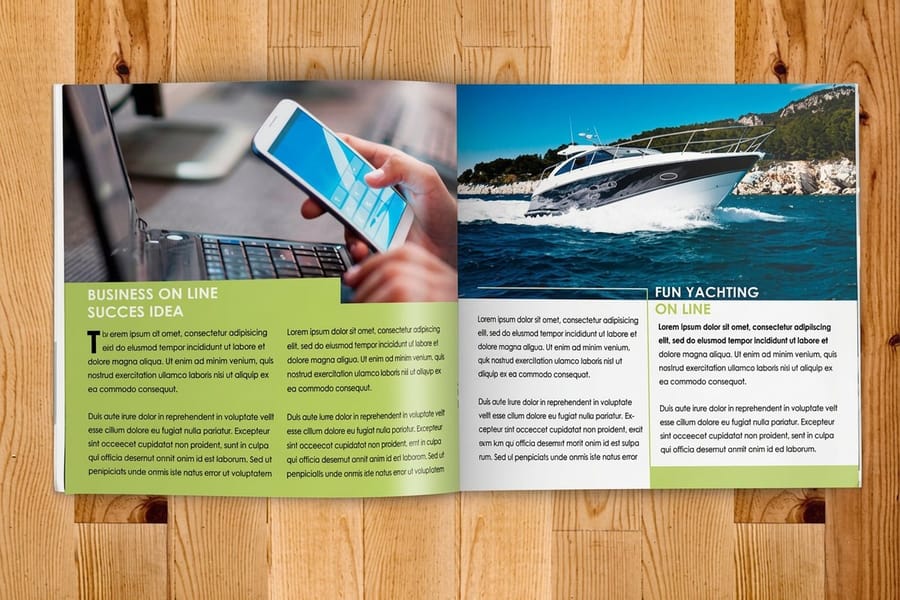
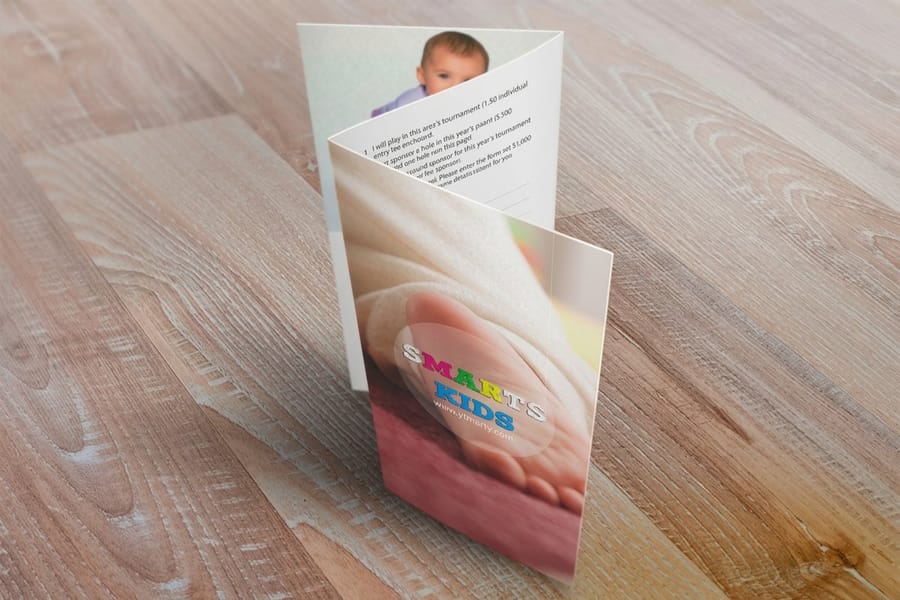
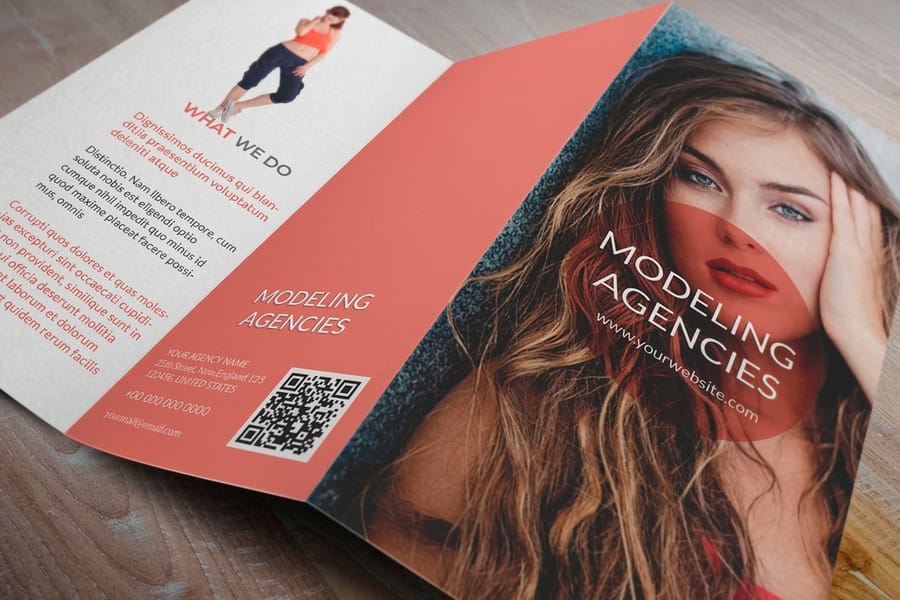
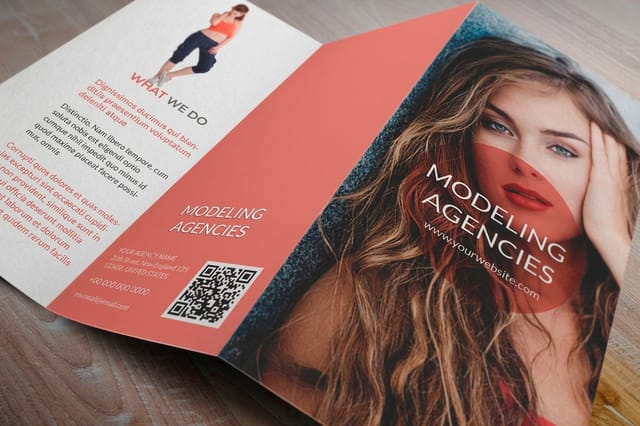
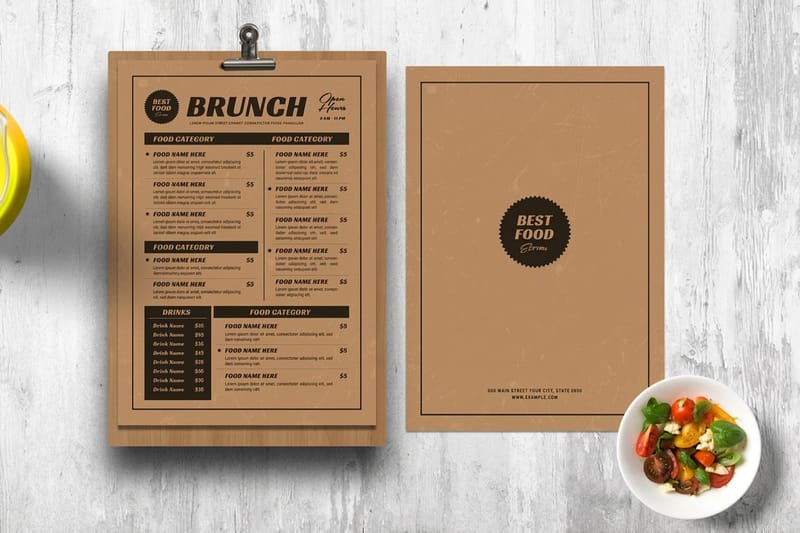
Match the format to how the piece gets used. A one page study handed out at a meeting or left in a lobby is a flat sheet, and standard flyers start at $39.54, which makes it cheap enough to reprint when the figures move. A study with a diagram and a second page of detail wants panels, so standard brochures at $57.11 fold it into something that reads in order. When you have four or five studies and want them as one artefact for a long sales cycle, standard booklets start at $240.55 and turn the set into a document a committee can pass around. For a proposal that has to arrive as a package, pocket folders hold the studies alongside the quote, though at $844.54 they belong to a deal size that justifies them.
There is a real trade-off here, and it is worth naming. Printing freezes the content. A booklet with a result that has since changed is worse than a web page you could have edited in a minute, so print the two studies that consistently close and leave the long tail digital. Order a quantity you will use inside a year rather than the one that looks cheapest per piece, because the per unit saving on a thousand copies is not a saving when six hundred of them go stale in a cupboard.
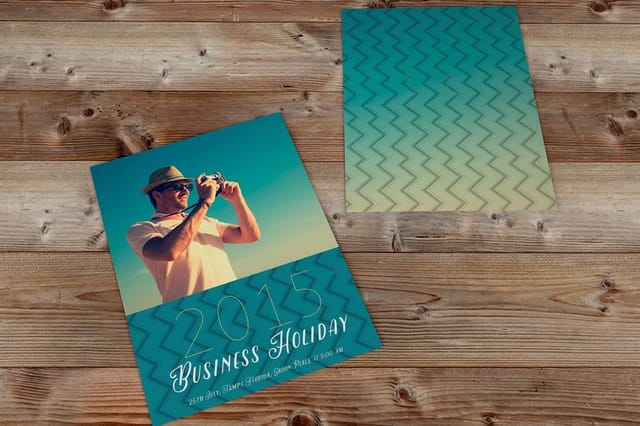
A condensed study also travels well as a mailer. A standard postcard from $16.48 carrying one headline number, one line of context and a link to the full page is a legitimate way to reopen a stalled account, and the format forces the brutal edit that improves the long version too. Trade shows are the other place printed proof earns its cost, alongside the rest of the trade show print kit.
Approvals, Refreshes, and Knowing Whether It Worked
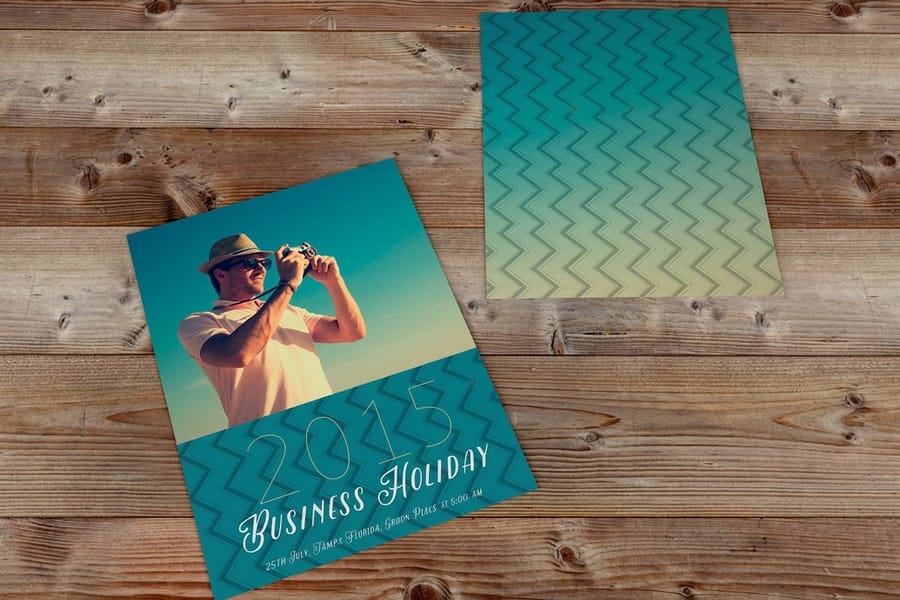
Most case studies die in approval, not in drafting. The fix is procedural: ask for permission at the start of the interview, not after the piece is written, and tell the customer exactly what you plan to publish while they are still enthusiastic about the outcome.
Send the draft with the specific figures highlighted and one question attached: is this number accurate and are you comfortable with it in print. That is far easier to answer than an open request for feedback, which invites a marketing team to rewrite your study into their boilerplate. Give a deadline, and offer the anonymised version as the fallback in the same email so a nervous legal team has somewhere to land other than no.
- Named and quantified. The full strength version. Worth chasing for two weeks.
- Named, relative figures. "Cut it by about a third" instead of the dollar amount. Approved far more often.
- Anonymous, quantified. Industry, size and region kept. Weaker authority, same recognition.
- Internal only. Used in proposals under NDA, never published. Still useful to sales.
Measuring it is simpler than it looks. Ask your salespeople which study they attach to proposals and which one prospects mention back. That single question tells you more than page views, because a case study is read at a point in the deal where analytics rarely follow. Then review the set once a year, confirm the numbers still hold, and retire anything featuring a customer who has left. If you want the surrounding program, the marketing strategy guides cover the channels that carry these stories, and the lead generation strategies show where proof fits among them.
Wally explains a case study that closes
One matching customer, three numbers, one page
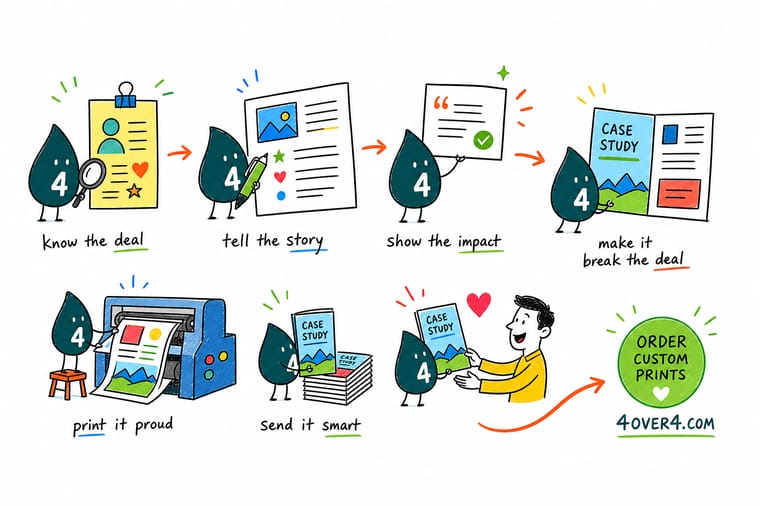
Wally does not open with the company history. He names the situation his reader is already in, says what made it hard, then gives the figure before, the figure after, and how long sat between them. He prints the customer's own words about the thing that nearly stopped them buying, because that is the doubt his next reader has. Then he stops at one page and puts it on the table, where a link in an email would never have been opened.
Print your case study booklets →Specs and pricing
Formats for a printed case study, with starting prices
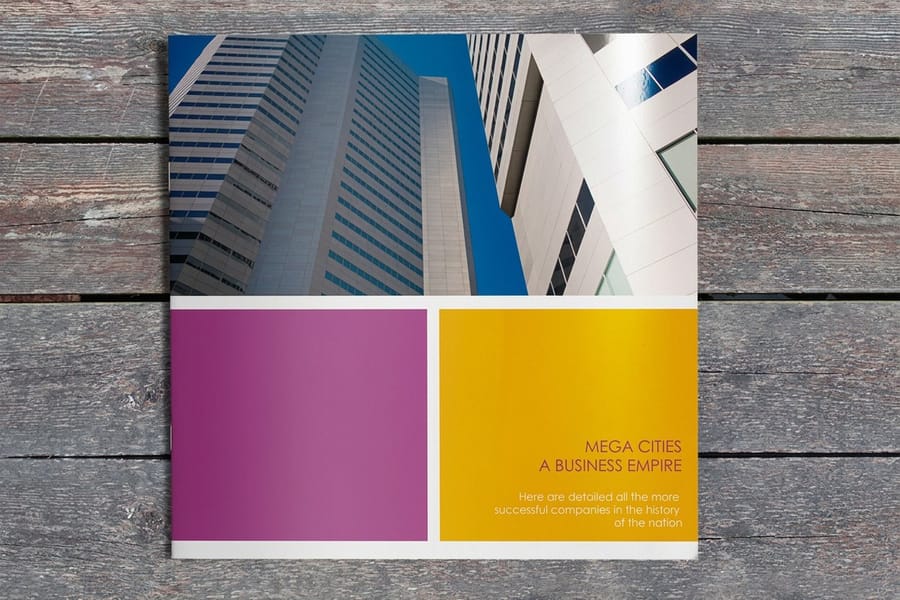
Booklets for the full set, brochures for a study with a diagram, flyers for the single page you hand across a table. Live configuration choices and starting prices from the 4OVER4.COM configurator.



Print it
Put your proof on paper
Explore more
Where to go next


By the numbers
The shop printing the sales pieces in these stories
Common Questions
Your case study questions, answered
How long should a case study be?
About 500 words for the version you hand to a buyer, and one page. That is enough for a situation, a constraint, the decision, a result with real figures, and a proof line. Longer versions exist for a reason, usually a technical audience that wants the implementation detail, but keep those as a second document rather than stretching the first. The failure mode is not a study that is too short. It is a study that runs to three pages and gets skimmed to nothing.
What if the customer will not let us use their name?
Publish it anonymously with the industry, the rough size and the region intact: "a 40 person accounting firm in the Midwest" still lets a reader recognize themselves. You lose some authority, so compensate with specificity everywhere else and with a named quote from someone inside your own team who ran the work. Ask about the anonymous version at the start of the interview rather than after you have written it. People say yes to a redacted study far more often than to a named one, and asking early saves you rewriting the whole thing.
What do we do when the client will not share numbers?
Convert to relative figures. A customer who will not print "we saved $184,000" will often approve "we cut the line item by about a third." Failing that, use time and volume instead of money: three days down to four hours, two people down to one, twelve reports a month instead of four. If nothing quantified survives approval, say so plainly in the study rather than filling the gap with adjectives. Readers forgive a missing number. They do not forgive a vague one that reads like it is hiding something.
How many case studies do we actually need?
One per segment you sell into, then stop and improve them. Five studies that each match a real buyer type beat twenty that blur together, and a small set is one you can keep current. Most teams find that two of the set do nearly all the closing work, which is the pair worth printing and worth refreshing every year. Track which one sales attaches to proposals and treat that as your signal.
Should a case study be a web page, a PDF, or printed?
All three, in that order of effort. The web page earns search traffic and is the version you can update the same afternoon. The PDF travels through email and gets forwarded internally, which is where most deals are actually argued. Print is for the meeting: a study you place on the table gets read in front of you, and it stays on the desk after you leave. Print the two that close and keep the rest digital, because printing freezes the content and a study with an out of date figure is worse than no study.
How often should a case study be refreshed?
Once a year, and immediately if the result changed. Check back with the customer, ask whether the figure held, and either update it or add a line about where it stands now. A study dated three years ago with a result nobody has revisited invites the reader to wonder what happened next. If a featured customer leaves you, retire the study rather than quietly leaving it up.
Get Started
A folder and a printed study cost $3.38 a set
Pick the format that matches the meeting, upload the file, and we print case studies your sales team can hand over instead of emailing.
Legal Disclaimer
Gold Standard guarantees apply to all standard orders placed through 4over4.com. Price match requires verifiable proof of a competitor's published price for an equivalent product with matching specifications and turnaround time. Satisfaction guarantee covers manufacturing defects and print quality issues. Contact support with order number and documentation. On-time delivery rate based on tracked orders 1999 to 2026. Individual results may vary based on shipping carrier performance.
